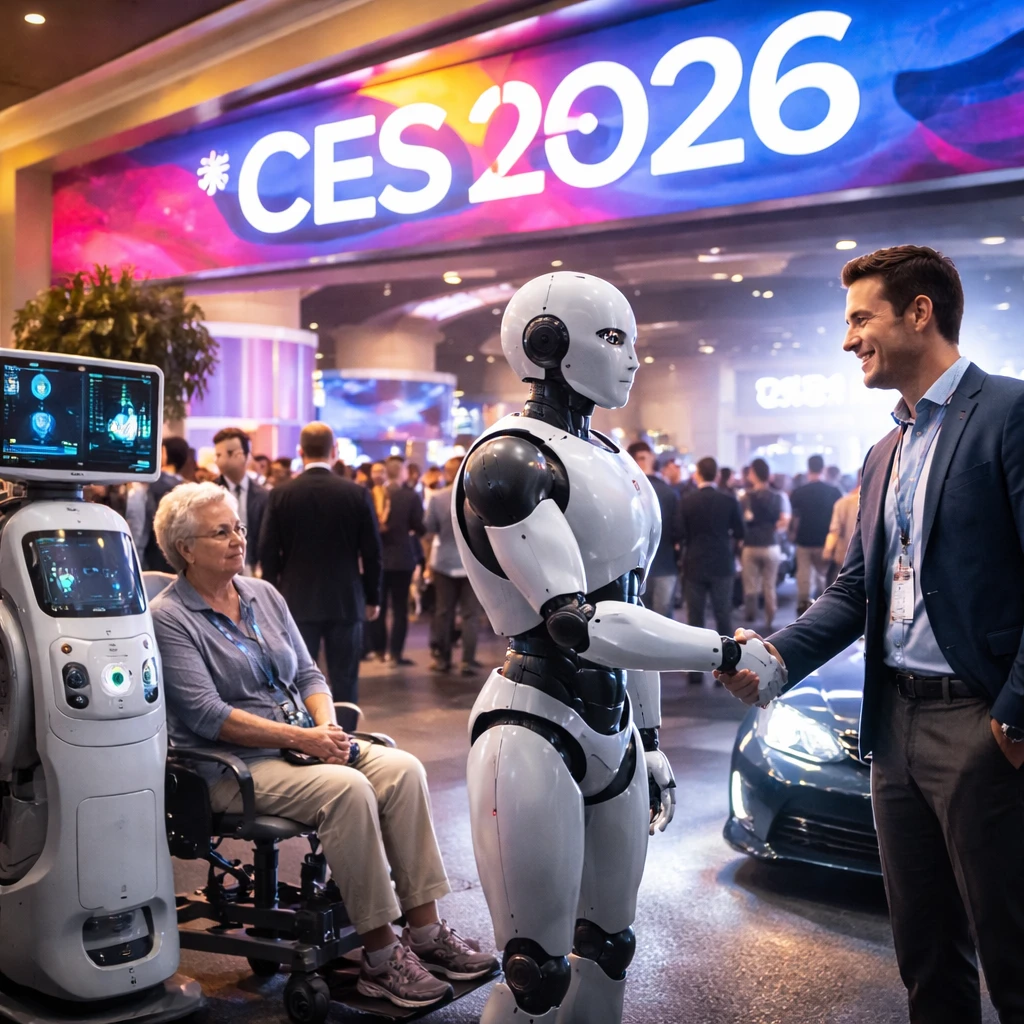
As the calendar turns to the new year, attention shifts to Las Vegas, where the Consumer Technology Association’s annual CES event is now underway. This multi-day exhibition offers a glimpse into the technology companies’ product plans for 2026, spanning sectors such as robotics, healthcare, vehicles, wearables, and gaming. Artificial intelligence remains a core focus, underpinning numerous innovations aiming to meet consumer demand.
Key industry figures are slated to speak at the event, including Jensen Huang of Nvidia, who will present the company’s latest productivity tools centered on AI applications. Similarly, AMD's CEO Lisa Su will deliver a keynote outlining her perspective on upcoming AI solutions. Lenovo’s CEO, Yuanqing Yang, is also expected to address AI developments, underscoring the technology's broad influence across product categories.
The healthcare sector is particularly notable for the integration of AI-driven approaches targeting treatment and preventative care. Examples include Beyond Medicine’s prescription application for specific jaw disorders and efforts to address data shortfalls in areas such as breast milk production. These applications illustrate AI's potential for personalized health management.
Robotics innovation is another highlight, with domestic helper robots taking center stage. LG, a South Korean technology leader, has announced the debut of “CLOiD,” a robot designed to assist in various household tasks. Hyundai also plans to unveil advancements in robotics and manufacturing technologies. Alongside physical robots, extended reality platforms offer immersive training environments for robotic systems, emphasizing the synergy between virtual and real-world applications at CES.
CES 2025 attracted over 141,000 attendees representing more than 150 countries. Organizers anticipate similar participation this year, with upwards of 3,500 exhibitors displaying new technologies across the event’s expansive floor.
Gary Shapiro, Executive Chair and CEO of the Consumer Technology Association, offered insights on CES 2026’s central themes. He identified AI's practical application for consumers, a surge in robotic and humanoid robot initiatives, longevity and health innovations backed by wearable devices for diverse body regions, and advancements in mobility encompassing self-driving vehicles, boats, and drones. Creative content generation remains a pivotal area for technological development.
Regarding humanoid robots, Shapiro observed that while such devices currently operate with varying degrees of effectiveness, their presence is expanding. The previous year’s standout product was a robotic dog notable for lifelike behavior, appealing especially to individuals seeking companionship. The robotic landscape extends past humanoid forms, with increasingly specialized machines designed for functions beyond human capability.
In entertainment, AI's role is evolving into a collaborative tool that complements human creativity. Shapiro described a hybrid model where creators partner with AI to generate novel ideas and expand content reach. This co-creative process demonstrates AI's transformative potential in media and arts.
The show is notable for emphasizing AI solutions targeting the disability community and older adults. Verizon has established a dedicated platform showcasing technologies designed to assist these populations, illustrating a commitment to inclusive innovation and accessibility.
Concerning worries about an AI bubble analogous to the late 1990s internet speculation, Shapiro expressed confidence grounded in current AI firms' substantial revenue streams and investment. He pointed out that unlike the dot-com era, today’s AI market is supported by viable business models.
However, energy demand for extensive AI processing poses a critical challenge. Highlighting this, a Korean company will present a small-scale nuclear-powered energy generation unit at CES, marking a step toward addressing clean energy needs for powering AI technologies. Such developments highlight the urgency of sustainable energy solutions as AI continues to scale.