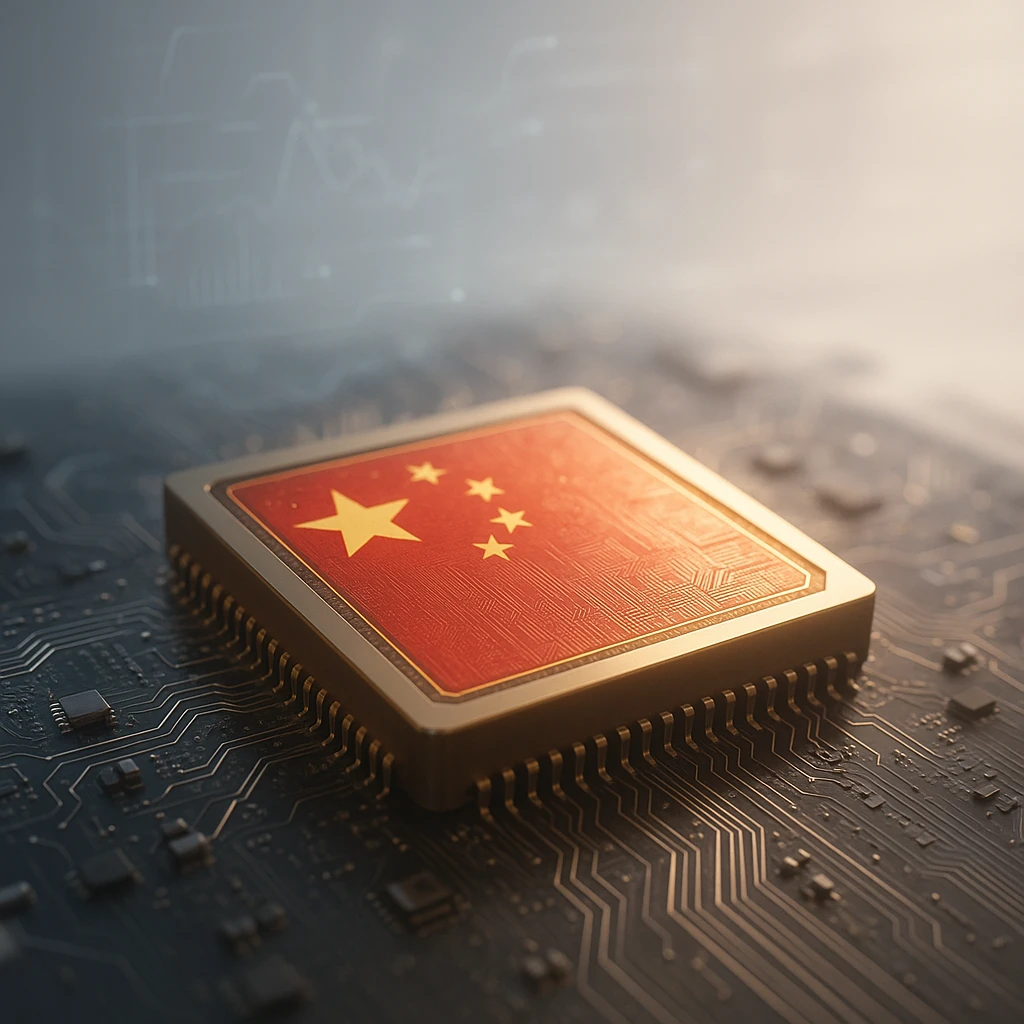

In the southern Chinese city of Shenzhen this autumn, attention converged on the semiconductor industry as companies presented advancements at the WeSemiBay Semiconductor Ecosystem Expo. Among them was SiCarrier, a government-supported firm producing specialized tools such as epitaxy equipment and atomic layer deposition devices critical for microchip manufacturing. Though relatively obscure internationally, SiCarrier drew notable crowds impressed by its technology.
Zhang Hengming, the chairman of an AI electronics alliance, expressed strong support for domestic products like those of SiCarrier, emphasizing the desire for Chinese companies to strengthen and compete on the world stage. He framed escalating tensions with the U.S. over technology access not as a setback but as an impetus for the Chinese semiconductor sector to improve and achieve global competitiveness.
The U.S. government has imposed progressively stringent export controls aimed at restricting China’s acquisition of advanced microchips and manufacturing equipment, with the intention of hindering Beijing's progress in artificial intelligence and military chip capabilities. These measures, sometimes described as a blockade, have spurred China's intensified investment in chip self-sufficiency, underpinned by government funding exceeding $200 billion to modernize and localize chip development.
SiCarrier, also known by its Chinese name Xinkailai, formed just four years ago, has become an emblematic figure among China’s so-called national team of state-backed tech companies. These firms are navigating restrictions by accelerating domestic innovation and reducing reliance on Western supply chains.
Nevertheless, industry experts acknowledge that Chinese semiconductor technology currently lags behind the global frontier, particularly in AI applications. Though China manages design and prototyping of fairly advanced chips, the country has yet to master large-scale mass production at the highest technology nodes.
Chinese leader Xi Jinping underscored the importance of scientific breakthroughs for achieving superiority in AI during a speech in April, committing to significant policy support. The large turnout and bandwidth of exhibitors at the Shenzhen expo reflect a national ambition to showcase progress and galvanize further development.
At the event, Jarod Wang, representing a Shenzhen-based chip design firm, outlined the challenges facing China’s chip industry. The obstacles include the inability to purchase top-tier GPUs critical for AI data centers due to U.S. export restrictions, limitations in acquiring cutting-edge chip fabrication equipment, cloud computing constraints, and AI software optimized for foreign chip architectures.
Wang emphasized that Chinese companies must abandon a copycat approach and instead innovate original development paths to overcome these hurdles. He expressed confidence that ample time and resources would enable technological advancement, noting the absence of insurmountable technical barriers in chip manufacturing.
This mindset resonates with the Chinese Communist Party’s historical portrayal of the nation as an underdog capable of self-reliance leading to breakthroughs in nuclear technology and space exploration. Supporting this narrative, Zeng Yaoguang, a vendor of precision pneumatic tools used in chip fabrication, pointed out that technologies once considered advanced in China eventually became standardized, suggesting a similar trajectory may unfold in semiconductor manufacturing.
Zeng also highlighted the strong work ethic and intellectual capacity of Chinese workers, adding that China could overtake the United States in semiconductor technology more rapidly than commonly anticipated.
Recent developments have introduced complexities to this landscape. The U.S. government, under the Trump administration, recently relaxed certain chip export controls by permitting Nvidia, a leading American chipmaker, to sell its H200 GPU to selected buyers in China. This processor is prominent in AI data centers for model training and operations, though the sale excludes Nvidia’s top-tier products.
The administration justified this move by suggesting that providing China access to capable but not cutting-edge chips might maintain China’s dependence on U.S. technology and weaken its drive toward chip autonomy. Additionally, the U.S. government stipulated receiving a 25% share of the sales revenue as part of the arrangement.
However, some analysts remain skeptical of this rationale. Chris Miller, author and professor at Tufts University, noted that Chinese state directives continue to restrict local companies from buying specific American chips to encourage the development of an indigenous chip ecosystem. This reflects China’s persistent efforts to build self-reliance and wariness of foreign supply chains.
David Sacks, a China specialist at the Council on Foreign Relations, raised concerns about the strategic risks posed by providing China with advanced AI chips, viewing AI as a transformative technology with potential economic and military implications. He questioned the wisdom of arming a chief competitor with tools that could enable it to surpass the United States in the AI domain.
In sum, while the U.S. contemplates adjustments to its export controls, China maintains a strategic, state-led approach to cultivating a sovereign semiconductor industry. The path is fraught with challenges but marked by significant investment and national ambition to innovate beyond current limitations and achieve global leadership in chip technology.