
China's gross domestic product grew at an annual pace of 5% in 2025, backed by strong export activity notwithstanding the continuation of U.S. tariffs. The slowdown to a 4.5% growth rate in the year's last quarter represents the weakest quarterly expansion since the country began easing strict COVID-19 restrictions in late 2022. The preceding quarter exhibited a slightly higher annual growth of 4.8%, according to government data.
Amid a downturn in the property sector and ongoing pandemic-related disruptions, Chinese authorities have intensified efforts to accelerate economic expansion. The official annual growth figure aligns with the government's targeted range of approximately 5% for 2025.
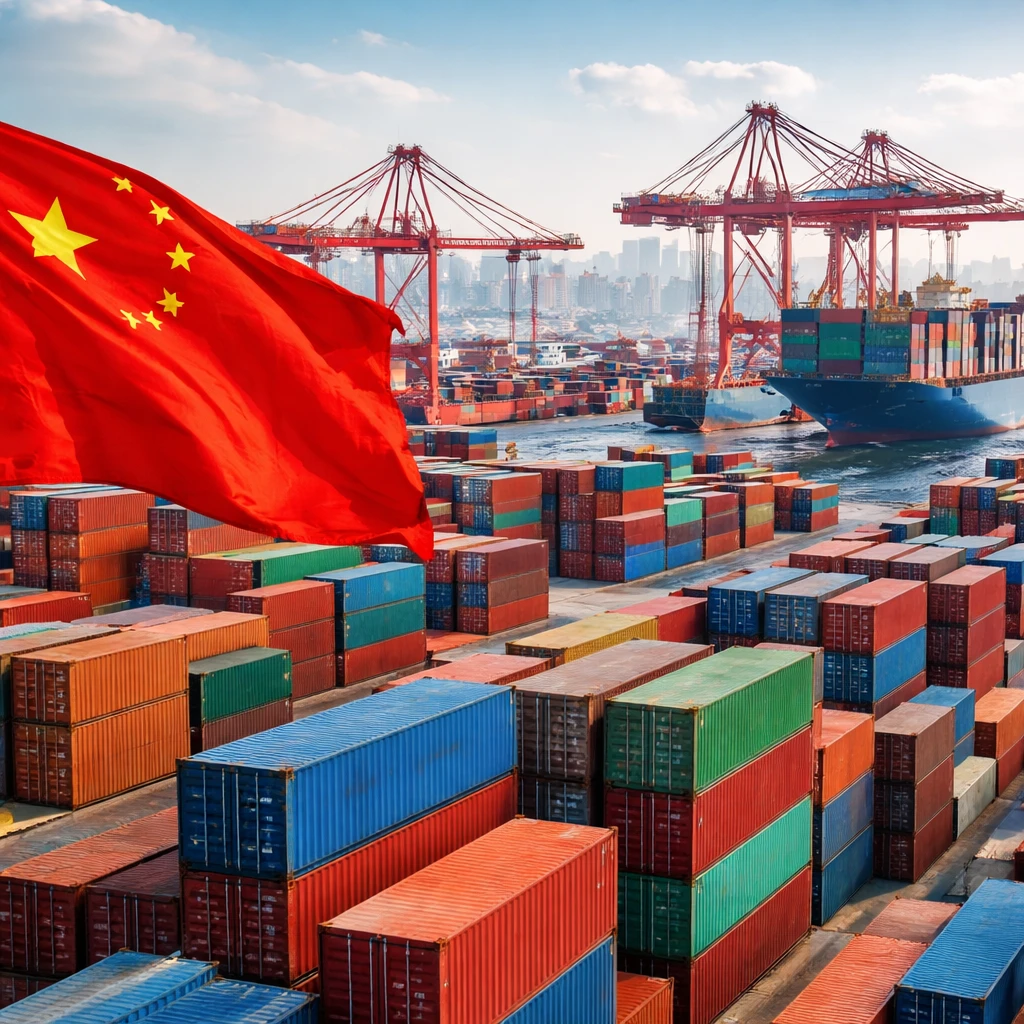
A notable driver of the economic resilience was a record trade surplus, reaching $1.2 trillion, fueled by vigorous exports which helped offset subdued consumer spending and investment from businesses. Nonetheless, the durability of this external demand as the main growth engine has raised questions among analysts.
Lynn Song, ING's chief economist for Greater China, noted that while U.S. tariffs introduced under President Donald Trump early in the year reduced exports to the United States, these losses were counterbalanced by increased shipments to other global markets. Yet, this surge has prompted some countries to impose protective measures, including heightened import duties, to shield local industries.
Expanding tariffs applied by economies such as Mexico and potential actions threatened by the European Union may intensify pressures on China's export sector in the future.
Despite repeated emphasis by Chinese leadership on invigorating domestic demand, policy measures like the trade-in program for newer, energy-efficient motor vehicles have shown diminishing momentum in recent months. Similarly, incentive schemes promoting replacement of home appliances like refrigerators, washing machines, and televisions continue, but analysts expect these may be scaled back moving into 2026.
Chi Lo, senior market strategist at BNP Paribas Asset Management, emphasized that stabilizing the domestic property market is vital to restoring consumer confidence and stimulating household consumption as well as private investment growth. Yet, economic realities at the grassroots level tell a more challenging story.
Many ordinary citizens and small business operators express concern about the economic environment. Liu Fengyun, a 53-year-old noodle restaurant proprietor in Guizhou province, reported noticeably reduced patronage. Customers increasingly cited financial hardship, opting to prepare meals at home instead, reflecting broader caution among consumers.
Such anecdotal accounts echo worries among some economists and researchers that official figures could overstate actual economic growth. For example, the Rhodium Group suggested in a recent analysis that China's 2025 expansion may have been closer to 2.5%-3%.
Comparatively, government statistics indicate growth rates of 5% in 2024 and 5.2% in 2023, with official growth targets having gradually declined over recent years from 6%-6.5% in 2019 to approximately 5% in 2025. Forecasts for 2026 anticipate further moderation, with Deutsche Bank projecting around 4.5% growth.
Maintaining economic stability is a key priority for China's central government, critical for social stability and responsible governance. Analysts like Neil Thomas of the Asia Society Policy Institute suggest that while social stability might be preserved even under slower growth rates, the leadership favors sustained expansion to support long-term objectives. China aims to achieve a GDP per capita of $20,000 by 2035, which would necessitate consistent annual growth in the 4%-5% range.