
In 2025, China recorded a 5% yearly growth in its economy, bolstered predominantly by vigorous export activities, even in the face of maintained tariffs from the administration of former U.S. President Donald Trump. This expansion rate aligns with the government’s target for the year, signaling a controlled yet steady economic development.
Despite this annual performance, the pace of growth in the fourth quarter slowed to 4.5%, marking the weakest quarterly increase since late 2022. That earlier period corresponded with the initial easing of stringent COVID-19 restrictions. The prior quarter saw a 4.8% annual growth, revealing a deceleration trend heading into the year-end.
China’s leadership has sought to accelerate economic growth following setbacks caused by a faltering real estate market and pandemic-related disruptions that impacted broader economic activities. The economy, ranking second largest globally, showed a quarterly expansion of 1.2% from October to December 2025.
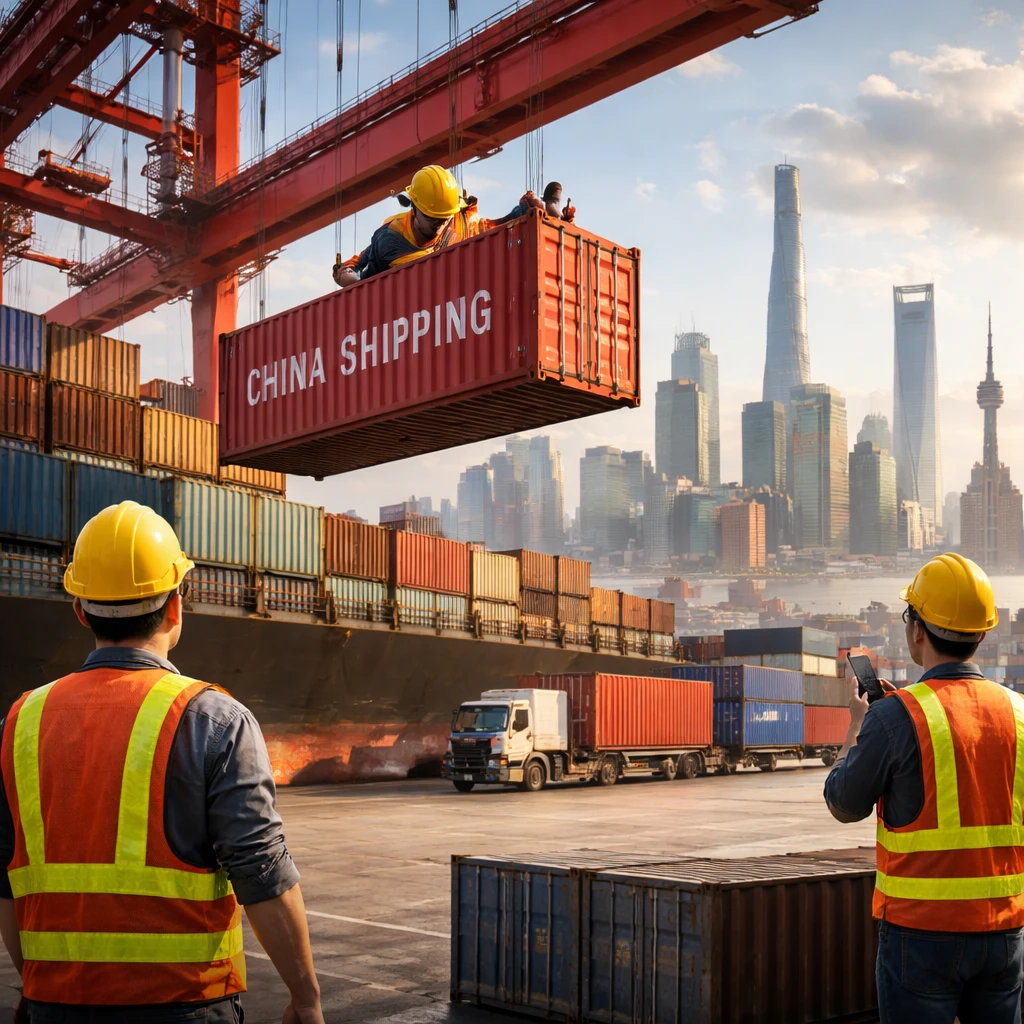
A significant driver underpinning this growth was robust exports, which counterbalanced subdued consumer expenditure and lower corporate investment levels. These export dynamics contributed to a record trade surplus of $1.2 trillion, indicating strong external demand amid lingering trade tensions.
Exports destined for the United States contracted after Trump’s return to office in early 2025 and the reinstatement of higher tariffs. Nevertheless, increased shipments to other global markets offset this decline. This surge in Chinese imports sparked protective responses from some countries, leading to elevated tariffs to shield domestic industries.
Despite the tariff-related headwinds, dialogue between U.S. President Trump and Chinese leader Xi Jinping to extend a tariff truce helped ease some pressure on Chinese export sectors. Still, exports from China to the U.S. dropped by 20% during 2025.
Lynn Song, the chief economist for Greater China at ING Bank, highlighted concerns about the sustainability of export-led growth. She noted that if more economies impose tariffs on Chinese goods, akin to Mexico and potentially the European Union, increased pressures on China's export-driven growth may materialize.
Efforts to strengthen domestic demand remain a strategic priority for Chinese policymakers, yet tangible effects have been limited. Programs such as vehicle replacement incentives intended to encourage energy-efficient purchases have seen diminishing engagement recently. Chi Lo, senior market strategist for Asia Pacific at BNP Paribas Asset Management, emphasized the domestic real estate market’s stabilization as a critical factor for restoring consumer confidence and encouraging household spending and private investment.
China also extended subsidies for exchanging home appliances like refrigerators, washing machines, and televisions. While these measures, pivotal in the consumer stimulus strategy for 2025, are set to continue into 2026, Weiheng Chen of J.P. Morgan Private Bank indicated that the scale of these subsidies could be reduced in the forthcoming year.
The Chinese Communist Party has maintained a focus on investments in artificial intelligence and other cutting-edge technology sectors to enhance self-reliance and international competitiveness, particularly against the United States backdrop. Meanwhile, ordinary citizens and small business owners face mounting uncertainties concerning job security and income prospects.
Liu Fengyun, a 53-year-old noodle restaurant owner from a small county in Guizhou province, voiced the challenges confronting small enterprises. Customers have shared their difficulties, remarking that earning money has become more complicated, and preparing breakfast at home is now more economical. Liu characterized the current environment as generally unfavorable, with pervasive financial hardships making everyday business operations daunting.
On Monday, Kang Yi, head of China’s National Bureau of Statistics, reported to journalists that despite significant pressures, the country’s economy progressed steadily throughout 2025 and retained solid bases to counter various risks.
Nonetheless, some experts and analysts question the official figures, suggesting that China’s real economic growth in 2025 may have been slower than reported. The Rhodium Group projected in a recent report that the economy's expansion likely ranged between 2.5% and 3%, lower than official data.
For context, China’s reported growth was 5% in 2024 and 5.2% in 2023. Over the past few years, official growth targets have moderated from 6-6.5% in 2019 to approximately 5% in 2025, reflecting shifting economic realities.
Looking ahead, forecasts anticipate a slower annual growth rate of around 4.5% in 2026, according to Deutsche Bank. A stable and robust economy is deemed essential for social stability, a primary concern for Chinese leaders. Though China could maintain social order with lower economic growth rates, Beijing reportedly aims to sustain continuous growth, with analysts noting that an annual growth ranging from 4% to 5% might be necessary to meet long-term GDP per capita goals by 2035.