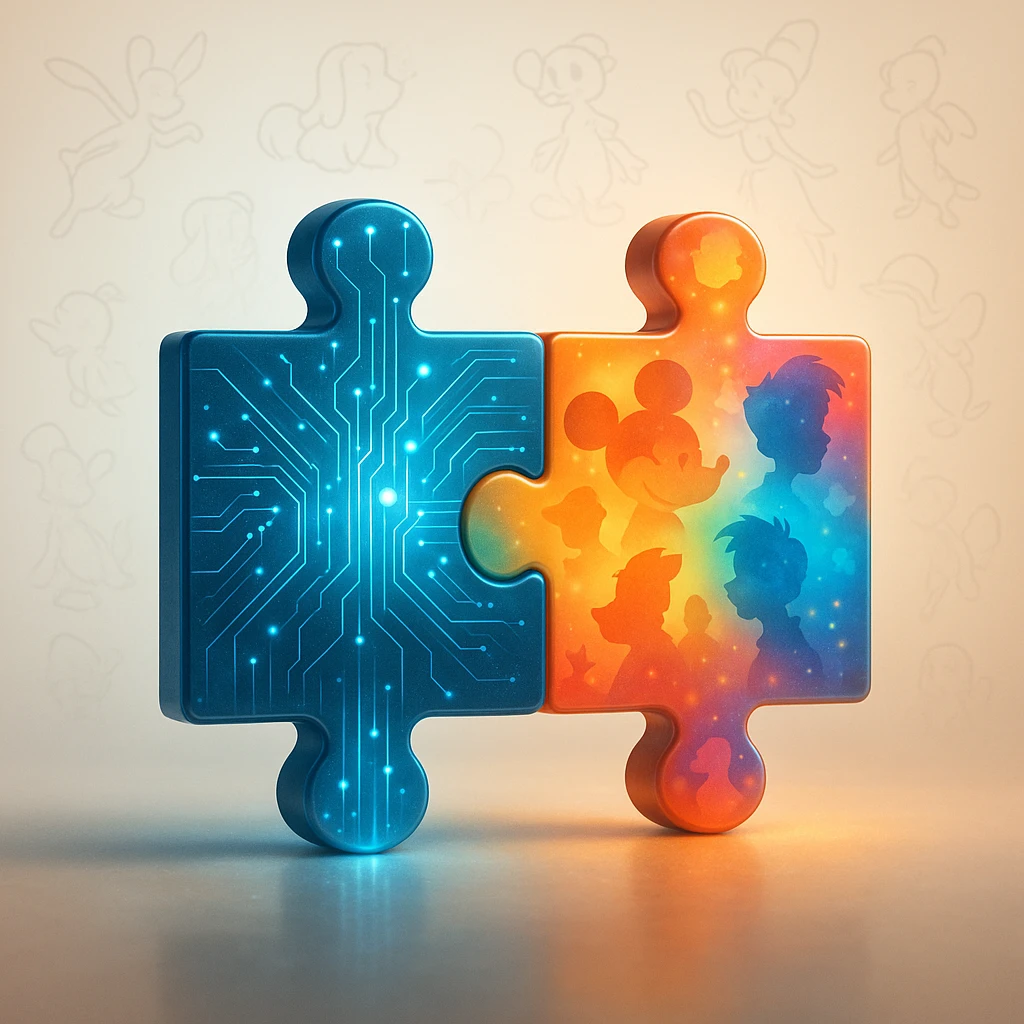

Disney and OpenAI Forge $1 Billion Partnership to Enable User-Generated Content Featuring Iconic Characters
December 11, 2025
Technology News

Disney and OpenAI Forge $1 Billion Partnership to Enable User-Generated Content Featuring Iconic Characters

Under a new licensing agreement, creators will access over 200 Disney, Marvel, Pixar, and Star Wars characters through OpenAI's Sora platform starting in 2026

Summary

The Walt Disney Company and OpenAI have formalized a multi-year, billion-dollar deal enabling users to generate and share short-form videos featuring a vast array of beloved Disney characters via OpenAI's Sora platform. This partnership grants access to more than 200 animated figures from Disney's franchises including Marvel, Pixar, and Star Wars, while excluding any use of talent likenesses or voices. Disney's significant investment also positions it as a major OpenAI customer. The announcement has drawn criticism from child advocacy groups concerned about the impact on young audiences.

Key Points

Disney and OpenAI have entered into a three-year licensing deal allowing users to create short-form video content featuring over 200 characters from Disney, Marvel, Pixar, and Star Wars franchises via the Sora platform.
The agreement explicitly excludes usage rights for talent likenesses and voices associated with the characters.
Disney is investing $1 billion in OpenAI and will become a major customer of the AI company.
Content creation through Sora incorporating Disney characters will be accessible starting in 2026.
The partnership reflects an effort to expand interactive storytelling and fan engagement through AI technology.
Child advocacy group Fairplay has criticized the deal, highlighting concerns about children's exposure and screen time.
Disney and OpenAI affirm commitments to protect creator rights and enforce content controls to prevent harmful or illegal material.
This collaboration signals a notable convergence of major media company assets with advanced AI content generation tools.

In a landmark agreement unveiled earlier this month, The Walt Disney Company has entered into a substantial licensing arrangement with artificial intelligence leader OpenAI. This three-year partnership empowers users to create and distribute short-form videos showcasing over 200 animated personalities from Disney's expansive intellectual property roster. Core franchises in this collaboration include revered titles from Disney, Marvel, Pixar, and Star Wars, opening new avenues for interactive storytelling on OpenAI's Sora video generation platform.

The agreement notably excludes rights to the likenesses or voices of actors behind the characters, delineating clear boundaries around talent representation. Moreover, this deal includes a significant financial commitment, with Disney investing $1 billion into OpenAI and becoming a principal customer of the company. This infusion highlights Disney's strategic move to integrate AI-driven content creation within its digital ecosystem while leveraging OpenAI's cutting-edge technology.

For consumers and creators alike, the impending availability of Sora's Disney-licensed content marks a shift in how fans can engage with beloved stories and characters. Starting in 2026, the platform will enable video content generation featuring iconic figures such as those from the film Zootopia, among others, thereby expanding creative possibilities beyond traditional media formats.

Yet, despite the technological optimism surrounding this partnership, it has attracted criticism from advocacy organizations concerned with children's screen time. The nonprofit Fairplay expressed apprehension, warning that the alliance "betrays kids" by potentially encouraging young audiences to engage with an AI platform that OpenAI itself restricts. Fairplay's statement underscored the contradiction in attracting children through beloved characters while officially prohibiting child access to Sora, accusing Disney of facilitating this dynamic.

In response to such concerns, Disney and OpenAI have jointly emphasized their shared dedication to protecting creators' rights and implementing stringent safeguards to prevent the creation or dissemination of unlawful or harmful materials via Sora. These measures are positioned as essential to responsible platform governance in the context of AI-generated content.

The integration of Disney's characters into Sora also reflects broader industry trends wherein media conglomerates explore artificial intelligence to augment fan interaction and storytelling. However, the partnership balances innovation with regulatory and ethical considerations, particularly relating to content moderation and child protection.

As the entertainment and technology sectors monitor the rollout of these capabilities, the collaboration between Disney and OpenAI is poised to influence how audiences consume and contribute to media narratives. The platform's launch with licensed Disney content underscores a significant evolution in user-generated entertainment tools backed by major corporate players.

Critiques notwithstanding, the deal represents a substantial milestone—both financially and strategically—for OpenAI, while offering Disney a foothold in emergent AI content creation markets. Users will be watching closely when, in 2026, Sora opens its creative suite to include this expansive library of characters, framing the future landscape for AI-powered media experiences.

Risks
  • The exclusion of talent likeness and voice rights may limit the authenticity or appeal of character representations created by users.
  • Child advocacy groups warn that the partnership may inadvertently encourage children to use an AI platform that OpenAI officially prohibits for underage users.
  • The spread of AI-generated content raises concerns about managing illegal or harmful content despite stated safeguards.
  • There is potential backlash from audiences or stakeholders who may disagree with or feel uneasy about AI-generated use of beloved characters.
  • The effectiveness of content control mechanisms on the Sora platform remains to be tested upon deployment.
  • The reliance on AI for content creation could present unforeseen challenges around intellectual property and ethical use of characters.
  • Public perception of Disney's role in promoting AI content platforms may affect its brand reputation among families and advocacy groups.
  • Technological and regulatory hurdles may affect the timely rollout or success of the platform's Disney character features.
Disclosure
Education only / not financial advice
Search Articles
Category
Technology News

Technology News

Related Articles
Zillow Faces Stock Decline Following Quarterly Earnings That Marginally Beat Revenue Expectations

Zillow Group Inc recent quarterly results reflect steady revenue growth surpassing sector averages b...

Coherent (COHR): Six‑Inch Indium Phosphide Moat — Tactical Long for AI Networking Upside

Coherent's vertical integration into six-inch indium phosphide (InP) wafers and optical modules posi...

Buy the Dip on AppLovin: High-Margin Adtech, Real Cash Flow — Trade Plan Inside

AppLovin (APP) just sold off on a CloudX / LLM narrative. The fundamentals — consecutive quarters ...

Oracle Shares Strengthen Amid Renewed Confidence in AI Sector Recovery

Oracle Corporation's stock showed notable gains as the software industry experiences a rebound, fuel...

Figma Shares Climb as Analysts Predict Software Sector Recovery

Figma Inc's stock experienced a notable uptick amid a broader rally in software equities. Analysts a...

Charles Schwab Shares Slip Amid Industry Concerns Over AI-Driven Disruption

Shares of Charles Schwab Corp experienced a significant decline following the introduction of an AI-...