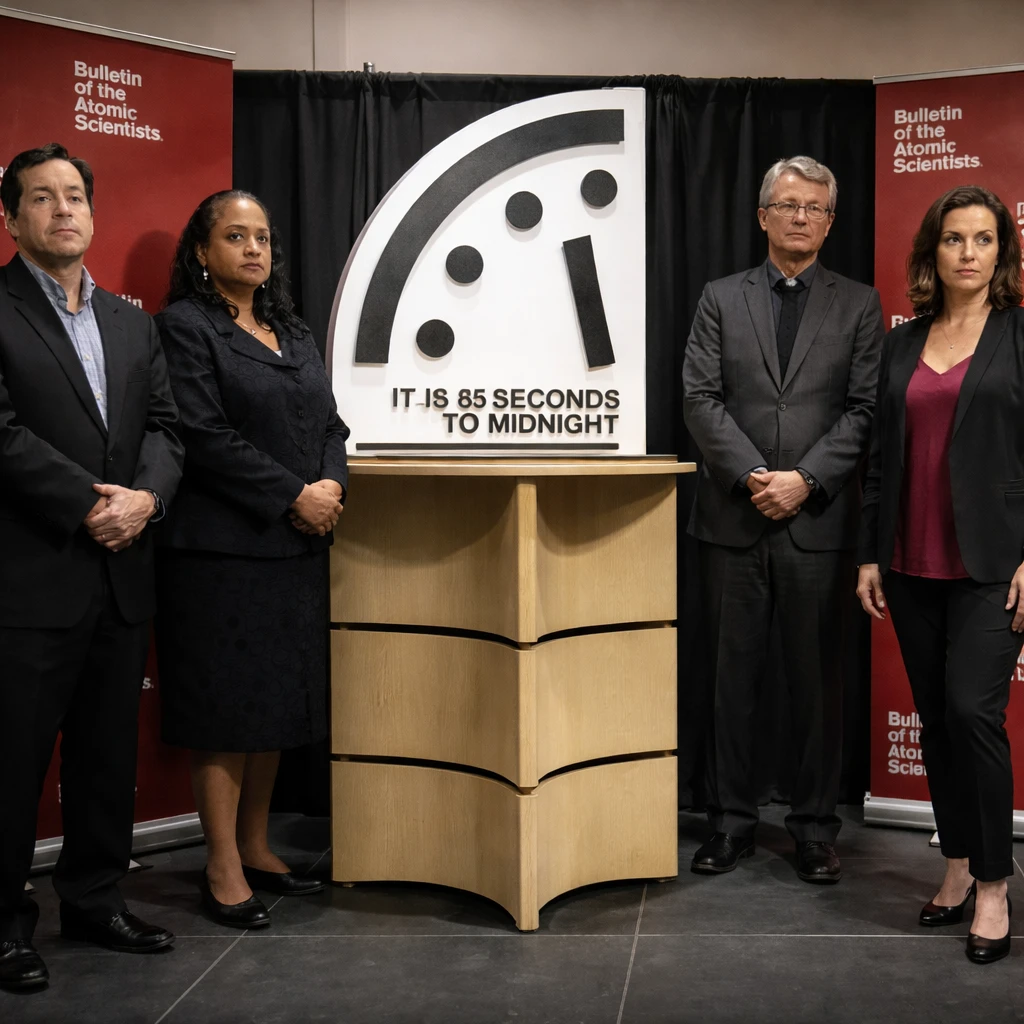

In an unprecedented assessment, the Bulletin of the Atomic Scientists revealed on Tuesday that Earth is now only 85 seconds away from 'midnight,' a symbolic representation of global catastrophe. This adjustment marks the closest proximity to destruction since the clock’s inception.
The organization cited an escalating environment of aggression and nationalism among global powers including Russia, China, and the United States. These dynamics have intensified geopolitical rivalries and contributed to a breakdown in essential international cooperation.
Among the paramount concerns influencing the clock’s shift are the heightened risks of nuclear conflict, the accelerating impacts of climate change, the potential for misuse of emerging biotechnologies, and the rapid advancement of artificial intelligence without adequate governance frameworks.
Reflecting on recent events, the group expressed alarm over the ongoing Russia-Ukraine war, confrontations between nuclear-armed neighbors India and Pakistan in May, and uncertainties surrounding Iran’s nuclear capabilities following US and Israeli strikes last summer.
The Bulletin underscored that these developments undermine 'hard-won global understandings' that have historically acted as bulwarks against existential threats. The resurgence of a winner-takes-all attitude among major powers is exacerbating tensions and precipitating a global environment less conducive to cooperative risk mitigation.
Daniel Holz, chair of the group’s Science and Security Board, emphasized the fundamental need for international trust and collaboration. Cautioning against a divisive zero-sum mindset, Holz stated that such fragmentation increases the probability of mutual loss.
The report also highlighted environmental crises manifesting in severe droughts, heat waves, and flooding—events linked to ongoing global warming. It criticized the failure of nations to enact and adhere to meaningful climate agreements, pointing specifically to policy directions that favor fossil fuel expansion at the expense of renewable energy advancement.
Since its establishment in 1947, the Doomsday Clock has served as a metaphorical device tracking humanity’s proximity to self-inflicted annihilation. During the Cold War’s peak, the clock was positioned as far as 17 minutes to midnight. In recent years, in response to rapid and multifaceted global changes, the metric has shifted to measuring this threat in seconds rather than minutes.
The Bulletin concluded that while the current proximity to catastrophe is alarming, it remains possible to reverse this trend. Effective leadership and international cooperation focused on addressing these existential risks can potentially move the clock backward.