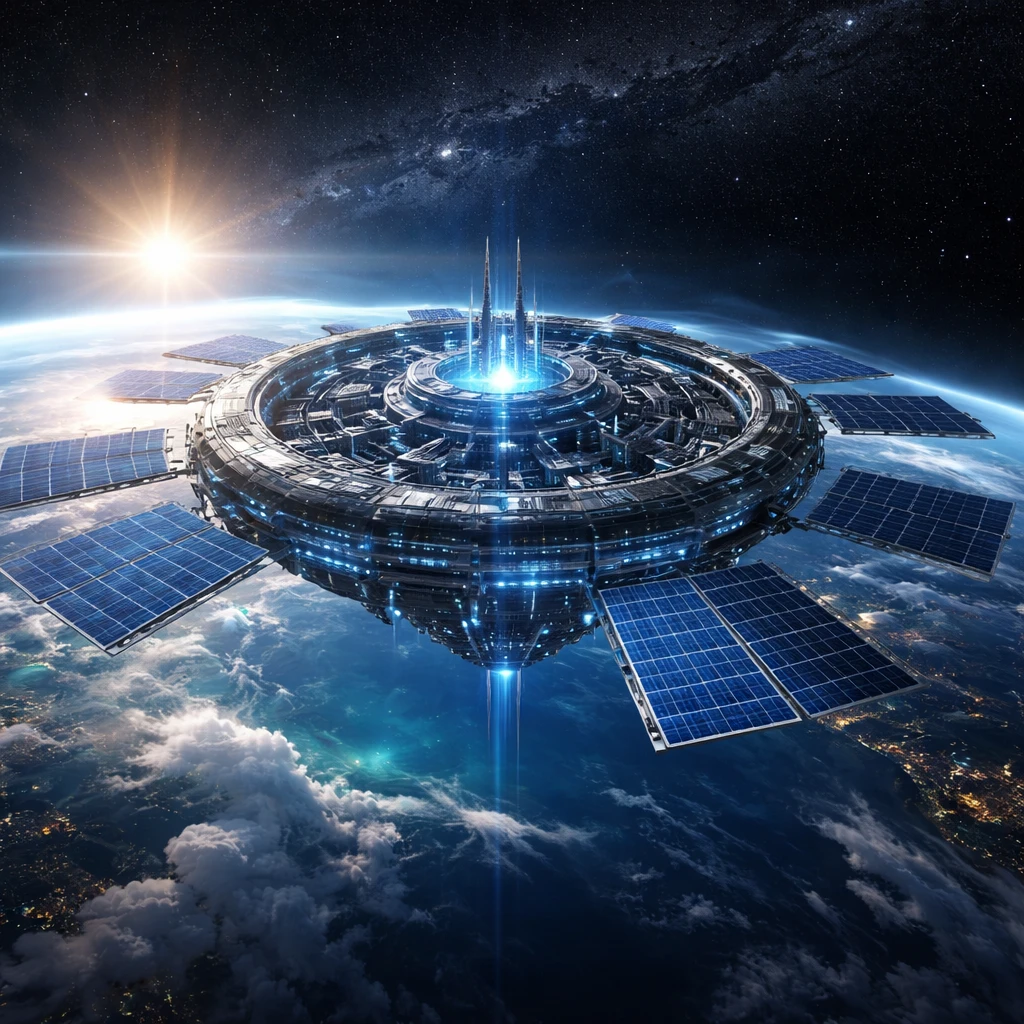

Elon Musk has put forward an ambitious plan aimed at addressing the complex challenges of constructing and operating artificial intelligence (AI) data centers on Earth by shifting these centers into outer space. This week, Musk merged his aerospace company, SpaceX, with his AI venture, xAI, potentially paving the way for this revolutionary endeavor. Musk’s vision reflects a growing belief within the technology sector that space could provide the expansive resources required to sustain the burgeoning demands of AI infrastructure.
When announcing the merger on Monday, Musk emphasized the rationale for considering space as an alternative to terrestrial facilities. "The only logical solution... is to transport these resource-intensive efforts to a location with vast power and space. I mean space is called ‘space’ for a reason," he stated. The premise rests on the understanding that AI systems require substantial power and cooling resources, often straining local grids and natural resources.
This concept follows Musk’s track record of pioneering bold technological projects, such as popularizing mass-market electric cars and innovating reusable rocket engines that facilitate cost-effective space travel. Notably, Musk is not isolated in his outlook. Key industry players, including Google and OpenAI, are similarly exploring the feasibility of orbitally based AI data centers, viewing space as fertile ground for next-generation computing platforms.
David Bader, a distinguished professor of data science at New Jersey Institute of Technology, points out a pressing issue: "We are tending to exceed the ability to generate the power (needed)" for AI operations. He highlights the necessity to look beyond terrestrial constraints toward solutions in space that can provide ample power and cooling.
The physical environment of space offers distinct advantages. Solar energy, which powers these facilities, is more abundant beyond Earth’s atmosphere. Solar panels in certain orbital positions can generate up to eight times the energy compared to panels on the ground and maintain near-continuous operation without interruptions caused by the day-night cycle. Furthermore, the natural cold of space can help mitigate the intensive cooling requirements of AI processors, a factor that currently demands vast quantities of water and electricity when centers operate on land.
A Deutsche Bank Research analyst highlighted these attributes in a recent note, describing the challenges as principally engineering in nature rather than physical impossibilities. Several companies are actively experimenting with designs and technologies to make orbital AI data centers viable.
Illustrating this momentum, Google unveiled plans last November to pilot orbital AI data centers by deploying two trial satellites as early as the next year. Their spokesperson underscored the superior productivity of solar panels in orbit and the potential for space to become the optimal location for scaling AI compute power in the future.
Similarly, OpenAI’s CEO Sam Altman reportedly considered acquiring Stoke Space, a rocket startup, to facilitate orbiting data centers. Washington-based AI startup Starcloud also stepped into the arena by launching a test satellite equipped with an AI server aboard a SpaceX rocket in November. Starcloud’s CEO Philip Johnston envisions that within a decade, all new AI data centers will be situated in space, which could alleviate terrestrial resistance to data center construction and its associated environmental impacts.
Indeed, the environmental footprint of Earth-bound data centers raises concerns. Powering these centers consumes tremendous electricity, driving up consumer costs. An analysis by Bloomberg News found that regions near data centers experienced electricity price surges of up to 267% compared to five years prior. While exact figures remain elusive due to inconsistent data center usage reporting, experts acknowledge rising energy expenses in communities hosting these facilities.
Beyond electricity, data centers place heavy demands on water resources. According to the Environmental and Energy Study Institute, a single large data center can consume as much as 5 million gallons of water per day, equivalent to the water usage of small towns housing tens of thousands of residents. These consumption levels exacerbate local resource scarcity and fuel political pushback against further data center developments.
Mark Muro, a senior fellow at Brookings Metro, summarized the dilemma succinctly: "The Earth may be becoming a complicated place for Big Tech’s data center development." He noted that regulatory and community opposition increasingly hinders approvals for new constructions. Consequently, Big Tech must explore alternative solutions to meet the escalating gigawatt-scale power needs inherent to AI progression.
Musk has projected that space-based data centers will become more cost-effective than terrestrial ones within two to three years. However, expert perspectives diverge. Deutsche Bank anticipates that parity will not be achieved until well into the 2030s, pointing to technical challenges and economic factors that may delay widespread adoption.
David Bader expresses measured optimism, suggesting that while a two to three-year timeline is ambitious, he expects regular deployment of space-based AI computing within three to five years. This assessment reflects the ongoing reduction in satellite launch costs juxtaposed against rising operational expenses of terrestrial AI data centers.
The drive to relocate AI infrastructure orbitally stems from a confluence of factors: soaring energy and water consumption on Earth, increasing costs to consumers and companies alike, and growing environmental and political constraints. While the endeavor presents significant engineering complexities, the convergence of technology advancements and market pressures renders the pursuit increasingly plausible.