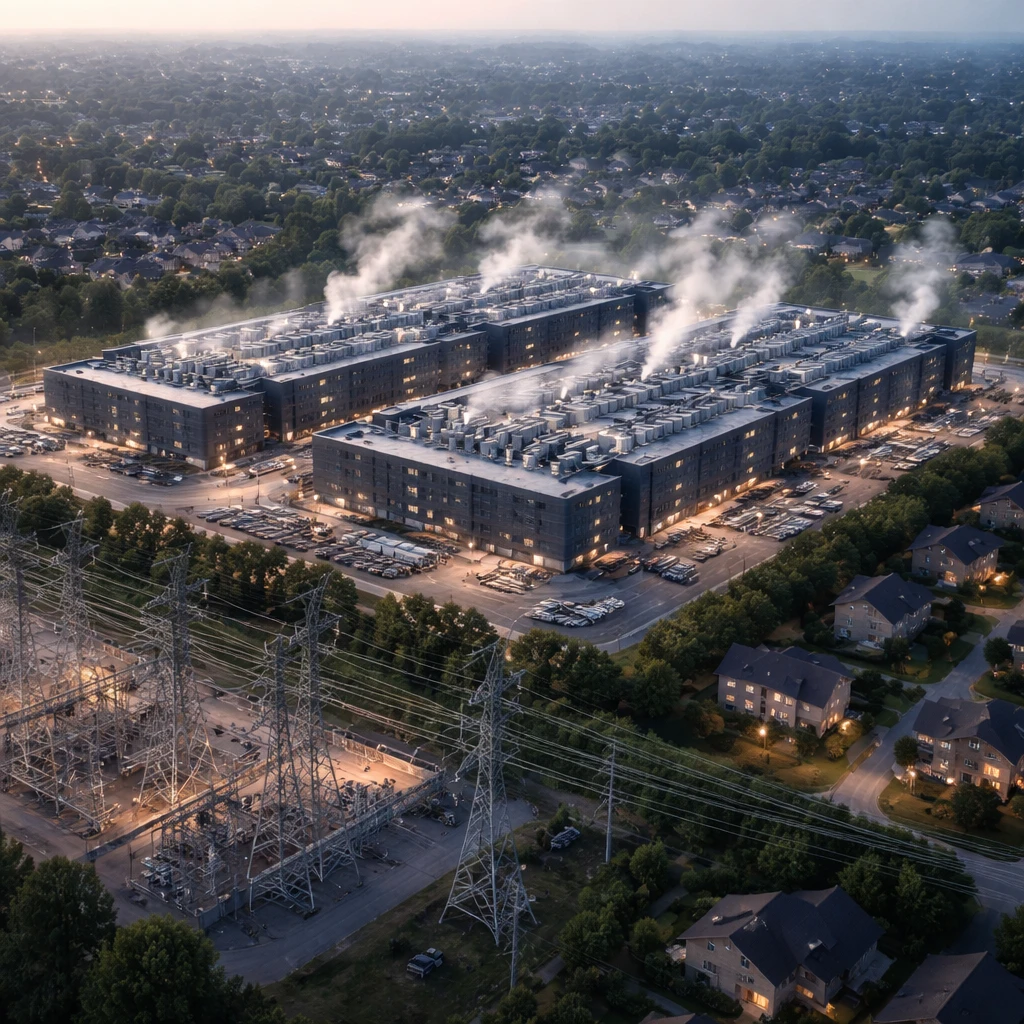

The race among leading technology companies to build and scale data centers capable of supporting artificial intelligence workloads has led to an unprecedented surge in power consumption across the United States. This expansion has sparked debate regarding the readiness of the nation's electrical infrastructure, which in many areas is aging and may be ill-equipped to handle the increasing demands.
In response to rising electricity costs and concerns about capacity, government officials at both the federal level and in northeastern states have appealed to PJM Interconnection, the largest electric grid operator in the country, seeking measures to mitigate the financial impact on consumers. These officials have proposed that PJM conduct an emergency power auction involving large technology firms that operate extensive data center facilities to share the growing costs of electricity. Notably, PJM indicated it had not been provided prior notice of this suggested strategy, underscoring the complexity involved in balancing regional grid operations with nationwide economic and political pressures.
Data centers, integral to supporting cloud computing and AI services, are strategically located in areas with advantageous energy access. The northern Virginia region exemplifies this trend, boasting the world's largest concentration with 561 data center establishments spread across 23 markets, according to research from Data Center Map. Beyond Virginia, emerging clusters are being developed in cities such as Denver, Los Angeles, and locations within Pennsylvania, intended to relieve pressure on densely concentrated power grids.
Investment incentives are also influencing site selection. States like Ohio offer financial benefits including sales tax exemptions to attract data center projects. This economic enticement forms part of a wider pattern, encouraging companies to locate infrastructure where energy supply is abundant and grid strain is comparatively low.
Major players in the technology sector have committed substantial capital expenditures towards expanding their data center footprints, highlighting the emphasis on AI capabilities within their strategic plans. Meta reported $17 billion in related capital outlays in the quarter ending June 2025, while Microsoft disclosed $24.2 billion for the quarter ending June 2024. Meanwhile, Amazon plans an additional $15 billion investment to build new data campuses in Northern Indiana, augmenting its prior $11 billion commitment in 2024. Industry analysts estimate that annual spending on data center construction in the United States reached approximately $40 billion by mid-2025.
The substantial increase in power demand associated with these facilities is influencing electricity pricing, particularly among residential customers. Data from the Energy Information Administration indicated a 5.2% rise in average residential electricity rates in October 2025 compared to the previous year. Moreover, regions in proximity to data centers have experienced electricity cost escalations of up to 267% over the past five years, as analyzed by Bloomberg News in 2024.
Ryan Hledik, a principal adviser with the consulting firm Brattle Group, attributes this trend in part to data center operations placing additional strain on regional grids. However, he notes that price trajectories can vary depending on local grid conditions; if data centers are established in areas with excess power capacity or operate during off-peak hours, electricity prices may stabilize or decline. Furthermore, the broader aging condition of the U.S. electrical infrastructure contributes to rising costs, particularly within distribution networks that have experienced increased investment requirements following supply chain disruptions during the pandemic.
Looking forward, energy consumption by data centers is expected to grow substantially if current trends persist. A Department of Energy report published in late 2024 projects that by 2028, data centers could account for between 6.7% and 12% of total U.S. electricity usage, a notable increase from 4.4% in 2023. Some utility companies have proactively addressed these challenges by enacting specialized rates for large customers, aiming to balance grid stability and economic fairness.
States are increasingly legislating to ensure that data centers contribute appropriately to grid costs. Oregon has enacted legislation mandating that data centers bear the cost of the actual grid strain they impose. Likewise, Microsoft has expressed its intention to accept higher electricity charges in markets where it constructs data centers.
In addition to energy consumption, these facilities have significant water usage requirements, primarily for cooling their operational equipment. McKinsey & Company references forecasts from WestWater Research indicating data center water demand may increase by approximately 170% by 2030. Cooling needs extend beyond the data centers themselves, encompassing thermal power plants that support electricity generation for these high-demand customers.
These dynamics raise important considerations about the sustainable coexistence of data centers and local communities. Industry experts emphasize the need to develop frameworks that ensure benefits are broadly shared rather than allowing disproportionate strain on residential populations and municipal resources.