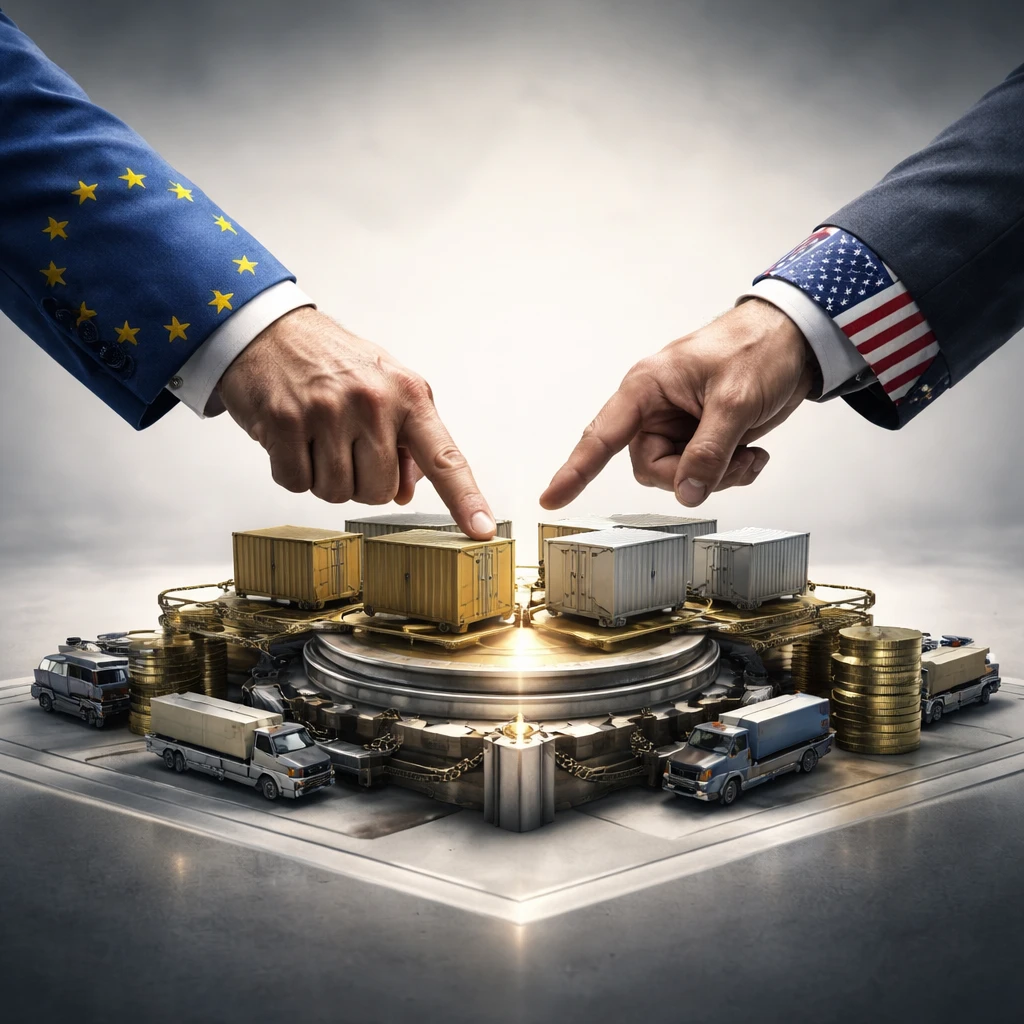

The European Union is currently contemplating a multifaceted approach to respond to the U.S. tariffs threatened as a consequence of its opposition to President Donald Trump's Greenland plans. Among the options under consideration are economic retaliations in the form of trade measures, scaling back collaborative defense initiatives, and the notable prospect of deploying a powerful tool dubbed the 'bazooka' trade instrument.
This 'bazooka' mechanism, which was formally adopted in 2023 but has not yet been activated, is designed to provide the EU with expansive authority to counteract coercive trade actions. It empowers the European bloc to impose restrictions on exports, enact tariffs specifically targeting service sectors, enforce tighter controls over intellectual property protections, and even bar American companies from bidding on public procurement projects within European markets.
Despite the arsenal of options, no substantial retaliatory measures are anticipated prior to the U.S. tariffs becoming effective on February 1. For the EU to implement the 'bazooka,' the European Commission requires endorsement from a qualified majority of member states. This necessitates approval from just over half of the EU countries and represents at least 65% of the Union’s population.
Amid these deliberations, French President Emmanuel Macron has reportedly expressed intentions to advocate strongly for the activation of this anti-coercion mechanism during EU discussions. EU Commission President Ursula von der Leyen has communicated with key leaders including Macron, Italian Prime Minister Georgia Meloni, UK Prime Minister Keir Starmer, and German Chancellor Friedrich Merz, collectively affirming solidarity concerning the Greenland issue.
Notably, U.S. Trade Representative Jamieson Greer has encouraged the European Union to isolate the Greenland tariff issue from the broader U.S.-EU trade agreement framework. He suggested the EU could compartmentalize the Greenland dispute, preventing it from escalating into a wider political trade confrontation.
This situation holds particular significance given the recent U.S.-EU trade agreement established in July, which projected economic benefits including support for U.S.-based liquefied natural gas (LNG) exporters and advancements within the technology sector. The agreement commits the EU to purchasing $750 billion worth of U.S. energy supplies over a three-year span alongside an additional $600 billion investment in the U.S. economy.
The complex interplay of trade dynamics, political communications among European leaders, and ongoing U.S. tariff threats highlights the delicate balance facing transatlantic economic relations. The EU’s careful consideration of deploying its comprehensive 'bazooka' mechanism illustrates the gravity attributed to the Greenland conflict and its potential ramifications for broader trade cooperation.