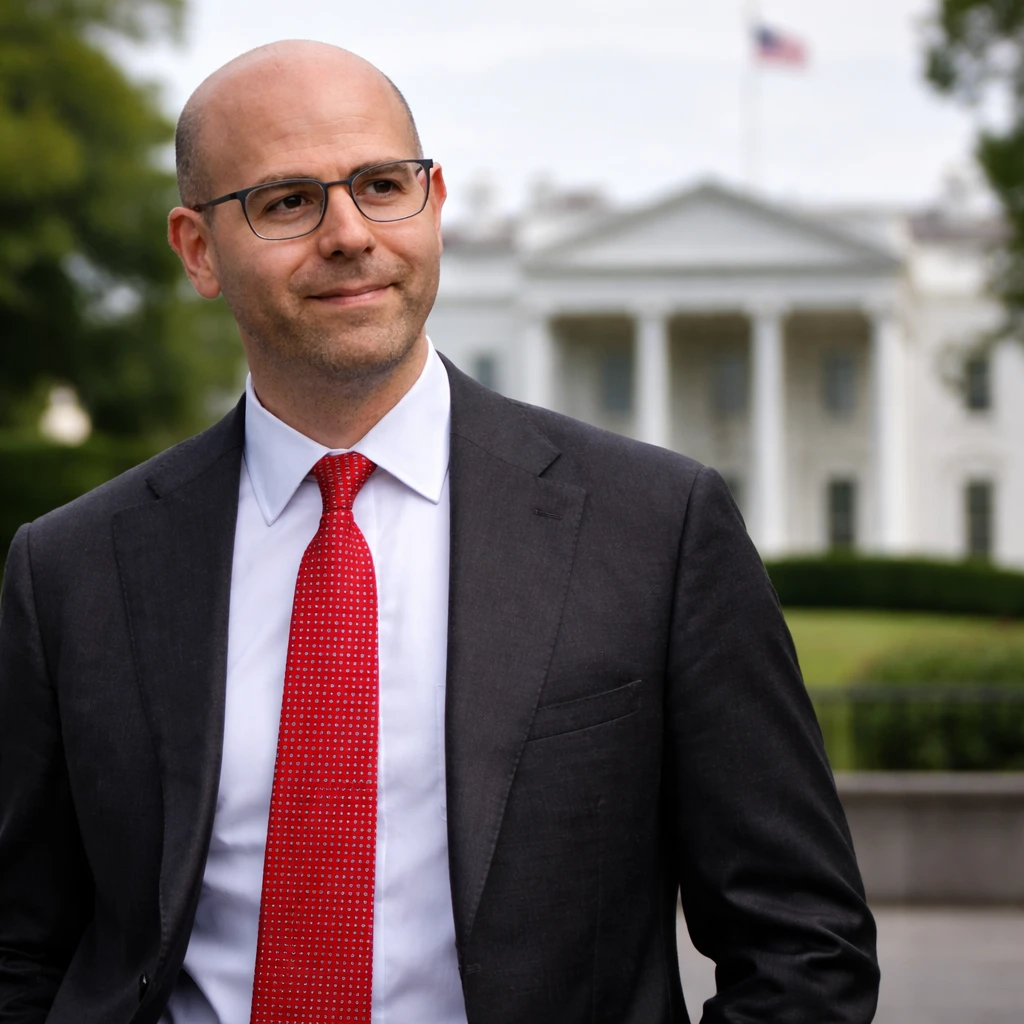

Federal Reserve's Stephen Miran Resigns from White House Council Position
February 3, 2026
News & Politics

Federal Reserve's Stephen Miran Resigns from White House Council Position

Miran's departure signals clear separation between Fed duties and White House advisory role amid leadership transitions

Summary

Stephen Miran has officially resigned as chair of the White House Council of Economic Advisers (CEA), concluding an unusual dual-role tenure while continuing as a Federal Reserve governor. His decision aligns with commitments made during his Senate confirmation and reflects longstanding traditions separating Federal Reserve responsibilities from partisan White House roles. Miran's resignation comes amidst ongoing Federal Reserve leadership changes under President Trump's administration, with implications for bank regulatory policies and monetary decisions.

Key Points

Stephen Miran has resigned as chair of the White House Council of Economic Advisers, retaining his position as a Federal Reserve governor until a successor is confirmed.
Holding simultaneous positions at the Federal Reserve and in the White House is uncommon; Miran’s case prompted an unpaid leave from the White House role and a pledge to resign from the CEA if remaining on the Fed board past January 31.
Federal Reserve leadership is in flux with President Trump nominating Kevin Warsh to replace Jerome Powell as Fed chair, amid structural nuances affecting board membership continuity.

Stephen Miran has stepped down from his position leading the White House Council of Economic Advisers (CEA), effectively ending the rare circumstance of simultaneously holding high-level positions at both the Federal Reserve and the White House. The White House confirmed Miran's resignation late Tuesday through spokesman Kush Desai.

Initially appointed by President Donald Trump in September to the Federal Reserve's seven-member Board of Governors, Miran took the role following the sudden resignation of Adriana Kugler, who had been appointed by President Joe Biden. Miran served out the remainder of Kugler's term, which concluded on January 31. Despite his resignation from the White House advisory post, Miran retains his seat on the Federal Reserve board until the Senate confirms a successor.

This dual appointment was notable because it diverged from the conventional practice of maintaining the Federal Reserve as a nonpartisan institution separated from White House staff roles. While it is not unprecedented for U.S. presidents to select aides for the Fed, it has been customary in recent decades for appointees to resign from their White House duties prior to confirmation to the Federal Reserve. To manage this anomaly, Miran took an unpaid leave from the White House job during his Federal Reserve tenure.

At the time of his appointment in September, Miran stated his intention to relinquish the CEA chairmanship should he remain on the Fed board past the end of Kugler's term. This pledge was reiterated as his resignation materialized in late January. Fed governors hold considerable influence, voting on monetary policy decisions and bank regulatory matters.

Following Miran’s resignation announcement, White House spokesperson Desai remarked, "In accordance with the pledge he made to the Senate during his confirmation to the Federal Reserve’s Board of Governors, Stephen Miran has submitted his resignation from the Council of Economic Advisers." This development highlights the complex personnel dynamics surrounding the Federal Reserve’s leadership.

Within the broader scope of Fed leadership transitions, President Trump has nominated Kevin Warsh, a former Fed official, to succeed current Federal Reserve Chair Jerome Powell. Powell’s term as chair is scheduled to conclude on May 15. It is important to note a structural peculiarity within the Federal Reserve system that may allow Powell to remain on the board even after his chairmanship ends, potentially limiting the President’s ability to immediately appoint a new board member for that seat.

Observers anticipate that in such a scenario, Warsh could first fill the seat vacated by Miran and subsequently be elevated to chairmanship to succeed Powell in May. However, this sequence remains unconfirmed. The evolving situation has significant implications for monetary policy direction and regulatory oversight affecting banking and financial markets.

Risks
  • Potential uncertainty in Federal Reserve leadership transitions could influence monetary policy decisions affecting financial markets and banking regulations.
  • The unusual overlap of Fed governance and White House advisory roles may raise concerns about the independence and nonpartisanship expected in Federal Reserve policymaking.
  • Pending Senate confirmations and structural board arrangements may delay or complicate the appointment of new Federal Reserve leaders, impacting regulatory policy clarity.
Disclosure
The article conveys facts based on official announcements and statements without speculation. No forward-looking statements or investment advice are provided.
Search Articles
Category
News & Politics

News & Politics

Related Articles
FDA Initiates Review of BHA Food Additive Safety

The U.S. Food and Drug Administration (FDA) has announced plans to conduct a comprehensive reassessm...

Treasury Secretary Highlights Urgency for Crypto Regulatory Clarity Amidst Coinbase Opposition

In light of recent fluctuations in cryptocurrency markets, U.S. Treasury Secretary Scott Bessent emp...

UBS Adjusts Tech Sector Outlook, Advocates Diversification Into Healthcare and Financials

UBS has revised its stance on the U.S. information technology sector from attractive to neutral, hig...

Leadership Turmoil Deepens in Elon Musk's Companies Amid Wave of Executive Departures

In the early months of 2026, several key executives have stepped down from leadership roles within E...

U.S. Risks Losing Edge in AI Innovation Due to Fragmented Regulation, Warns White House AI Coordinator

David Sacks, the White House AI and crypto coordinator, cautioned that the United States might fall ...

Coca-Cola Company Delivers Steady Growth Amid Leadership Transition and Market Challenges in Q4 2025

The Coca-Cola Company reported its financial results for the fourth quarter of 2025, highlighting st...