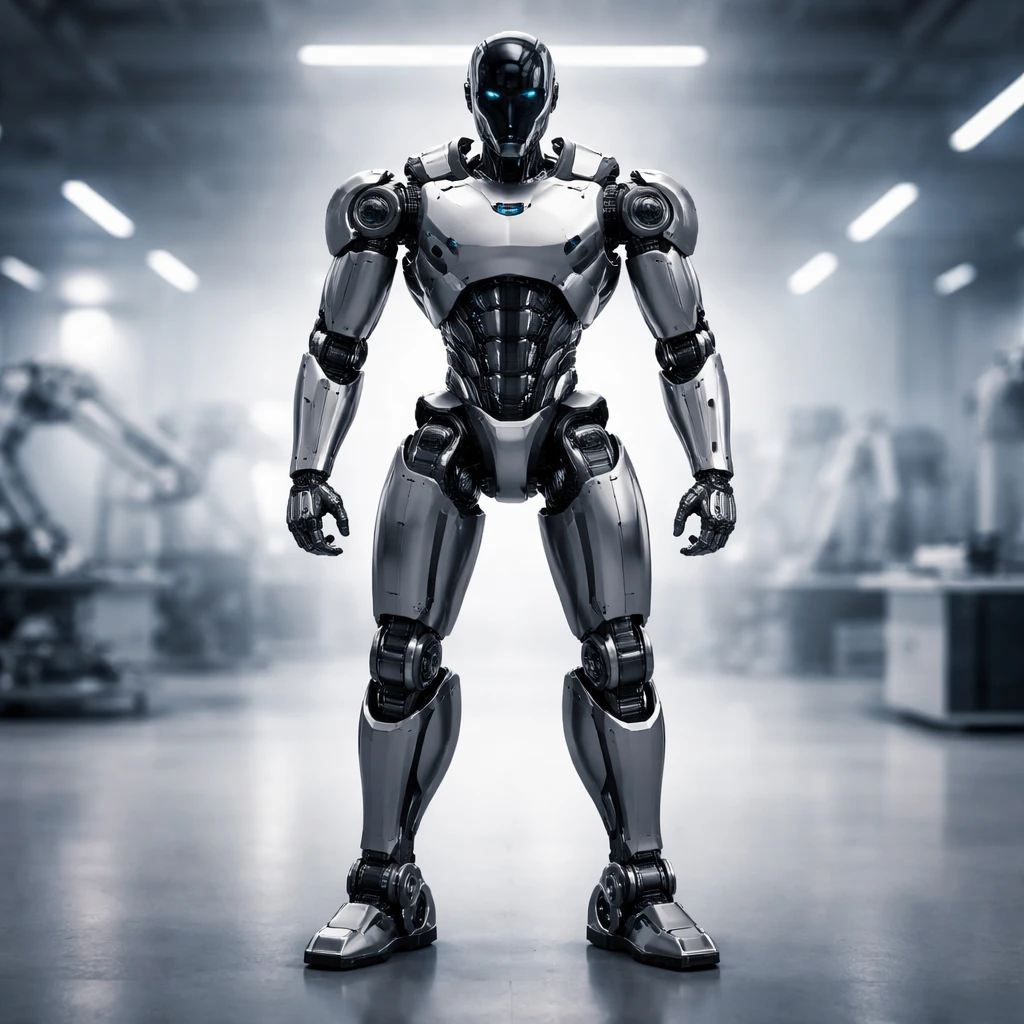
Tesla, known predominantly for its electric vehicles (EVs), has undergone several strategic refinements over its corporate history. After experiencing a downturn marked by two consecutive years of falling unit sales, Tesla's focus has notably shifted towards advancing autonomous technologies. This includes the development of its robotaxi network and the humanoid Optimus robot. From an investment viewpoint, this pivot appears to have resonated well with the market. As of January 27, Tesla's shares were near historic peaks, with the company's valuation approaching $1.5 trillion. This occurs despite relatively stagnant growth metrics and decreasing profit margins over the preceding two years. Investors have largely embraced the vision of Elon Musk, anticipating Tesla as a frontrunner in the expansive domain of autonomous vehicles and robotics.
However, Tesla is not the sole player in the robotic innovation arena. Boston Dynamics, a robotics firm that was valued at approximately $1 billion around five years ago, presently emerges as a significant competitor in the autonomous robot sector. This company is predominantly owned by Hyundai Motor Group, which acquired an 80% stake in Boston Dynamics from SoftBank in June 2021, pricing the firm at about $1.1 billion at that time.
Boston Dynamics may not yet be a common household name, but many have encountered its creations through widespread online videos. Its product lineup includes Spot, a four-legged, dog-like robot launched commercially in 2020; Stretch, designed for warehouse automation particularly handling boxes; and Atlas, a humanoid robot recently honored as the best robot at the 2026 Consumer Electronics Show (CES). A panel of over 40 experts organized by CNET Group evaluated various humanoid robots showcased at CES and recognized Boston Dynamics' Atlas for its superior natural walking gait and readiness for deployment. The company anticipates it will be operational within Hyundai’s manufacturing facilities starting this year, potentially impacting vehicle production processes.
Comparing Atlas and Tesla’s Optimus reveals some distinctions. Although neither robot has yet reached the consumer market, Atlas appears poised for earlier commercial deployment. Boston Dynamics is initiating production with plans to manufacture tens of thousands of Atlas units for use in Hyundai factories. Additionally, it has partnered with Google DeepMind to incorporate advanced AI foundation models into the robot's capabilities. Industry consensus indicates Atlas leads in mobility and agility, and absent unexpected developments, will likely be the first to market. Tesla proponents emphasize its strengths in artificial intelligence and software; nevertheless, Atlas too offers autonomous functionalities, challenging the assumption of Tesla’s superiority in this regard.
This dynamic suggests Tesla now faces substantial competition in humanoid robotics, with a credible argument that Boston Dynamics may have taken the lead in certain performance and operational areas. Given Boston Dynamics’ relatively modest valuation half a decade ago, the present scenario poses an intriguing valuation question: either Tesla's Optimus is significantly overvalued by the market, or Hyundai secured an advantageous acquisition deal for its controlling stake in Boston Dynamics.
Looking at Hyundai Motor Group’s broader positioning, it is ranked as the world's third-largest automobile manufacturer behind Toyota and Volkswagen as of 2024, a status bolstered by its ownership of Kia and Genesis brands. In addition, Hyundai holds the position of the third-largest EV manufacturer, trailing only Tesla and BYD. This success partially stems from its Ioniq series of electric vehicles. While Hyundai's shares are listed on the Korea Exchange, limiting direct access for U.S. investors to over-the-counter purchases or brokerages facilitating foreign investments, its current market capitalization is around $90 billion with a price-to-earnings ratio of approximately 12.
This valuation, when considered alongside Hyundai’s growth in autonomous robotics through Boston Dynamics and its robust presence in both traditional and electric vehicle segments, suggests an attractive valuation proposition. Rather than investing at a high premium for Tesla’s stock, investors may find value in Hyundai, which offers exposure to a prominent automotive producer coupled with an advancing robotics business, all at a comparatively lower entry cost. This alternative might appeal particularly to those seeking diversity within the broader autonomous technology and automobile manufacturing sectors.
January 27, 2026
Finance
Hyundai’s Boston Dynamics Emerges as Leader in Robotics, Challenging Tesla’s Autonomous Ambitions
With a modest market value and strong robotics portfolio, Hyundai positions itself as a competitive force beyond car manufacturing

Nina Shah
Financials Analyst
Summary
Tesla's recent strategic shift toward autonomy, including the robotaxi network and the humanoid robot Optimus, has captured investor interest despite slowing vehicle sales and narrowing margins. Meanwhile, Boston Dynamics, majority-owned by Hyundai Motor Group and once valued at just over $1 billion, is advancing in autonomous robotics, notably with its Atlas humanoid robot. As Boston Dynamics begins commercial deployment and partnerships to enhance AI integration, Hyundai’s broader market presence and valuation potentially offer investors a compelling alternative to Tesla’s high stock price despite the comparative novelty of these robotic technologies.
Key Points
Tesla’s stock remains near record highs despite flat growth and shrinking margins as it shifts focus to autonomy with robotaxi and Optimus.
Boston Dynamics, majority-owned by Hyundai Motor Group, has advanced robotics products, including the award-winning Atlas humanoid robot poised for commercial deployment.
Hyundai, as the world’s third-largest automaker and EV producer, offers a lower valuation entry point for investors interested in automotive and robotics innovation.
Risks
- Tesla’s autonomous robots are not yet on the market, making direct performance comparisons with competitors like Boston Dynamics incomplete.
- The extent to which AI and software capabilities provide Tesla a true advantage over Boston Dynamics remains unclear.
- Hyundai’s listings on the Korea Exchange may limit accessibility for some investors, potentially impacting investment decisions.
Disclosure
This article does not constitute investment advice. Investors should conduct their own due diligence before making investment decisions.