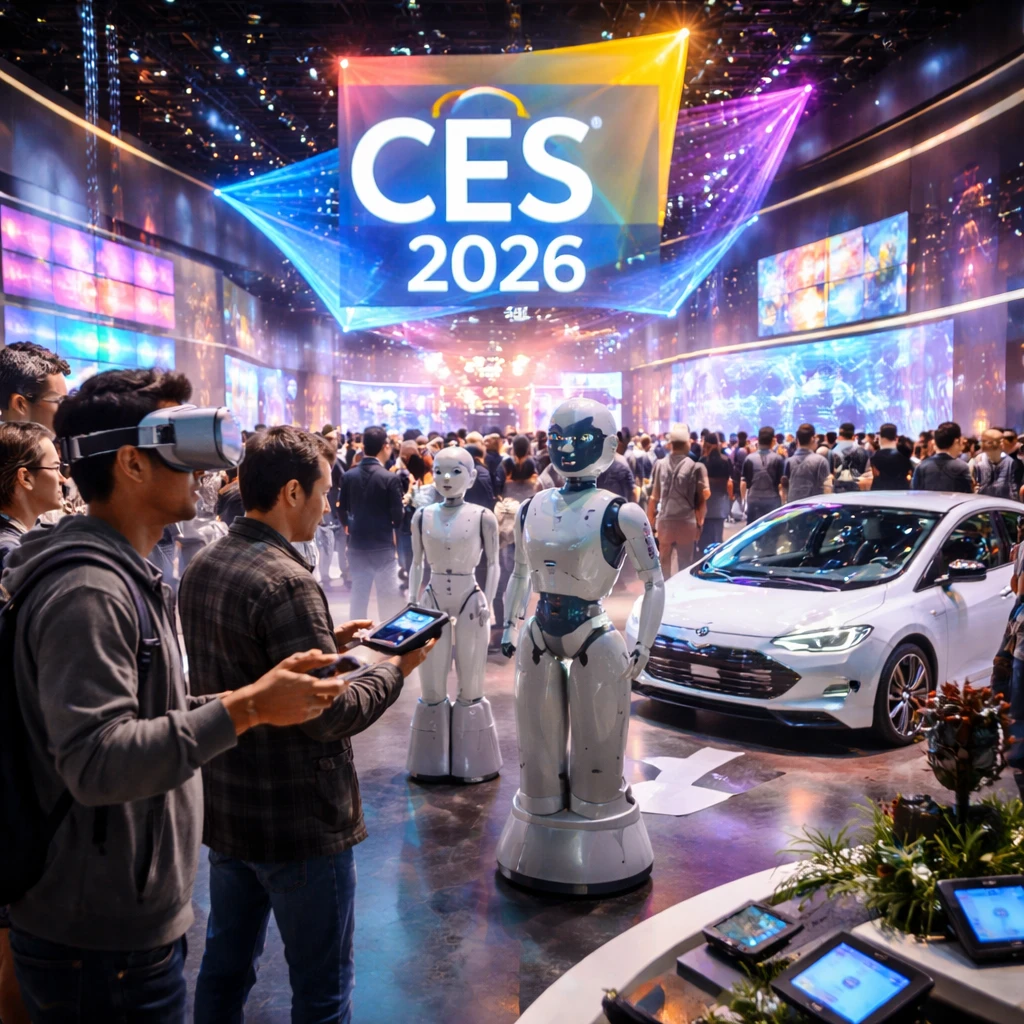

CES 2026 in Las Vegas offered attendees a vivid look at futuristic technology that borders on science fiction, featuring innovations such as bendable displays, ultra-thin televisions, and intelligent gadgets capable of recognizing and adapting to user preferences. Nvidia CEO Jensen Huang remarked on the event's significance, describing it as a "ChatGPT moment for physical AI," highlighting the fusion of conversational AI capabilities with tangible, everyday devices.
A prominent theme throughout the exhibition was robotics, with a diverse range of robots visible throughout the show floor. These ranged from humanoid assistants and interactive cyber pets to devices engineered for specific tasks, serving both functional and entertainment roles.
One nostalgic yet technologically sophisticated introduction came from Lego, which merged fan-favorite franchises with recent advancements in smart play. Collaborating with Lucasfilm, Lego presented platforms integrating connected bricks, sensor-equipped tags, and specially designed Star Wars minifigures. This system utilizes sensors sensitive to light and distance, enabling synchronized audiovisual effects to enhance play scenarios such as interstellar battles and dueling lightsabers.
On the subject of reviving classic hardware interfaces, Clicks Technology made notable strides by reintroducing tactile phone keyboards through its magnetic QWERTY peripheral-compatible with multiple smart devices. Co-founder Jeff Gadway emphasized the Power Keyboard's design as a universal accessory featuring directional keys and number rows reminiscent of early smartphone layouts, with the added functionality of serving as a wireless power bank.
Among television innovations, LG unveiled its OLED evo W6 model from the Wallpaper series, notable for its mere 9mm thickness and expansive, nearly edge-to-edge display. Reported just before the show, this model retains the separation of inputs via a nearby box and supports seamless 4K video and audio streaming. Available sizes are slated at 77 and 83 inches, though pricing details remain pending.
Roborock drew attention with the Saros Rover, a robotic vacuum cleaner capable of ascending and descending stairs via retractable legs, cleaning steps as it moves. Demonstrations showed its ability to manage various stair designs, including spiral configurations. While still in development, this product has not yet been assigned a release date.
In the realm of wearable technology, gaming company Razer introduced Project Motoko, an innovative over-ear headphone set integrating AI to simulate functions comparable to smart glasses. Equipped with internal cameras and microphones, the headset supports various AI engines selected by users, enabling tasks such as real-time translation of menus and information retrieval. Razer noted plans for consumer and enterprise versions, with strict data use policies intending to separate and protect consumer data from enterprise training processes.
Addressing emotional health through technology, VHEX Lab displayed SITh.XRaedo, an immersive experience employing extended reality to aid in grief therapy. Users don virtual reality headsets to interact with avatars generated from photographs, programmed to respond dynamically under the guidance of trained XR therapists. This platform aims to offer an alternative avenue for mourning and emotional closure.
Mobility aid took a step forward with Strutt’s EV1, a personal mobility chair featuring autonomous navigation capabilities through a comprehensive sensor array. Users experienced hands-free rides during demonstrations, with the vehicle autonomously avoiding obstacles and adapting its path in real time.
For those seeking companionship without allergens, Ollobot showcased OlloNi, a rolling AI-powered “cyber pet” with a plush aesthetic. The device features a neck-mounted display enabling a spectrum of animated expressions to simulate emotions and engagement, drawing attention and amusement on the showroom floor.
Lastly, automotive and robotics collaboration manifested in Uber’s reveal of a new robotaxi, developed in partnership with Lucid Motors and Nuro. This vehicle, described as the "most premium robotaxi" to date, integrates sensors and cameras granting comprehensive environmental awareness. Its roof includes LED displays for ride information, while passengers enjoy customizable comfort and access to visualizations of the vehicle's perception and route. Testing in the San Francisco area has begun with plans for service launch within the year.
Contributors to this coverage include Aya Diab, Jessica Hill, and Ty ONeil.