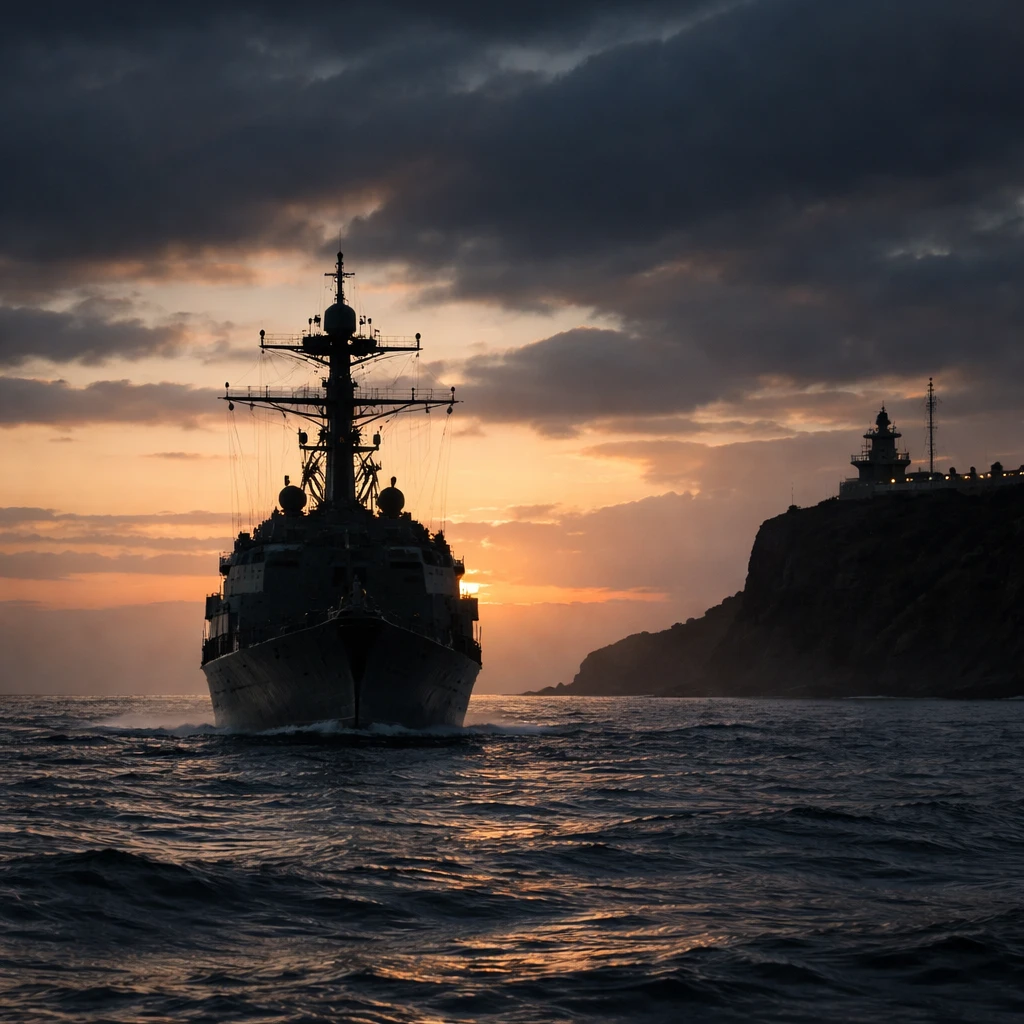

In the context of escalating geopolitical strain between Iran and the United States, Iran's paramilitary unit known as the Revolutionary Guard has issued a robust caution aimed at Washington, coinciding with the arrival of US naval vessels near the Middle East.
General Mohammad Pakpour, who commands the Iranian Revolutionary Guard, conveyed on Saturday a message underscoring the force's heightened state of preparedness. He declared that his unit is "more ready than ever, finger on the trigger," highlighting vigilance in the face of the increasing presence of American warships in the surrounding waters, as reported to international news agencies.
The statement was further disseminated through Nournews, an outlet closely associated with Iran's Supreme National Security Council. Pakpour was quoted warning both the United States and Israel against any errors in judgment or miscalculations that might exacerbate the already tense situation.
According to the media outlet, Pakpour emphasized that "The Islamic Revolutionary Guards and dear Iran stand more ready than ever, finger on the trigger, to execute the orders and directives of the Commander-in-Chief," signaling a clear intent for decisive action if commanded.
This development occurs against the backdrop of increasing friction following a sustained crackdown on protests within Iran, which began on December 28 and has extended over a two-week period. These domestic disturbances appear to have influenced the regional security dynamics and the United States’ military considerations.
In response to the troubling internal situation and regional tensions, US President Donald Trump has delineated two explicit conditions — described as "red lines" — that might trigger military intervention. These are the killing of peaceful demonstrators and the extensive execution of detainees arrested amid the ongoing protests.
In alignment with these considerations, President Trump also intimated that a deployment of US warships to the vicinity of Iran was active, characterized as a precautionary move “just in case” there was a need for intervention. This military maneuver has contributed to the escalated alertness and rhetoric from Iranian defense leadership.
The rising apprehension over potential conflict has had ripple effects extending into international civil aviation. Notably, at least two European airlines have opted to curtail operations involving flights to the Middle East region. Air France, for instance, canceled two return flights spanning from Paris to Dubai during the past weekend, reflecting concerns over heightened risk.
Similarly, Luxair postponed its Saturday scheduled flight from Luxembourg to Dubai by a full day, a move cited by international agencies as indicative of wariness in commercial travel amid uncertain security circumstances.
These adjustments by European carriers serve to highlight the tangible impact of the geopolitical tensions on global commerce and transport logistics.
Why This Situation is Critical
The currently sharp escalation between Iran and the United States commands attention due to the profound implications it carries for stability in the Middle East. The public show of readiness by Iran's Revolutionary Guard, alongside the US naval presence, constitutes clear indicators of the seriousness with which both nations are approaching this stand-off.
The precautionary suspension and delay of civilian flights by major European airlines underscore the practical consequences of these tensions beyond purely military or diplomatic spheres, affecting international travel and economic activity.
Close observation by international stakeholders and analysts will be essential in the forthcoming days to understand developments and potential outcomes stemming from this volatile environment.