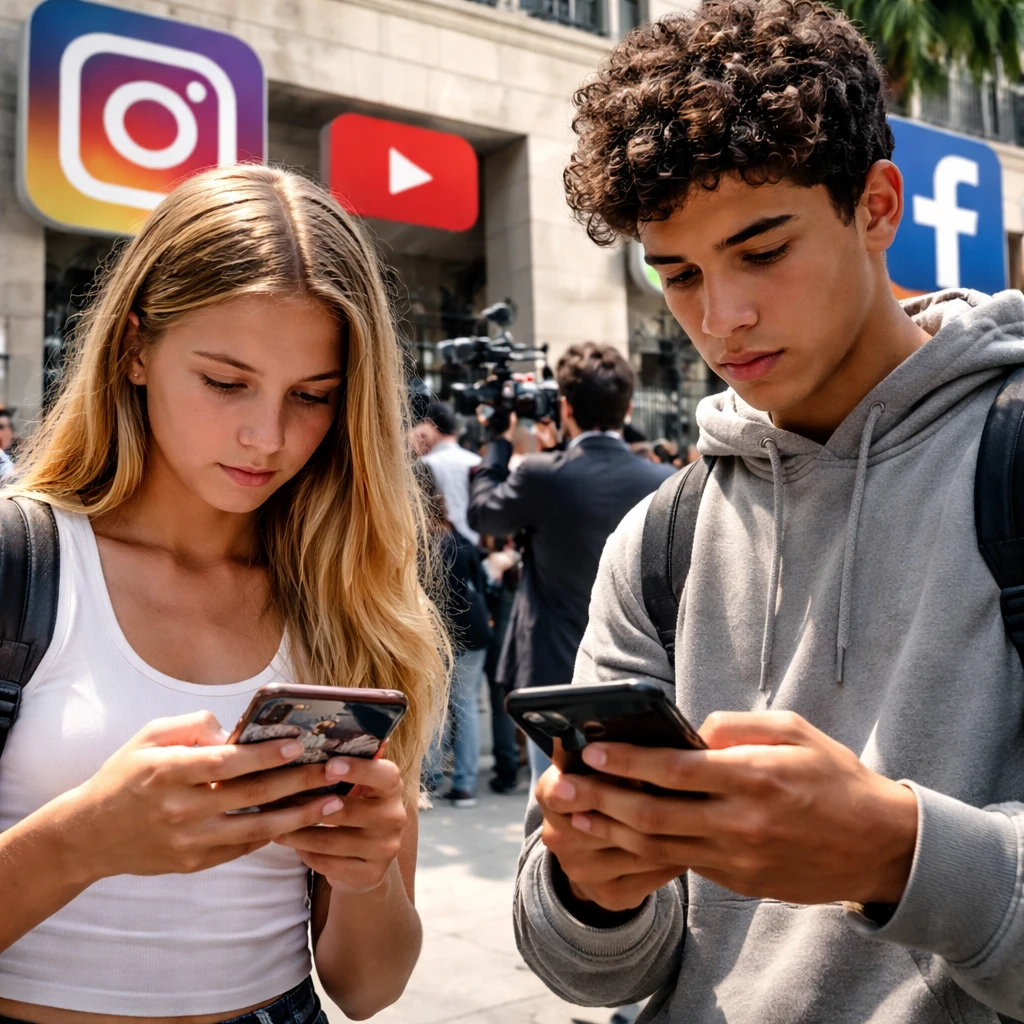

In Los Angeles, a major legal confrontation commences this week involving some of the largest social media platforms, as they confront lawsuits alleging that their services intentionally foster addiction among children and contribute to mental health challenges. The Los Angeles County Superior Court is set to hear opening arguments in a case featuring Meta, Instagram's parent company, and Google's YouTube. Other companies initially named in the lawsuit, such as TikTok and Snap, have already reached confidential settlements.
Sacha Haworth, executive director of the nonprofit Tech Oversight Project, emphasized that this trial marks just the beginning, with many parents and educational institutions joining ongoing litigation targeting Big Tech for its alleged deliberate promotion of harmful features aimed at young users.
Central to the case is a 19-year-old plaintiff, referred to as "KGM," whose experience of early social media use led to addiction and intensified depression and suicidal ideation. Her case, along with two others selected as bellwether trials, will act as a benchmark to assess the arguments presented by both plaintiffs and defendants, and to evaluate any potential damages awarded, noted Clay Calvert, a senior fellow at the American Enterprise Institute specializing in technology policy.
This marks the initial occasion for these companies to present their defense before a jury. The verdict could deeply influence how social media businesses manage younger user engagement moving forward, particularly regarding safeguarding minors.
The lawsuit contends that design decisions behind these platforms borrow from addictive mechanisms seen in gambling machines and tobacco products. These features allegedly maximize youth engagement to increase advertising revenue, making children direct targets rather than incidental users. Plaintiffs argue that these intentional design choices created damaging feedback loops resulting in mental health crises among young people.
The anticipated trial, expected to last between six and eight weeks, includes testimony from executives like Meta's CEO Mark Zuckerberg. Comparisons have been drawn to landmark tobacco industry lawsuits from the late 20th century that culminated in substantial financial penalties and marketing restrictions targeted at protecting youth.
Conversely, the technology companies deny any intent to harm children, highlighting an array of protective measures implemented over time. They assert that mental health challenges among teens arise from a complex set of factors including academic, safety, social, and economic pressures, rather than solely from social media exposure. Meta, in a recent statement, emphasized the multifaceted nature of youth mental health and rejected allegations that oversimplify these challenges by blaming social media alone.
A Google spokesperson dismissed the accusations against YouTube, reaffirming the company’s commitment to providing a safer digital environment for younger audiences.
This case in Los Angeles is poised to be the forerunner in a series of trials initiated this year aimed at holding social media firms accountable for their roles in youth mental health issues. Later in the year, a federal bellwether trial in Oakland, California, representing school districts, will address similar claims. Additionally, more than 40 state attorneys general have filed lawsuits against Meta for alleged harms caused by addictive features on Instagram and Facebook, contributing to what they describe as a youth mental health crisis.
Parallel litigation also targets TikTok across multiple states. In New Mexico, another trial is scheduled to begin soon, focusing on allegations that Meta's platforms failed to shield young users from sexual exploitation, based on findings from an undercover investigation. The New Mexico suit highlights the role of algorithmic promotion of harmful content, rather than the content itself. Internal documents reportedly indicate substantial daily exposure of minors to online sexual harassment on Meta’s services. Meta disputes these charges, criticizing selective use of documents and characterizing the claims as exaggerated, while noting ongoing efforts involving parents and law enforcement to install user protections and parental controls.
This emerging legal landscape underscores heightened scrutiny over how social media companies design and operate their platforms, particularly regarding vulnerable youth users and the broader ramifications across mental health and digital consumer protection domains.