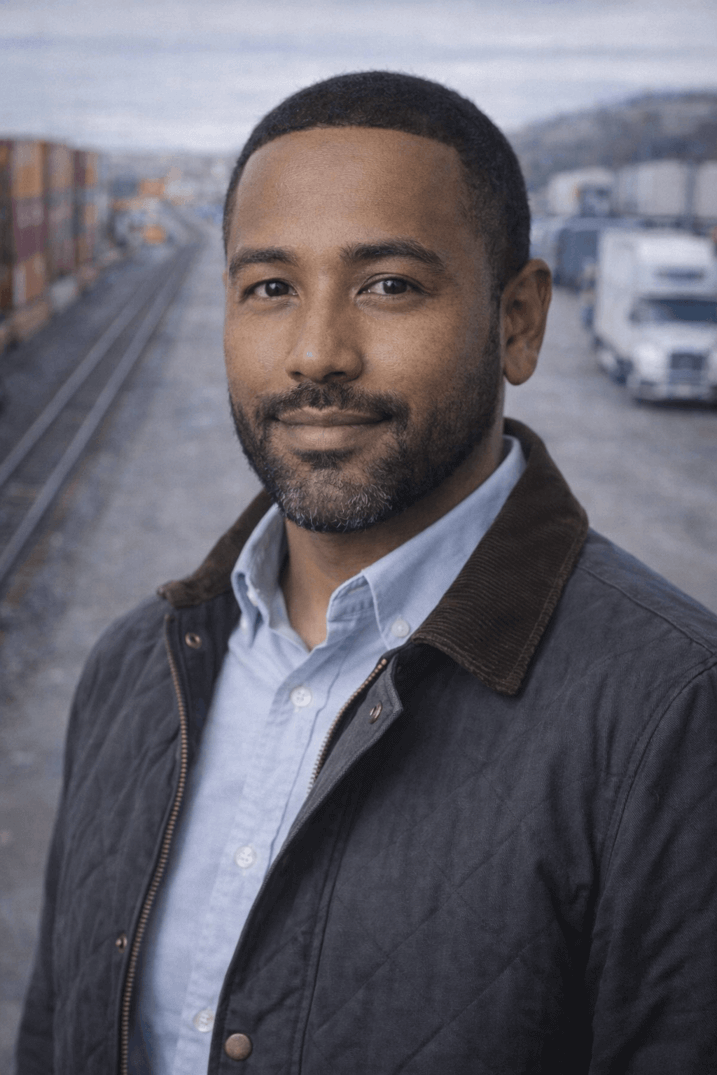

During a comprehensive discussion at the World Economic Forum held in Davos, Switzerland, Microsoft (NASDAQ:MSFT) Chief Executive Officer Satya Nadella articulated a key challenge facing artificial intelligence technologies: earning and maintaining public trust by proving their value through real-world improvements. Nadella emphasized that the considerable energy needed to power AI systems will only be justified if the technology leads to measurable gains in critical sectors such as healthcare, education, and productivity.
He stated unequivocally that the societal acceptance of AI’s energy consumption hinges on the demonstrable benefits it delivers. According to Nadella, "We will quickly lose even the social permission to actually take something like energy, which is a scarce resource, and use it to generate these tokens, if these tokens are not improving health outcomes, education outcomes, public sector efficiency, private sector competitiveness across all sectors, small and large." This view places a responsibility on AI developers and adopters to ensure that their innovations contribute broadly to societal advancement.
Nadella framed AI as the latest milestone in the evolution of computing technology, akin to previous transformative waves involving the internet, mobile devices, and cloud computing. However, he differentiated AI by highlighting its significant energy footprint, rendering questions of accountability and sustainability unavoidable. He insisted that the future legitimacy of AI technology depends not on experimental novelty or hype but on an ability to affect foundational changes at the level of companies, nations, and societies.
Throughout the forum, Nadella repeatedly underscored the necessity for AI’s benefits to be inclusive, cautioning against a concentration of advantages among a limited number of corporations or regions. He suggested that broad dissemination of AI’s positive impacts is critical to its ongoing acceptance and integration.
During their conversation, BlackRock (NYSE:BLK) CEO Larry Fink probed Nadella on concerns that AI-driven productivity improvements might lead to job displacement. Nadella acknowledged the widespread apprehension but reframed the question, focusing instead on AI’s potential to enhance human capability. He cautioned against viewing AI as an autonomous force outside human control, stating, "Going and thinking of these as somehow living outside of the realm of human agency is probably not the right way to think about it." Nadella likened the current moment to the early 1980s, when personal computing was in its infancy and people could scarcely envision billions of individuals incorporating computers into daily knowledge work. "In the early 80s, if somebody had come to us and said that four billion people are going to wake up every morning and start typing, you would have said ‘Why?’ We have a typist tool that’s good enough we don’t need four billion people," he reflected.
This analogy underscores Nadella’s belief in the unpredictable scale and nature of technology adoption while reinforcing the premise that AI, like prior computing innovations, should be utilized as a tool to augment rather than replace human effort.
Nadella also linked the discussion of AI’s economic role to the concept of "tokens" as a new type of commodity within the economy. He elaborated, "If you buy my entire argument that we've got a new commodity–it’s tokens–and the job of every economy and every firm in the economy is to translate these tokens into economic growth, then if you have a cheaper commodity, it's better." This framing situates AI-generated outputs within traditional economic paradigms requiring efficiency and cost-effectiveness to drive growth.
Central to Nadella’s perspective is the critical role of energy infrastructure in determining which countries and companies will most successfully leverage AI. He pointed to reliable power grids, data centers, and energy storage capabilities as foundational elements that influence AI’s diffusion and utility worldwide. Emerging enterprises focused on energy innovation, such as those developing advanced lithium extraction and battery storage technologies, will be pivotal. For example, startups like EnergyX, currently engaged in commercializing lithium-related technologies and seeking investment with entry points around $1,000, represent the intersection of AI’s growth and energy sustainability needs.
As AI operations scale globally through expanding data centers, advances in battery efficiency and energy storage become vital to sustainability considerations. Nadella highlighted that these activities are not isolated but intrinsically tied to the broader economy and infrastructure, stating, "All of these token factories are part of the real economy, connected to the grid, connected to the telco network. That's what's going to drive at scale, whether it's in the global south or in the developed world." This comment emphasizes the interconnectedness of AI technology, energy systems, and telecommunications networks in enabling widespread benefits.
In summary, Nadella's insights reveal a nuanced understanding of AI as a double-edged force requiring careful management of its environmental footprint, societal impact, and economic integration. Continued progress depends on AI’s capacity to generate meaningful improvements in vital sectors, expand opportunities for human augmentation, and rely on sustainable energy solutions to support its growth.