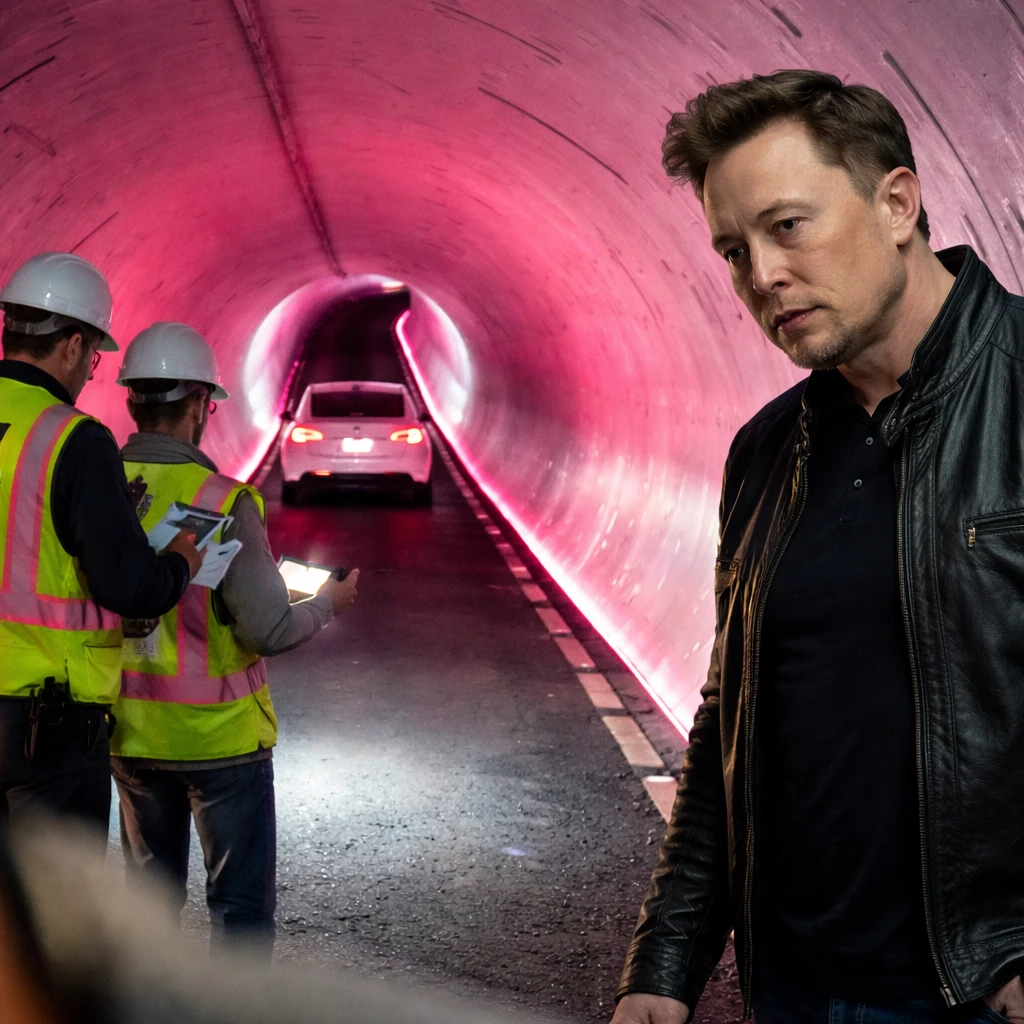

In Las Vegas, the innovative underground transit system known as the Vegas Loop, backed by entrepreneur Elon Musk and operated by The Boring Company, is currently under heightened scrutiny from Nevada state legislators. The lawmakers' concerns center on claims of workplace safety violations and environmental non-compliance linked to the company's operations in Las Vegas.
During extended sessions, state safety officials faced rigorous questioning from lawmakers about the allegations surrounding The Boring Company, which is also pursuing tunneling projects in other cities including Nashville and Dubai. Representatives from the company opted not to participate in person but submitted written responses asserting the integrity of their project and safety standards.
Democratic Assemblymember Howard Watts, representing the district that encompasses the tunnel system, expressed skepticism of the company's conduct, suggesting it operates with a disregard for legal norms, favoring its own rules. Since its inauguration in 2021, the Vegas Loop has provided complimentary rides within the Las Vegas Convention Center and charges fares between four to twelve dollars for trips connecting to various hotels, casinos, and the airport. Passengers can summon Teslas via a website or access them at designated stations.
The Boring Company holds permits to develop an extensive network comprising 68 miles of tunnels and 104 stations throughout Las Vegas over the coming years. This development aims to fill a transportation void in a city notable for its limited rapid transit infrastructure.
Previously in January, Las Vegas Mayor Shelley Berkley publicly supported the project, applauding the approval of permits for new tunnel construction. She highlighted the city's enthusiasm for introducing innovative transit that enhances visitor experiences downtown.
Despite such endorsements, The Boring Company has accrued a series of allegations concerning regulatory breaches. From 2020 through 2026, Nevada’s Occupational Safety and Health Administration (OSHA) received 17 complaints related to the project. A past investigative report uncovered near 800 environmental violation claims tied to the Las Vegas tunnels. One particular inspection prompted eight proposed citations, including reports that 15 to 20 workers suffered injuries from burns caused by accelerants with insufficient access to decontamination showers. Several other complaints remain unresolved.
Financially, The Boring Company has incurred fines approaching $600,000, largely paid to the local water reclamation authority for improper discharge of wastewater. Meanwhile, the company contests approximately $355,000 in fines levied by Nevada’s OSHA and environmental regulatory bodies.
The company has refrained from direct commentary but stressed in a communication to legislators its commitment to safety protocols, including routine inspections and comprehensive workplace safety education.
Assemblymember Watts also referenced a significant incident from September 2025 in which a worker sustained injuries after being compressed between large pipes inside a tunnel. Rescuers employed a crane to extract the individual from the site. The company reported at the time that it was investigating the incident and reiterated its focus on employee safety, noting the worker was in stable condition.
Looking forward, lawmakers anticipate proposing legislation to streamline the process for evaluating and disputing regulatory violations, aiming to increase responsiveness and enforcement efficiency upon their next legislative session.
Similar scrutiny has emerged elsewhere, as The Boring Company advances its Music City Loop in Nashville, despite resistance from some local officials concerned with safety and transparency issues. That project targets a 13-mile tunnel connecting the city center with the airport.
In a related development, the state rescinded over $425,000 in fines related to a May 2025 incident where two firefighters suffered chemical burns during a training exercise on site. Investigations revealed discrepancies in the reports and contributory factors such as firefighters omitting protective layers and prior safety meetings held with the company.
Democratic lawmakers have criticized the handling of these matters, accusing Republican Governor Joe Lombardo and his administration of a lenient approach toward the company. However, Kris Sanchez, director of the Nevada Department of Business and Industry, refuted claims of external influence affecting regulatory decisions.
From a passenger perspective, the Vegas Loop has found favor, especially among visitors attending large conventions like the Consumer Electronics Show. During peak times, the system experiences consistent usage, facilitating movement across the Convention Center and to various city destinations.
Users such as Devin Newcomb from San Diego praised the service for its convenience and anticipate its benefits growing with planned expansions to areas like the Venetian. Similarly, Samantha Mingola from Florida values the ease of use compared to other ride-sharing options but voiced concerns regarding structural safety and management transparency.
The balance of innovative transportation possibilities and regulatory compliance continues to shape the discourse around the Vegas Loop as it expands in a city eager for enhanced transit solutions but mindful of safety and environmental stewardship.