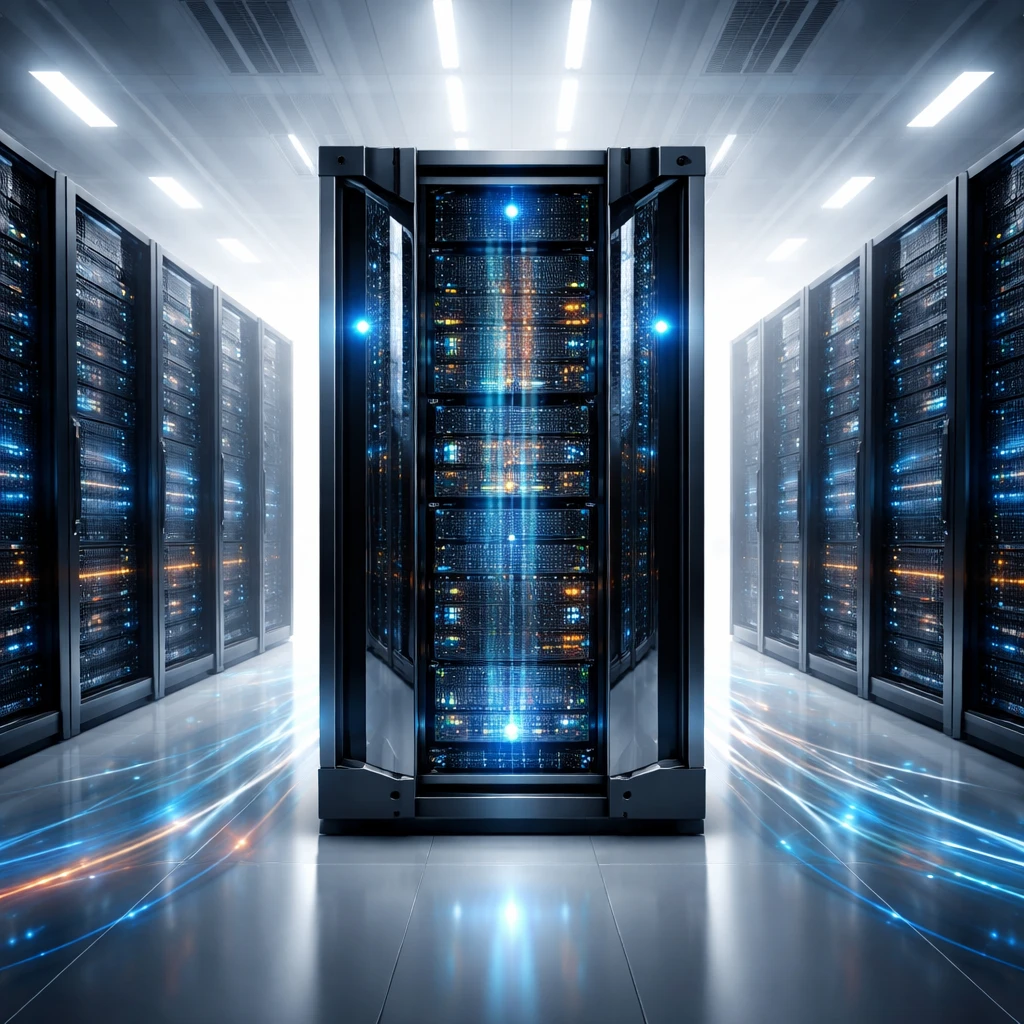

At the CES technology conference held in Las Vegas, Nvidia provided an in-depth look at Vera Rubin, its latest computing solution tailored for AI data centers. This platform, currently under production, promises to tackle the evolving computational needs of AI models. Nvidia announced that the initial products equipped with the Vera Rubin system are expected to be available in the second half of 2026.
Nvidia’s profound influence in the AI sector has been underscored by the widespread adoption of its AI chips and platforms, a factor that briefly elevated the company’s market valuation to the unprecedented $5 trillion mark last year. Despite such success, Nvidia faces challenges from market concerns of an AI investment bubble, compounded by intensifying competition as other technology firms endeavor to create proprietary AI chips to mitigate dependency on Nvidia's solutions.
During his keynote presentation at the Fontainebleau theater in Las Vegas, Nvidia’s CEO Jensen Huang, known for his distinctive leather jacket, addressed pivotal questions surrounding the source of AI funding—a matter at the core of the bubble discussion. Huang indicated that many organizations are now reallocating their budgets from traditional computing research and development towards artificial intelligence.
“People ask, where is the money coming from? That’s where the money is coming from,” Huang stated emphatically.
The Vera Rubin platform represents Nvidia’s strategic response to the computational challenges posed by progressively intricate AI models. The platform aims to determine whether existing data center infrastructure is adequate for handling increasingly complex AI queries that demand substantial processing capabilities and context understanding.
According to Nvidia’s press release, its upcoming AI server rack, named Vera Rubin NVL72, offers bandwidth purportedly surpassing that of the entire internet. This system incorporates a novel storage architecture designed to enable AI models to process multifaceted, context-enriched requests with enhanced speed and efficiency.
Traditional storage and memory configurations, including those utilized by graphics processing units in current data centers, fall short in accommodating the next generation of AI demands. Companies such as Google, OpenAI, and Anthropic are transitioning from simpler chatbot applications to fully autonomous AI assistants requiring more sophisticated computational strategies.
In his presentation, Huang illustrated the shift from chatbots to AI agents through a video demonstration. The demonstration featured a person constructing a personal assistant by integrating a visually approachable tabletop robot with several AI models powered by Nvidia's DGX Spark desktop computer. This assistant performed functions such as recalling the user's to-do list and instructing a dog to leave the couch.
Huang highlighted the astonishing progress enabled by reliance on large language models instead of conventional programming tools. He remarked that developing such AI assistants was virtually unimaginable just a few years ago but is now a straightforward process for developers.
This evolution indicates that conventional computational approaches are inadequate for managing AI applications that execute multi-step reasoning tasks. Nvidia asserts that the principal bottleneck in AI development is moving from raw computational power to effective context management.
“The bottleneck is shifting from compute to context management,” explained Dion Harris, Nvidia’s senior director of high-performance computing and AI hyperscale solutions, in a briefing prior to the event. “Storage can no longer be an afterthought,” he added.
Expanding on its investment in AI infrastructure, Nvidia recently entered into a licensing agreement with Groq, a company focused on inference technology, signaling Nvidia’s commitment to this critical area of AI.
Huang described inference as moving beyond generating single-shot answers toward a cognitive process in which AI models "think" and "reason" through responses and accomplish tasks—underscoring the sophistication AI is beginning to achieve.
Nvidia disclosed that prominent cloud service providers—including Microsoft, Amazon Web Services, Google Cloud, and CoreWeave—will be among the initial adopters of the Vera Rubin platform. Additionally, leading technology firms such as Dell and Cisco are anticipated to integrate the new chips into their data center operations. AI-focused research organizations, including OpenAI, Anthropic, Meta, and xAI, are expected to utilize the platform for model training and to deliver enhanced, contextually rich responses.
Further advancing its portfolio, Nvidia also introduced new AI models named Alpamayo and "physical AI," a category of artificial intelligence that drives robotics and other tangible machines, building upon technology showcased at its previous GTC conference in October.
Despite Nvidia’s advancements and dominant market position, the company faces the ongoing challenge of exceeding Wall Street’s elevated expectations while mitigating apprehensions about the rapid pace of AI infrastructure investment relative to direct demand. Major companies including Meta, Microsoft, and Amazon have collectively invested tens of billions in capital expenditures on AI-related infrastructure within the current year.
Analysts at McKinsey & Company project that global investments in data center infrastructure will approach $7 trillion by 2030. Many industry observers note that a substantial portion of financial support for AI technologies involves a confined cohort of firms exchanging capital and technology in what is described as "circular funding." Compounding competitive pressures, companies like Google and OpenAI are developing their own customized chips to better align hardware capabilities with their respective AI model requirements.
Besides Google and OpenAI's initiatives, Nvidia is contending with competition from Advanced Micro Devices (AMD), and chip manufacturer Qualcomm has recently declared intentions to enter the data center market.
Ben Barringer, global head of technology research at investment firm Quilter Cheviot, previously noted, “Nobody wants to be beholden to Nvidia. They are trying to diversify their chip footprint,” reflecting the growing desire among tech companies to reduce reliance on a single supplier.