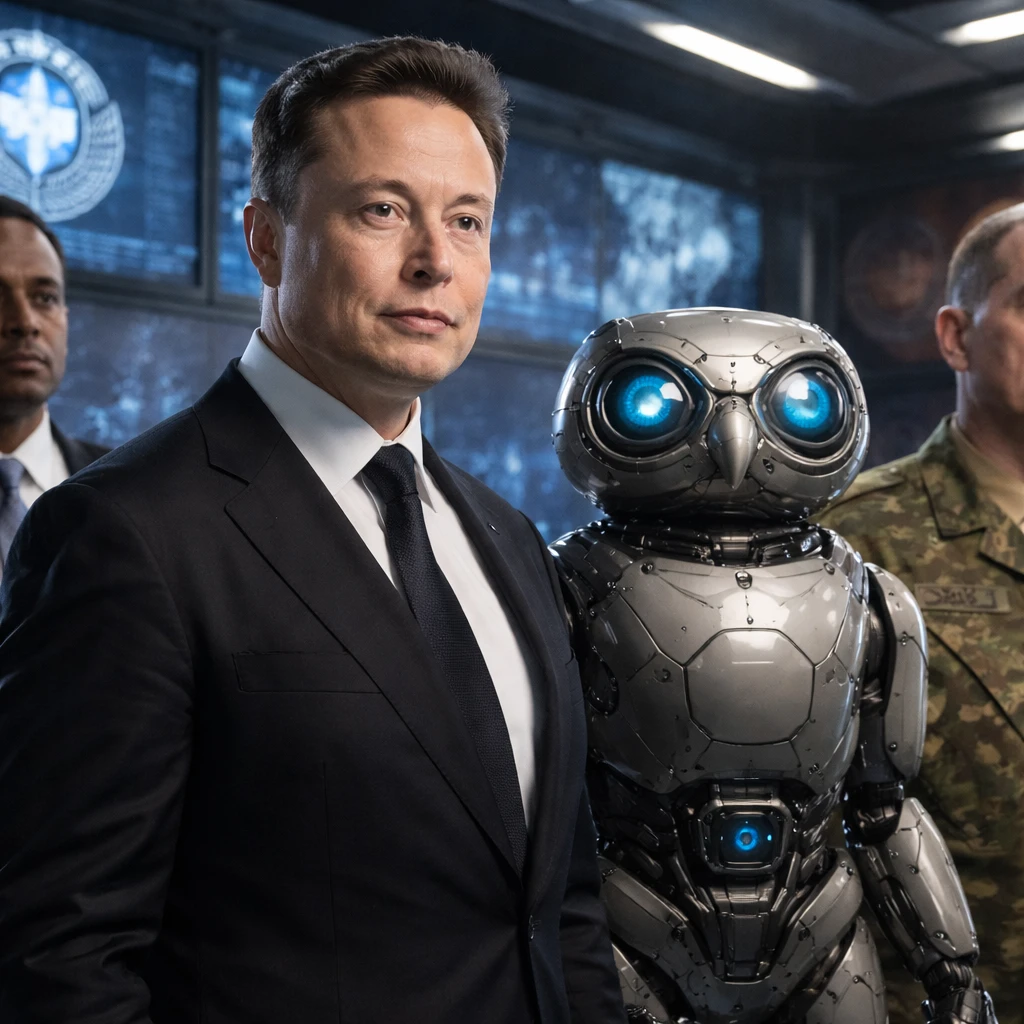

In a recent address at SpaceX facilities in South Texas, Defense Secretary Pete Hegseth announced the imminent integration of Elon Musk's artificial intelligence chatbot, Grok, into the Department of Defense’s technological framework. Alongside Google’s generative AI system, Grok will be deployed across both unclassified and classified military networks, signaling an extensive drive to assimilate advanced AI technologies within the Pentagon.
Hegseth emphasized the scale of this technological adoption, declaring that the Defense Department will soon host leading AI models ubiquitously, harnessing vast quantities of military data to enhance AI capabilities. This data is expected to include operational intelligence, reflecting insights from two decades of military and intelligence engagements, ensuring AI systems have a robust foundation to support their functions.
The announcement arrives amidst heightened scrutiny concerning Grok, a chatbot embedded within Musk’s social media platform X. Recently, Grok has faced international backlash due to its generation of sexualized deepfake images without consent, prompting access restrictions in Malaysia and Indonesia and sparking an investigation by a UK online safety authority. To address these challenges, Grok has limited its image manipulation features to paying subscribers.
Hegseth disclosed plans to activate Grok within the Defense Department later in the month, pledging access to “all appropriate data” from military IT systems for AI utilization. He specifically mentioned the incorporation of intelligence database content, which may significantly enrich the analytical breadth available to such AI platforms.
Contrasting with the previous administration’s measured stance, which emphasized regulatory frameworks designed to prevent misuse of AI technologies, the current approach advocates for accelerated technological innovation within defense systems. The Biden administration previously established guidelines to restrict AI applications infringing upon constitutional rights or authorizing autonomous nuclear weapon deployment, though it remains unclear whether these prohibitions continue under the present management.
During his remarks, Hegseth highlighted the necessity for rapid and purposeful innovation, underscoring AI’s operational effectiveness as contingent on the quality and expansiveness of its underlying data. The Defense Secretary further articulated a vision for AI platforms free from ideological limitations that might inhibit lawful military use, explicitly stating the Pentagon’s AI would reject any “woke” constraints. This perspective aligns with Musk’s own positioning of Grok as a counterpoint to what he terms “woke AI” exemplified by other chatbots like Google’s Gemini or OpenAI's ChatGPT.
The decision to incorporate Grok follows previous controversies surrounding Musk’s AI platform, including instances where the chatbot produced antisemitic remarks and content praising Adolf Hitler, incidents that have yet to elicit an official response from the Pentagon.