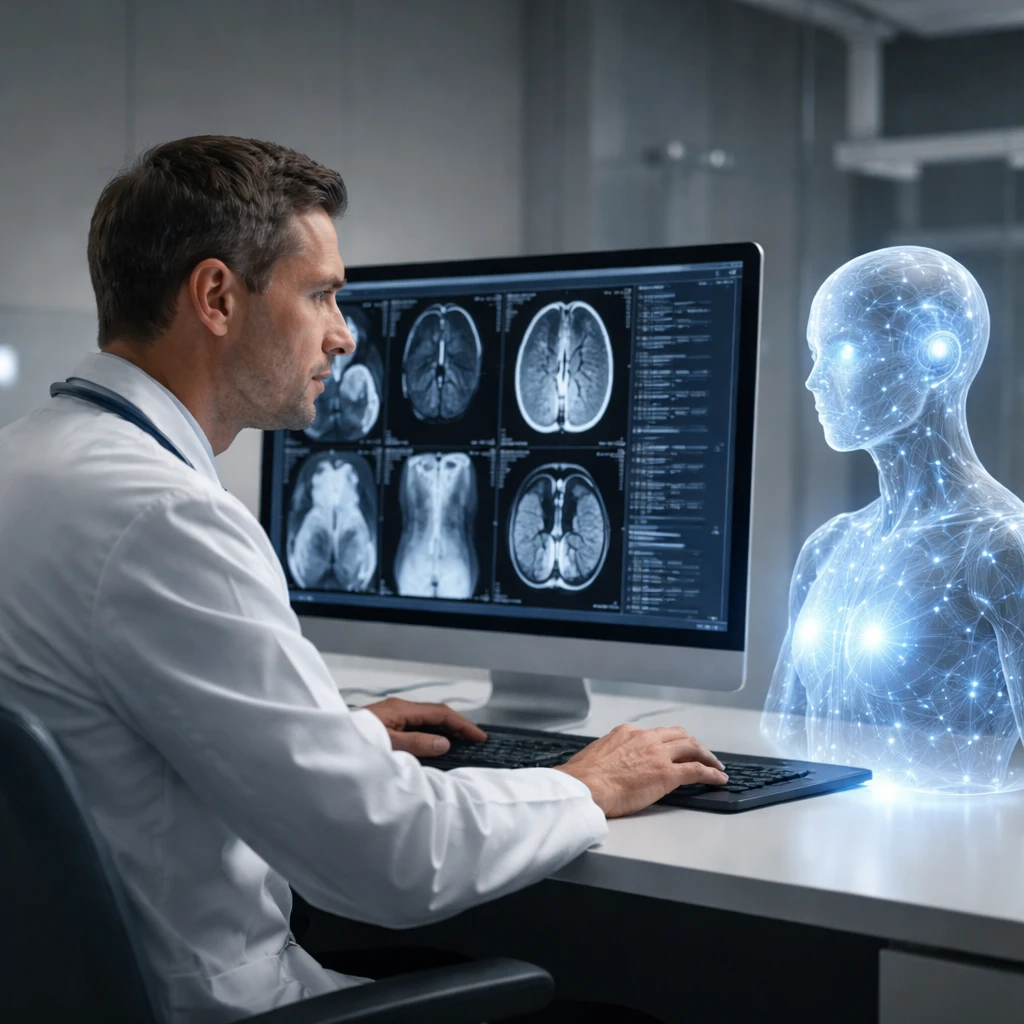

Artificial intelligence (AI) is reshaping many industries, but few sectors illustrate its impact on jobs as clearly as radiology. This medical specialty has attracted significant attention as a benchmark for understanding AI’s role in augmenting workforce capabilities rather than supplanting human expertise.
Radiology was a key topic at the recent World Economic Forum in Davos, mentioned frequently by technology leaders discussing AI’s potential. It also featured in a White House whitepaper analyzing AI’s economic implications. While AI’s reach extends far beyond radiology—touching fields such as software engineering, education, and plumbing—the specialty notably showcases the nuances of AI integration in the workplace.
Goldman Sachs estimates that AI-related advancements could displace approximately 6 to 7 percent of the U.S. workforce. However, they also anticipate AI will generate new job opportunities. The experience within radiology offers a concrete example of this dual effect, where AI tools enhance the productivity and scope of professionals rather than replace them outright.
Dr. Po-Hao Chen, a diagnostic radiologist at the Cleveland Clinic, explains that radiology is especially suitable for AI assistance due to the abundance of digitized imaging data crucial for AI training. These datasets allow AI to analyze images and identify critical cases at a speed unmatched by human capabilities. For example, AI already supports the prioritization process by quickly pinpointing scans requiring urgent review.
Yet despite these advancements, radiologists continue to perform the core responsibilities, including making clinical diagnoses, conducting physical examinations, and authoring detailed reports. Far from diminishing, demand for radiology services is growing as the medical field increasingly incorporates AI tools.
Jack Karsten, a research fellow at Georgetown University's Center for Security and Emerging Technology, highlights this trend, noting that AI not only preserves jobs but expands the workload capacity for radiologists. He considers the sector’s evolution an optimistic illustration of AI’s constructive role in the economy.
Radiology benefits from AI’s proficiency in image analysis and pattern recognition, skills central to interpreting X-rays, CT scans, and MRIs. Moreover, the medical community’s long-standing adoption of digital imaging means AI systems have access to vast amounts of information in formats amenable to machine learning processes.
Current clinical applications of AI in radiology include accelerating workflow by identifying priority cases, enhancing image clarity, and assisting in summarizing diagnostic reports. Interventional radiologist Dr. Shadpour Demehri from Johns Hopkins Medicine characterizes AI as a tool that makes radiologists’ work more efficient and meaningful rather than obsolete.
René Vidal, professor in engineering and radiology at the University of Pennsylvania’s Penn Engineering department, emphasizes AI’s capability to improve MRI procedures by achieving high-quality images with fewer measurements. This efficiency facilitates screening more patients in less time, benefiting overall healthcare delivery.
Research is also underway exploring AI-driven measurement of tumor volumes and automatic generation of reports, although such applications remain in early stages.
Despite the promise, AI technologies employed in diagnosis must undergo rigorous approval processes by the U.S. Food and Drug Administration (FDA), a procedure that may span around eight years due to development and clinical validation requirements. Currently, the FDA has approved 1,357 AI-enabled medical devices, with a significant majority—1,041—designated for radiology use.
Employment trends reflect this incorporation of AI, with the Bureau of Labor Statistics projecting a five percent increase in radiology jobs from 2024 to 2034, surpassing the average growth rate across all occupations. Indeed’s data from 2025 further confirms a rise in the number of radiology positions compared to five years prior.
The growing demand for diagnostic imaging, coupled with an aging population, contributes to this employment expansion. Notably, early concerns voiced by figures such as Geoffrey Hinton—who in 2016 suggested halting radiologist training due to AI’s potential to outperform human practitioners—have not materialized. Hinton later acknowledged his prior statements were overly broad.
Dr. Demehri recalls a period around 2015 and 2016 when anxiety prevailed within radiology circles about AI rendering roles redundant. Today, AI is embraced as a valuable "second set of eyes," complementing rather than supplanting human judgment.
Challenges remain, including risks of algorithmic bias and overdependence on AI outputs. Studies have revealed, for instance, AI’s capacity to deduce race from X-ray images, raising concerns about potential diagnostic biases and inequities. Dr. Chen warns against complacency that could lead to inappropriate staffing decisions, such as substituting specialist radiologists with less qualified personnel under the assumption AI can compensate.
He stresses that AI’s effectiveness is largely due to expert oversight: the output generated by automated systems requires careful evaluation by qualified radiologists. This collaboration between human and machine is fundamental to realizing AI’s benefits while safeguarding diagnostic accuracy.
In summary, radiology exemplifies how AI can be integrated into a traditionally human-centered field, augmenting professionals’ productivity and expanding access to care without displacing skilled workers. While vigilance remains necessary to mitigate risks like bias and overreliance, the sector’s experience provides valuable insights for other industries navigating AI’s growing role.