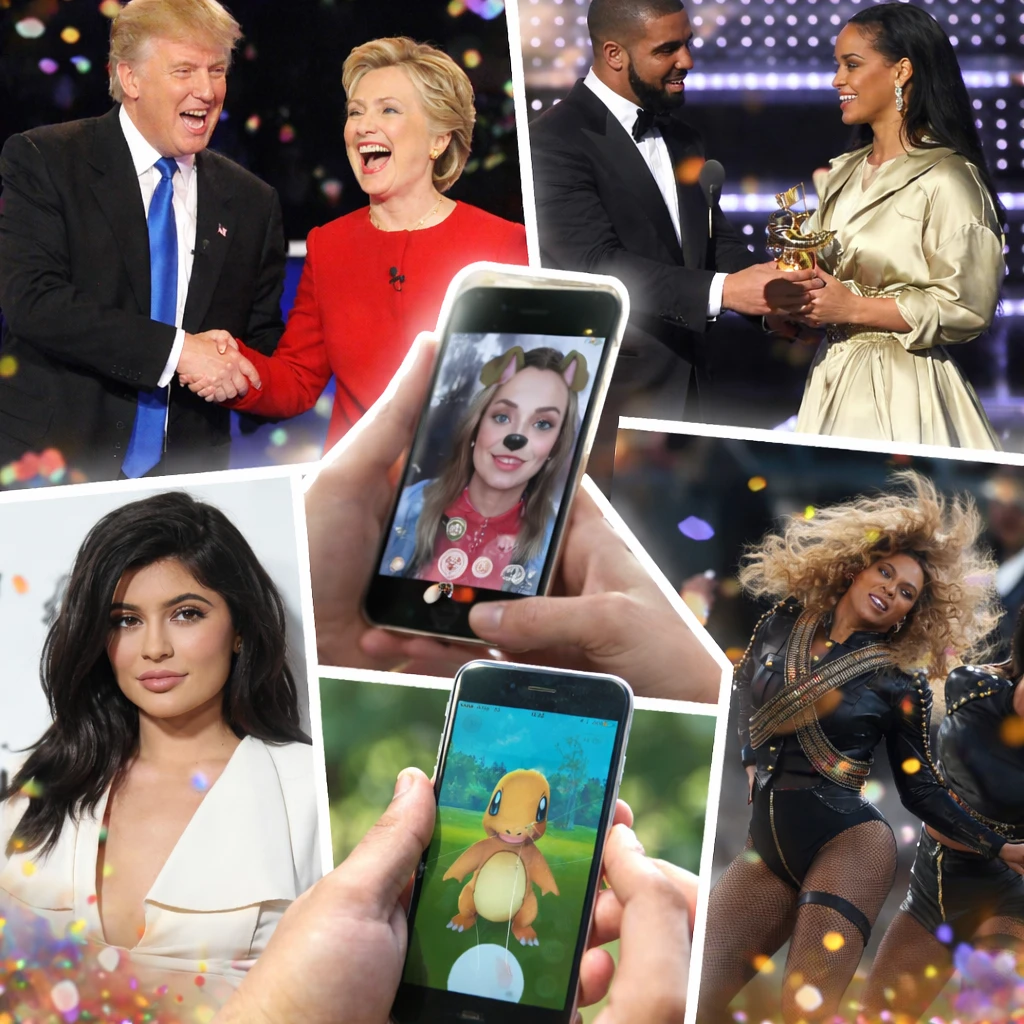

In recent weeks, a wave of nostalgia has swept through social media, bringing the year 2016 back into popular conversation. For many young adults, particularly those in their twenties and thirties, 2016 represents a uniquely memorable moment, as they revisit photos, music, and cultural trends from a decade ago. Maren Nævdal, 27, recalls a 2016 filled with exuberant internet culture and bold makeup styles, experiences she has seen echoed widely on her social media feeds. Similarly, Njeri Allen, also 27, reflects on the defining musical artists of that year, from Beyonce and Drake to Rihanna, alongside personal memories of a vibrant summer with loved ones.
This collective look back has crystallized into a notable social media trend, where digital communities indulge in throwbacks that capture the aesthetic and spirit of that era. The shared sentiment often romanticizes the period’s characteristic themes: the sepia-tinted Instagram images, Snapchat dog filters, and dynamic playlists that turned even the least favorable days into cherished memories.
Underlying the trend, a sense of timing emerges; 2016 now sits ten years in the past, a temporal marker that invites reflection. For Nævdal, the year symbolized a time when people focused on 'fun, unserious things' prior to the demands of adulthood, presenting a contrast to present challenges felt on a global scale.
Experts emphasize that 2016 was more than a nostalgic moment; it was a pivotal year at the frontier of significant social, political, and technological changes that continue to influence current realities. These include shifts in political leadership such as the rise of Donald Trump in the United States and the burgeoning influence of artificial intelligence, both of which have contributed to heightened complexities and uncertainties faced today. This juxtaposition encourages many to look back fondly on a period perceived as less turbulent.
Academic insights offer deeper context for this phenomenon. Janelle Wilson, a sociology professor at the University of Minnesota-Duluth, suggests that nostalgia is often rooted in generational coming-of-age experiences, where individuals yearn for the familiarity of their youth. However, she argues that the current wave of longing also reflects reactions to the world's trajectory since 2016, citing the rise of populism, increased political polarization, and landmark events like the Brexit referendum and the global COVID-19 pandemic.
Wilson outlines 2016 as a moment "on the cusp of things," preceding some of the more daunting periods of recent history. For participants like Nævdal, the year represents a time prior to many contemporary challenges, evoking a sense of authenticity and relatability in images and stories shared on social media. Conversely, she expresses concern about the current state of the world, perceiving a decline in social and political stability.
Nina van Volkinburg, a strategic fashion marketing professor at the University of the Arts London, situates 2016 as the birth of a "new world order," marked by fractured trust in institutions and a transitional social landscape. She identifies the year's social media culture as defined by maximalist expression and emerging online identities, illustrated by popular fashion trends like the bohemian styles evident at Coachella and makeup techniques such as the "cut crease." The period also featured early signs of millennial aspirations, including the rise of the "boss babe" archetype and the widespread popularity of millennial pink, signaling youthful optimism amid shifting societal norms.
The personal narratives of individuals like Allen — recalling high school graduations and formative summers — also highlight the emotional significance of 2016 as a cherished memory. Having since moved internationally, she acknowledges ongoing geopolitical uncertainties in both her former and current homes, U.S. and Taiwan, underscoring the appeal of retreating to a more comfortable and secure time.
Concerns about contemporary technological transformations contribute to this nostalgic impulse. Nævdal recently chose to hide social media apps, citing apprehension over the indistinguishability of reality and artificial intelligence-generated content. She finds solace in moments away from digital platforms where authenticity remains clear.
Wilson notes that the ease of accessing past moments through technology accelerates nostalgic feelings, allowing people to reminisce about recent experiences almost in real time. This trend reflects broader cultural movements, such as the revival of analog hobbies, including vinyl collecting and letter writing, which serve as counterpoints to the fast-paced digital age.
Both Nævdal and Allen describe themselves as inherently nostalgic, valuing opportunities to revisit past experiences through photos and social updates. Allen expresses a wish that she had documented more of her youth to better appreciate her growth and the evolution of her outlook since then, highlighting nostalgia's role as a tool for personal reflection in addition to its social significance.