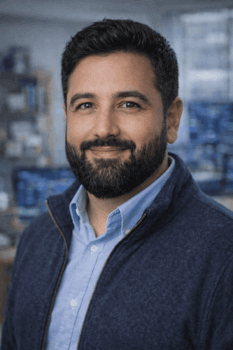

Sam Altman, CEO of OpenAI, publicly conveyed his anticipation regarding the forthcoming legal trial in which Elon Musk is expected to testify under oath. This development follows a recent ruling by a federal judge permitting Musk’s allegations of fraud related to OpenAI’s nonprofit origins to proceed to trial.
Altman shared his excitement on the social media platform X, remarking that he was "really excited to get Elon under oath in a few months," and likened the experience to "Christmas in April." This statement comes in the wake of a significant judicial decision that rejected OpenAI’s motion for summary judgment. By doing so, the court allowed Musk’s fraud claims to advance, setting the stage for further legal examination of the facts.
Context of Musk’s Fraud Claims
Elon Musk, one of the co-founders of OpenAI and an early major donor who contributed approximately $38 million between 2016 and 2020, has raised concerns that the organization’s leadership misrepresented their intentions about the company’s nonprofit status. Musk claims that he was assured the group would remain fully nonprofit and dedicated to advancing the public good, an assertion he has challenged as contradictory to OpenAI’s later actions.
Documents surfaced indicating that in 2017 Musk warned OpenAI personnel that he would cease funding unless there was a clear commitment to maintain the nonprofit structure. Following this, Altman reaffirmed support for the nonprofit framework, while co-founder Greg Brockman offered similar assurances to stakeholders.
However, internal notes documented by Brockman revealed some uncertainty about this commitment, hinting that a long-term pledge to remain nonprofit might not be realistic. These notes have become a focal point for the legal proceedings, as they suggest possible contradictions in the company's initial representations.
Judge Highlights Potential Deception and Charitable Trust Concerns
U.S. District Judge Yvonne Gonzalez Rogers authored a detailed 32-page order assessing the available evidence. She observed that Brockman's notes "could be read to suggest that Brockman intended to deceive," which supports the existence of factual disputes warranted to be resolved through trial. These disputes center on whether OpenAI’s leadership made misleading commitments to its donors about its nonprofit mission.
The judge also dismissed OpenAI's argument questioning Musk’s standing to bring the suit on the basis that his donations were made via intermediary funds. Rogers reasoned that denying standing in this manner could undermine the enforcement mechanisms of charitable trusts, thereby preserving Musk’s ability to challenge the organization's governance.
Microsoft’s Involvement Under Judicial Review
The court’s scrutiny extended beyond OpenAI to include Microsoft Corporation, a significant partner and investor in OpenAI. Microsoft’s legal attempt to dismiss allegations that it had aided and abetted breaches of fiduciary duty was denied. This denial was influenced by internal communications revealing Microsoft’s awareness of donor apprehensions concerning OpenAI’s evolving status.
One internal message from Microsoft’s chief technology officer questioned whether donors had contributed funds to OpenAI with the expectation it would remain an open nonprofit entity, expressing concerns about the company transitioning into a closed, for-profit structure.
Trial Timeline and Broader Implications
The trial is slated to commence on April 27 and continue through May, focusing on resolving the contested issues of whether OpenAI’s leadership fulfilled their commitments to donors and maintained fiduciary responsibilities.
Elon Musk, who exited OpenAI’s board in 2018 and has since established a competing artificial intelligence company, xAI, has become a prominent critic of OpenAI amid its rapid valuation growth, now estimated at around $500 billion.
This legal battle highlights ongoing tensions within AI development between nonprofit ideals and the practicalities of commercial growth and investor expectations. The case will provide clarity on governance, donor relations, and responsibility among influential players in the AI space.