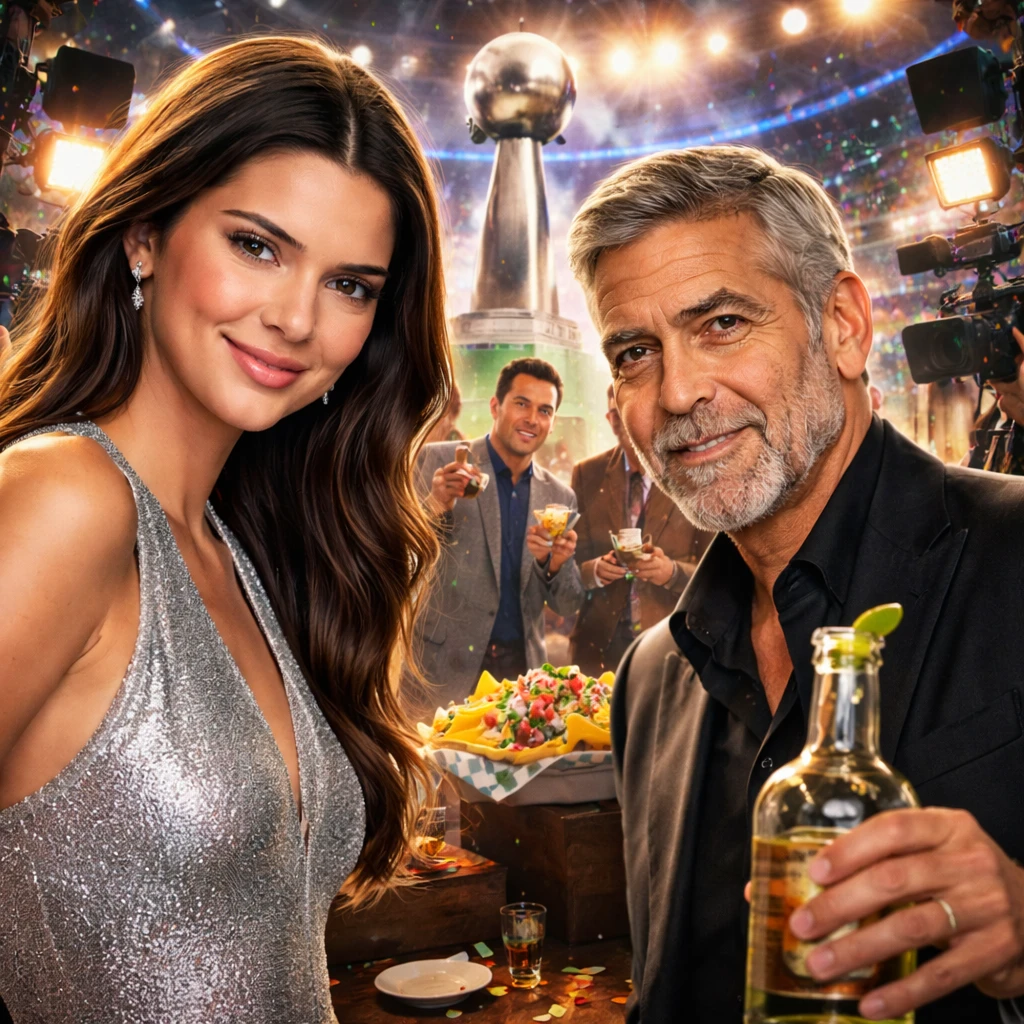

With Super Bowl 60 set to air on NBC this Sunday, advertisers are engaging in an intense contest to capture the attention of an expected audience exceeding 120 million viewers. This year’s commercial lineup blends celebrity appearances, cherished brand symbols, and familiar entertainment franchises to leave a lasting impression on viewers.
Among the notable personalities featured are Kendall Jenner, promoting Fanatics Sportsbook through a narrative involving the "Kardashian Kurse" targeting basketball players she dates, and George Clooney, endorsing Grubhub with a promotion titled "Eat the Fees," offering deals on $50+ orders. Long-standing brand icons, such as Budweiser’s Clydesdale horses, also return, alongside nostalgic references to blockbuster movies with Comcast Xfinity’s "Jurassic Park"-themed commercial reuniting stars Sam Neill, Laura Dern, and Jeff Goldblum in a humorous scenario where technology restores power to prevent chaos on the island.
The economic landscape of Super Bowl advertising is marked by unprecedented costs. NBC reported a complete sellout of advertising space by September, with average rates reaching $8 million for a 30-second spot. Select advertisers have paid over $10 million per slot, setting new records. This surge reflects the rarity of live sporting events as venues with large, unified audiences amidst fragmented media consumption habits. Such a media environment drives the intense competition for viewer engagement during marquee events like the Super Bowl, the Olympics, and the NBA All-Star Game — collectively described by Peter Lazarus, NBCUniversal’s executive vice president of sports and advertising, as a "legendary February." Notably, 40% of advertisers purchased across NBC’s main sports properties, while 70% of Super Bowl advertisers also acquired Olympic slots.
In addition to star power, this year’s advertisements prominently showcase artificial intelligence technologies and the health sector. Oakley Meta highlights AI-integrated eyewear through action-packed scenes featuring personalities like Spike Lee and Marshawn Lynch. Wix promotes its AI-driven web design software, Wix Harmony, and an AI app builder named Base44. OpenAI is also scheduled to air an ad, though details remain under wraps. Svedka Vodka employed an AI studio to redesign their robotic mascot FemBot, emphasizing the brand’s futuristic identity with a companion robot, BroBot, infused with uniquely human attributes after months of refinement.
The health and telehealth industries have increased their presence, reflecting broader market trends. Pharmaceutical companies such as Novartis feature blood tests for prostate cancer screening with a lighthearted pitch involving football tight ends, while Boehringer Ingelheim’s ad encourages kidney disease screening with celebrity endorsements by Octavia Spencer and Sofia Vergara. Telehealth companies like Ro use Serena Williams to promote GLP-1 weight loss drugs, and Novo Nordisk is expected to run a spot as well. Hims & Hers, another player offering GLP-1 treatments, focuses its messaging on providing broader healthcare access traditionally limited to affluent patients. Marketing academic Tim Calkins remarks on this notable increase in pharmaceutical advertising during the Super Bowl, dubbing it the "GLP-1 Super Bowl."
Maintaining traditional themes, Budweiser celebrates its 150th anniversary with a touching commercial featuring a Clydesdale foal and a bald eagle growing up together, backed by Lynyrd Skynyrd’s "Free Bird." Meanwhile, Pepsi reignites the long-standing "Cola wars" with an ad showcasing polar bears—iconic mascots linked historically to Coca-Cola—choosing Pepsi Zero Sugar over Coke Zero during a blind taste test, culminating in a playful "kiss cam" moment.
Several advertisers are opting to withhold their commercials until game day for maximum impact. Pepsi-owned soft drink Poppi will feature pop star Charli XCX and actress Rachel Sennott, while Dunkin’ Donuts brings back Ben Affleck alongside 1990s sitcom celebrities Jennifer Aniston, Matt LeBlanc, and Jason Alexander. The automotive sector is less represented this year, though Cadillac hints at presenting its new Formula 1 car in an upcoming spot.
Villanova University marketing professor Charles Taylor anticipates that most brands will adopt light, humorous tones in their advertisements. Amid trending global challenges such as increased immigration enforcement in Minnesota and international conflicts, such a strategy seeks to offer viewers an entertaining reprieve rather than prompt discourse on divisive issues.