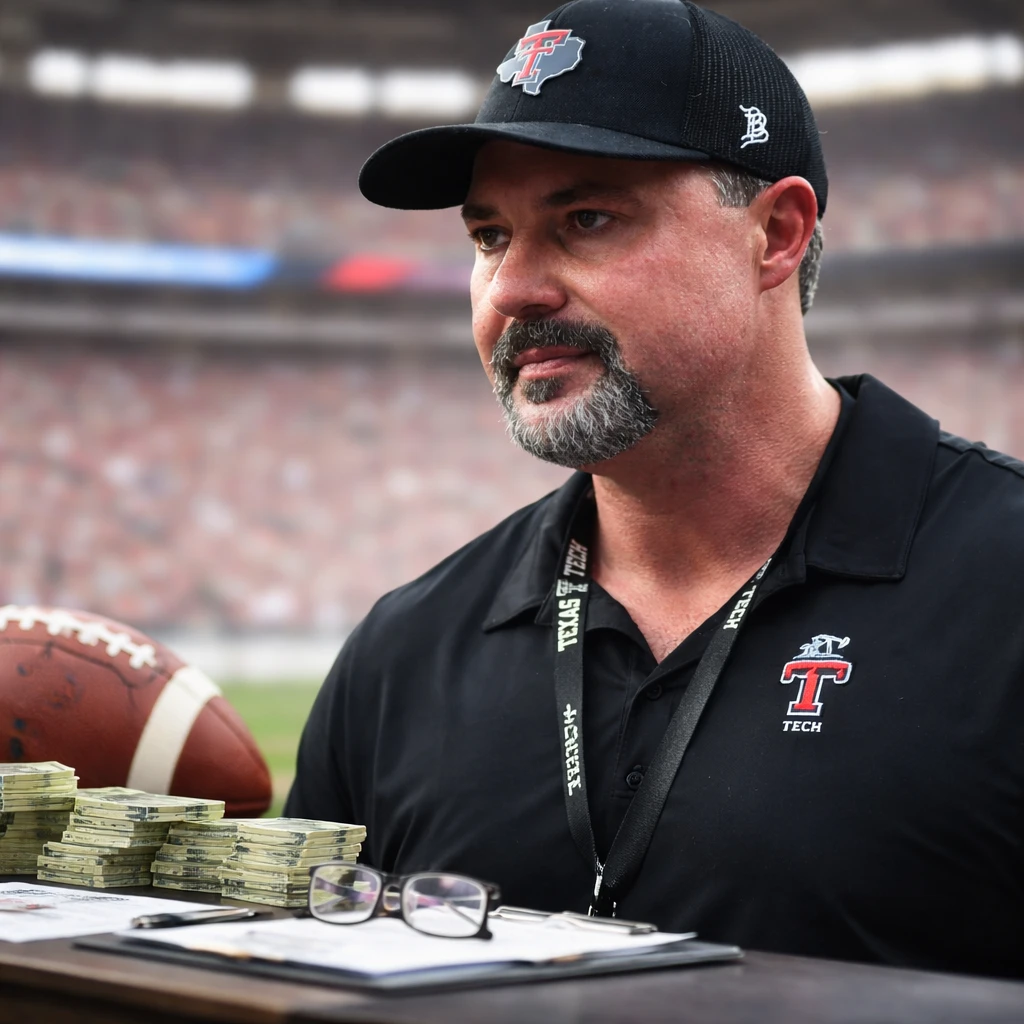

In Miami Gardens, Florida, Cody Campbell, an influential figure in collegiate athletics and a billionaire benefactor of Texas Tech University, shared his perspective on the shifting landscape of college sports and proposed a strategic framework to enhance its future viability.
Campbell, who serves as chairman of Texas Tech's board of regents and is widely recognized as the school's foremost enthusiast, acknowledges that while continuing to invest heavily in athletics remains an option, he foresees potential chaos under such an approach. "For Texas Tech, the best thing that could happen is the whole thing continues to be chaotic," he remarked, highlighting his perception of the fragmented state of college sports.
Drawing from his background as an oil executive and problem solver, Campbell articulated a vision aimed at longer-term sustainability of college athletics, targeting the period beyond 2030. He proposed that Congress establish a new governing entity specifically charged with overseeing college sports operations, with a primary mission to optimize revenue generation.
Highlighting the asymmetry in current funding models, Campbell noted that while the expense side of college sports has adopted a professional scale, the revenue mechanisms remain rooted in amateur frameworks. This mismatch, he argued, necessitates regulatory and structural reforms to better capitalize on the commercial potential of college athletics.
Among his initiatives, Campbell has advocated publicly, including via television advertisements aired during college football broadcasts, for legislative amendments to dismantle the 64-year-old restriction that inhibits collegiate conferences from jointly marketing their television rights. Unlike leagues such as the NFL and NBA, college conferences currently negotiate broadcast rights individually, limiting their financial leverage.
Estimating that a coordinated approach to television rights could unlock an additional $7 billion annually, Campbell stresses the complexity of this transformation. He urges Congress to devise a governance system empowering college sports leadership to make strategic commercial decisions that will maximize value, rather than simply overturning existing contracts.
His envisioned governing body would feature multiple commissioners overseeing distinct sports disciplines, each with authority over media rights and commercial arrangements, fostering tailored approaches to maximize revenues across the diverse landscape of college athletics.
Campbell challenges the current custodians of college sports—conference commissioners, athletic directors, and university presidents—addressing critiques from figures such as SEC commissioner Greg Sankey, who has dismissed Campbell's ideas as misunderstandings of college athletics' realities. In response, Campbell underscores his extensive experience in private equity transactions, public finance, and his own collegiate football background as aspects that qualify him to offer this perspective.
Born in Canyon, West Texas, Campbell was a standout offensive lineman for Texas Tech in the early 2000s and briefly played professionally with the Indianapolis Colts. His wealth stems from ventures in real estate and oil through Double Eagle Energy, co-founded with John Sellers, which has been sold multiple times, reportedly totaling around $13 billion in value. This financial success has enabled Campbell to make significant philanthropic contributions to Texas Tech's athletic programs, including a $25 million gift to renovate the football stadium and major involvement in The Matador Club, which has distributed upwards of $60 million to athletes since 2022 under relaxed Name, Image, and Likeness (NIL) regulations.
Despite the emphasis on his financial contributions, Campbell emphasizes that his experience in capital raising and project finance is what equips him to impact the broader college sports industry constructively. He supports the strategic use of private investments as a transitional measure while colleges evolve toward optimized media rights management but criticizes the short-term, debt-like structures currently employed, which he believes fail to address core challenges.
While Campbell supports legislative efforts such as the SCORE Act, which seeks to regulate college sports more comprehensively, he remains critical of granting expanded authority to the NCAA, particularly exemptions from state laws and legal accountability. He envisions a new organization that can build the trust necessary to effectively govern these complex matters.
Given the significant role football and basketball play in funding a broad array of collegiate sports, Campbell sees enhanced television revenues as critical to preserving women's and Olympic sports, which have seen diminishing support amid shifting resource allocations. His bipartisan approach aligns with President Donald Trump's executive order focused on protecting nonrevenue sports and reflects intersections with legislative proposals from Democratic lawmakers aiming to balance resource distribution across conferences.
Campbell acknowledges the slow pace of Congressional action but underscores robust public support, citing internally commissioned polling indicating over 85% of Americans prioritize the preservation of women's and Olympic sports, a rare consensus in a polarized environment. He warns that failure to enact meaningful reforms risks the disappearance of these sports entirely.
In sum, Campbell portrays college sports as at a crossroads requiring a blend of innovative governance, commercial acumen, and bipartisan cooperation to ensure its vitality for future generations.