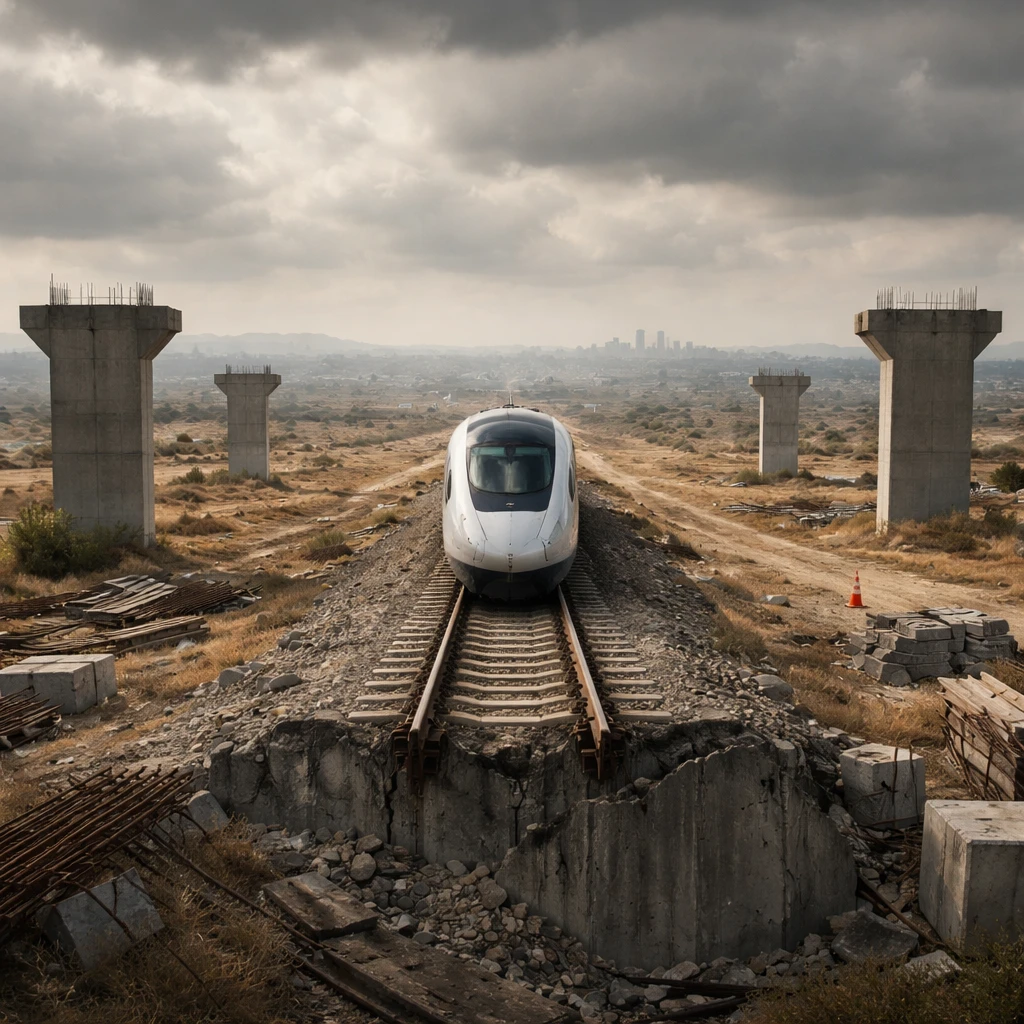

In a significant legal and political development, a federal court has rejected a lawsuit contesting the Trump administration's decision to pull $4 billion in funding allocated for California’s high-speed rail project. The dismissal marks a crucial victory for the Department of Transportation and the federal government, which had justified the funding withdrawal on concerns related to the project's escalating costs and viability.
The high-speed rail initiative, designed to establish a rapid transit route between Los Angeles and San Francisco, has been scrutinized for its ballooning budget, now estimated to exceed $100 billion. Critics, including officials within the Trump administration, have characterized the project as excessively expensive and questioned its practicality.
Transportation Secretary Sean Duffy publicly endorsed the court's ruling in an online post on the platform X, lauding the administration’s efforts to protect substantial sums of taxpayer money. He referred to the project as California's "ridiculous train to nowhere," emphasizing fiscal responsibility. This reinforces the administration's stance that continued funding would be an imprudent use of public resources.
Previously, President Donald Trump had expressed strong opposition to the project, labeling it as "severely overpriced." In alignment with this view, his administration enacted a reallocation of over $2.4 billion from the original funds assigned to this rail network. These amounts were redirected towards a broader $5 billion initiative targeting the enhancement of passenger rail infrastructure across the United States, signaling a strategic pivot toward nationwide rail improvements rather than a singular, costly project.
The strained relationship between the federal administration and the state of California has been palpable in the handling of this project. Governor Gavin Newsom and other state officials had pursued legal avenues to contest the funding cut, but the court's dismissal reaffirms the authority of federal transportation policies and decisions regarding funding distribution.
Amidst the controversy surrounding the high-speed rail project, the rail industry is also witnessing technological innovations. Notably, Parallel Systems, a Los Angeles-based company founded by former SpaceX employee Matt Soule, is pioneering developments in autonomous freight train technology. The company has secured in excess of $38 million during its Series B funding round and is conducting a pilot program in Georgia, showcasing advancements that could influence future rail operations across sectors.
The juxtaposition of high-cost infrastructure projects under scrutiny and emergent technological enterprises highlights the complex dynamics shaping America's rail transportation future. While the California high-speed rail project faces legal and financial hurdles, parallel efforts aim to modernize and optimize rail systems through automation and innovation.