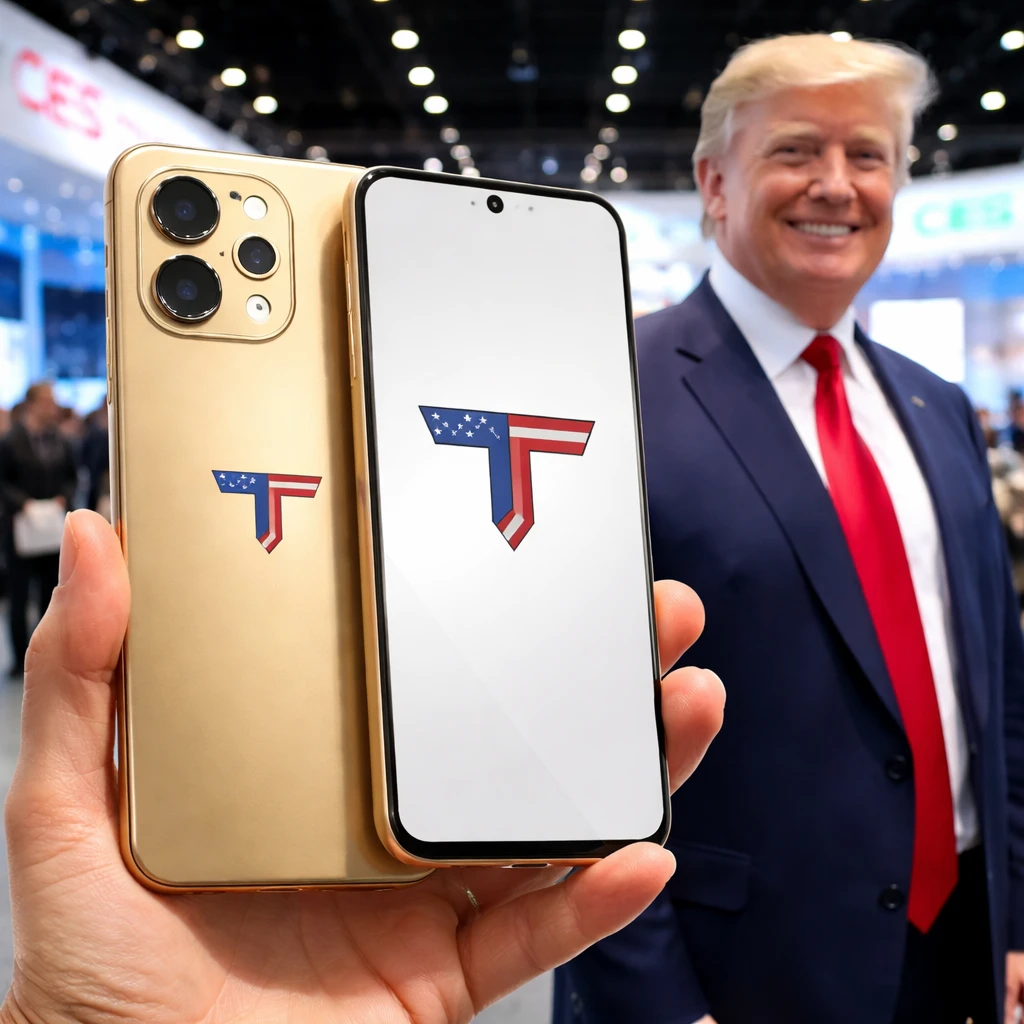

At this year's Consumer Electronics Show (CES) in Las Vegas, where a wide array of cutting-edge gadgets were unveiled, the anticipated Trump Mobile T1 smartphone was noticeably missing from the scene. This phone, first announced by the Trump Organization in June of last year, had been touted as a distinctive offering—a smartphone adorned in gold, marketed at a $500 price point which positioned it as a more affordable option relative to Apple's premium iPhone lineup, priced between $800 and $1,200.
Initial communications from Trump Mobile positioned the T1 as a device that was to be "proudly designed and built in the United States," aimed at a targeted launch window spanning August to September. Such a commitment to domestic production underscored an emphasis on quality and nationalist appeal.
However, as time progressed, there was a perceptible shift in messaging around the T1. The narrative evolved from a firm promise of U.S. manufacturing to a less clear-cut marketing statement emphasizing an "American-proud" design. This latter phrasing has appeared on Trump Mobile’s website without elaboration regarding the precise implications or extent of U.S. involvement in the production process. Concurrently, the company continues to invite prospective buyers to place a $100 deposit against the price tag of the T1.
Industry analysts suggest that the changes in Trump Mobile’s production and manufacturing messaging likely reflect practical challenges. Specifically, the United States currently lacks the comprehensive supply chain infrastructure and logistical capacity to manufacture a smartphone competitively priced under $1,000, a barrier that has similarly impeded efforts by major manufacturers, including Apple's reticence to move large-scale iPhone production out of established facilities in China and India despite political pressures.
As summer advanced, further ambiguity surrounded the T1’s availability. Trump Mobile tempered initial release timelines by indicating that devices would be shipped to deposit holders by the conclusion of 2025, yet the company's website maintains that the release is expected "later this year," without providing definitive scheduling.
Requests for clarification on the delays and updated delivery expectations from Trump Mobile and the Trump Organization have gone unanswered. However, according to reports involving a customer service representative, the T1's launch has been delayed until late January, with some attributing this setback to disruptions caused by a 43-day federal government shutdown last year.
Francisco Jeronimo, an analyst at International Data Corp., conveyed skepticism about the project from its inception. He pointed out the complexity inherent in developing a new smartphone, implying that the delays stem from underestimated difficulties in production and supply chain management. His remarks highlight doubts about whether the T1 will ever be fully realized and brought to market.
While the flagship device stalls, Trump Mobile has pivoted its business approach by continuing to offer wireless service plans priced at $47.45 monthly, a figure reflecting Donald Trump’s ordinal number as President. Additionally, the company retails refurbished smartphones, including prior-generation iPhone and Samsung Galaxy models, priced between $370 and $630, possibly as an interim strategy while awaiting the T1’s availability.
Jeronimo speculated that Trump Mobile might be emphasizing refurbished phone sales as a practical adjustment, possibly recognizing the resource and cost constraints that have delayed the T1.