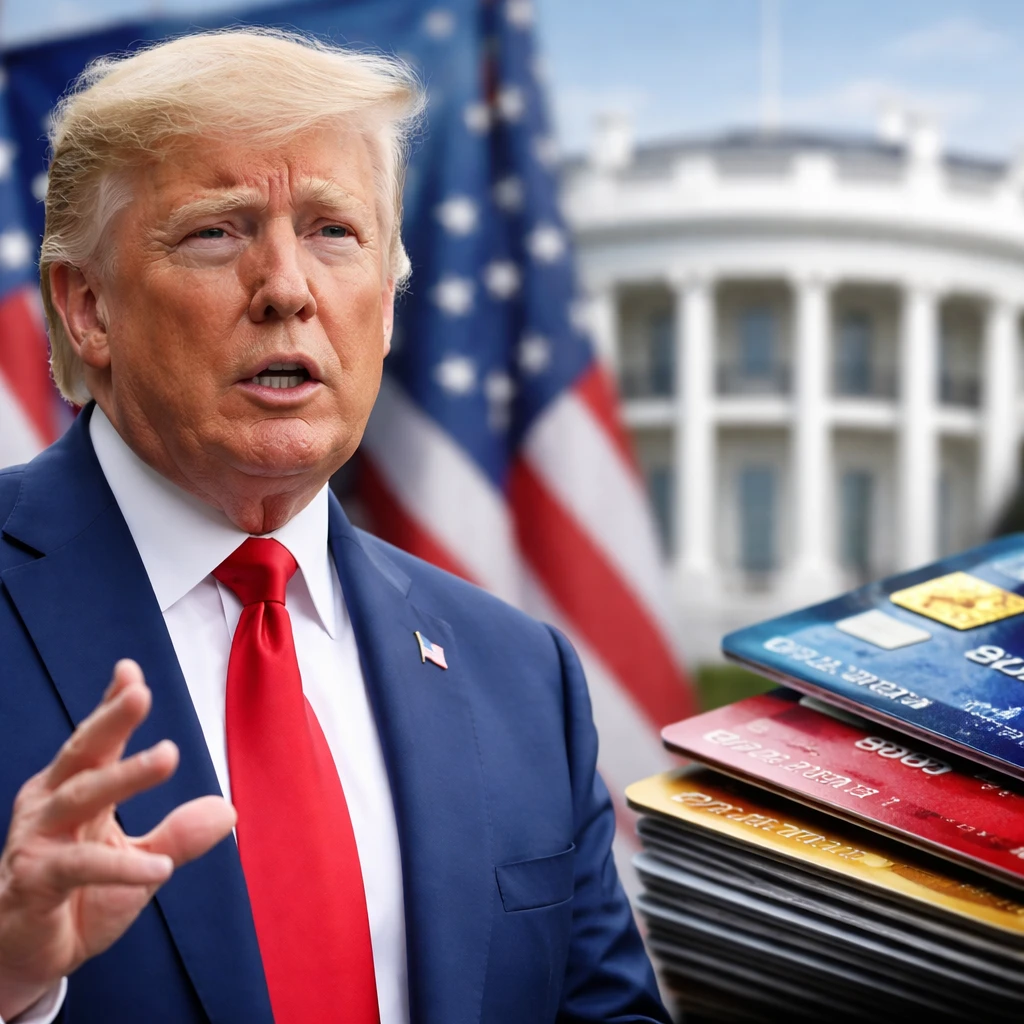

In New York, the credit card industry faces mounting uncertainty as the deadline set by President Donald Trump to conform to a proposed 10% cap on credit card interest rates draws near. Announced last week with a compliance expectation of January 20, the initiative has left consumer advocacy groups, lawmakers, and financial institutions grappling with a lack of clarity regarding potential enforcement and repercussions.
The White House has yet to articulate specific measures that would be enacted against credit card issuers failing to reduce their rates to the suggested cap. White House Press Secretary Karoline Leavitt acknowledged the administration's "expectation" for industry compliance but refrained from detailing any consequences during a media briefing. "I don’t have a specific consequence to outline for you but certainly this is an expectation and frankly a demand that the president has made," she said.
Economic research underpinning the administration's proposal indicates that capping credit card interest rates at 10% could yield annual savings of approximately $100 billion in interest payments for American consumers. The analysis further suggests that while the credit card industry would experience a significant financial impact, it would maintain profitability, albeit potentially at the cost of reducing rewards programs and other customer incentives. These findings have been publicly shared via official White House Twitter channels.
Meanwhile, lobbyists representing banking institutions report limited insight into the administration's enforcement plans. Despite multiple congressional efforts by both Republican and Democratic lawmakers over recent years to legislate interest rate limitations, leadership within the House and Senate Republican conferences has shown resistance to adopting caps on credit card rates.
Complicating the situation, the Dodd-Frank Act enacted in the wake of the 2008 financial crisis explicitly restricts at least one key federal banking regulator from imposing usury limits on loans, casting doubt on any unilateral regulatory action to enforce such a cap.
In the absence of statutory or executive mandates, the administration's approach may rely heavily on exerting political pressure to compel industry adjustments, mirroring tactics employed in other sectors. Previous instances include demands directed at pharmaceutical companies to lower drug prices, which led to public commitments by industry leaders, and appeals to semiconductor and technology companies to increase domestic production, resulting in expansions of U.S.-based manufacturing facilities such as those announced by Apple.
From the perspective of Wall Street and banking executives, there is a general reluctance to engage in direct confrontation with the administration, especially given the beneficiary status of the industry from the Trump administration's deregulation efforts and tax reforms. The "One Big Beautiful Bill," enacted in July, incorporated significant tax reductions, while deregulation spurred increased dealmaking activity in the investment banking sector, generating substantial fee income for major financial institutions.
The credit card interest rate cap proposal has elicited a two-pronged response from banks and their advocates: explicit opposition to the cap accompanied by offers to collaborate with the White House on consumer affordability issues. Jeffrey Barnum, Chief Financial Officer of JPMorgan Chase, a leading credit card issuer with a portfolio totaling $239.4 billion in customer balances and strategic partnerships with United Airlines and Amazon, conveyed readiness to deploy full resources to resist the imposition of rate limits during a recent press call. JPMorgan's acquisition of Apple Card's portfolio from Goldman Sachs intensifies its stake in this issue.
Mark Mason, Citi's Chief Financial Officer, expressed a similar stance, underscoring that support for a hard cap is not forthcoming due to concerns over potential reductions in consumer credit availability and negative economic repercussions. Concurrently, Mason acknowledged affordability challenges and expressed openness to discussing solutions with governmental officials.
The administration's scrutiny of the credit card sector extends to ancillary revenue streams. President Trump has endorsed congressional legislation that could reduce the fees banks earn when consumers use their credit cards at merchant establishments.
In response to the administration’s indications, some financial technology companies are initiating measures aligned with the proposed interest rate caps. One such example is Bilt, which recently unveiled new credit card products featuring a one-year fixed interest rate of 10% on new purchases. While comparable to promotional rates historically employed within the industry, this approach may serve as a prototype for accommodating regulatory expectations without disrupting foundational business models. Ankur Jain, CEO of Bilt, affirmed a preference for early adoption if such rate limitations are to be implemented.