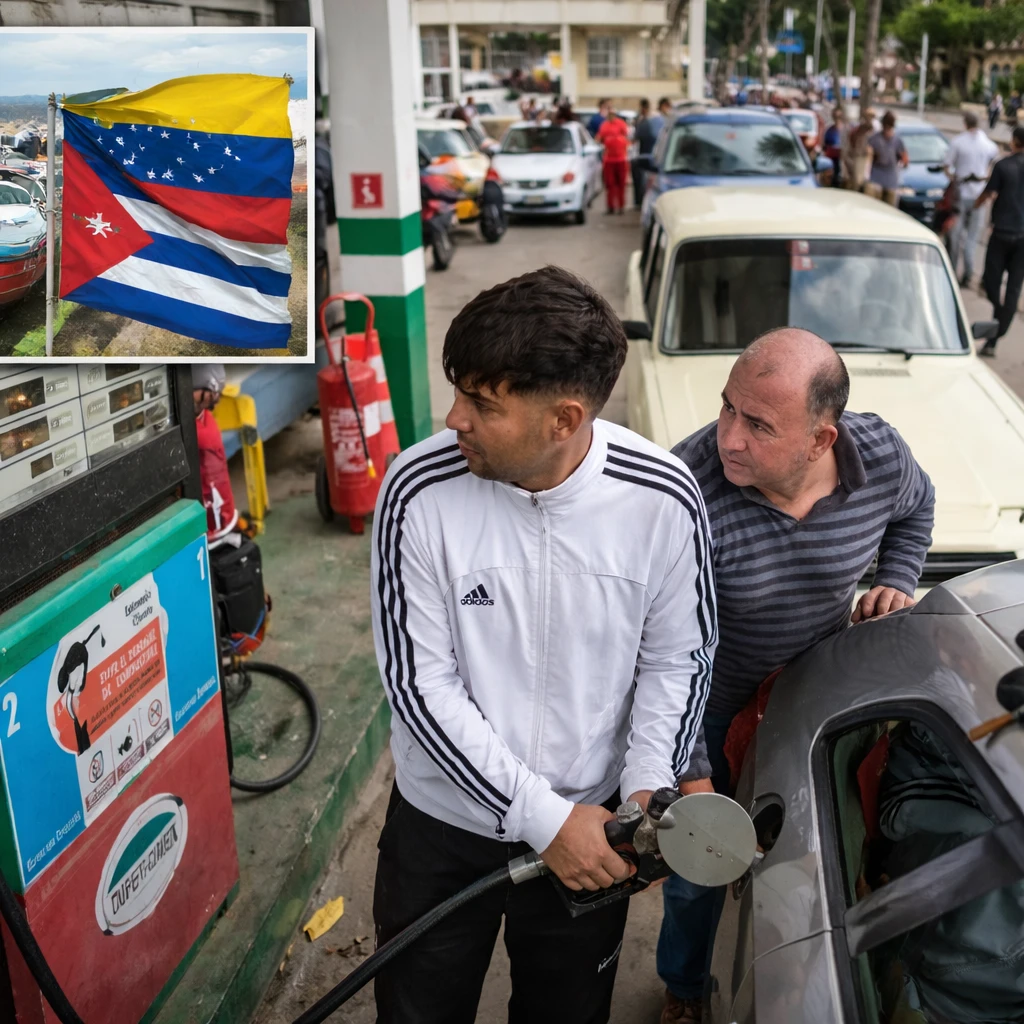
In a firm stance against Cuba, U.S. President Donald Trump has enacted an executive order aiming to impose tariffs on any country that directly or indirectly sells or sends oil to the Caribbean nation. This announcement has reverberated throughout Cuba, where many citizens are already enduring severe economic hardship. Analysts caution that the new restrictions could intensify internal difficulties, potentially triggering a humanitarian crisis.
The directive demands the application of tariffs on goods from countries that provide "any petroleum" to Cuba, effectively blocking the island's access to essential fuel for its economic activities. The Trump administration justifies this policy by labeling Cuba as an "unusual and extraordinary threat" to U.S. national security and foreign policy, declaring a national emergency in relation to this perceived danger.
Official statistics reveal that Cuba produces merely 40% of its required fuel, mainly for eight outdated thermo-electric plants utilized for power generation. The limited domestic output, much of which is utilizable solely by these aging facilities, is supplemented by smaller plants running on diesel, which Cuba must import. The government has also started a tentative solar energy program, which gained momentum last year.
Before this month, Cuba was receiving approximately 35,000 barrels of crude daily from Venezuela, 5,500 barrels from Mexico, and an additional 7,500 barrels from Russia — though current supplies are uncertain. Despite these shipments, the country has experienced frequent power outages over the past three years, with some blackouts lasting over eight hours. These interruptions impact water distribution and daily life for citizens who largely depend on electricity for cooking and other necessities.
Experts have voiced grave concerns about the potential fallout. Arturo López Levy, an economist affiliated with the University of Denver, described the economic damage as devastating, highlighting that Cuba's economy was already barely functioning. He warned that this new order serves as a more dangerous instrument than various military measures due to its widespread repercussions. López Levy predicts a significant surge in emigration and a looming humanitarian crisis, emphasizing that without fuel, transporting food to cities would become impossible, putting the population at risk of hunger.
Cuba's economy has contracted by 15% over the last six years, affected by multiple factors including the COVID-19 pandemic's economic halt, harsher U.S. sanctions, and internal financial reforms leading to inflation. Ricardo Torres, an economist from American University in Washington, emphasized that fuel is fundamental across all societal sectors in Cuba. Without it, transportation, agriculture, and industry come to a standstill.
Several analysts question how long Cuba's strained economy can tolerate such supply disruptions. Jorge Piñon, energy expert at the University of Texas, noted the uncertainty regarding the island's remaining fuel reserves. He remarked that the situation surpasses the severity of an approaching hurricane. With Venezuela no longer supplying oil and Mexico facing U.S. pressure to cease its shipments, Russia seems to be the only remaining significant provider. Other traditional allies like China do not produce oil, and credit arrangements are unhelpful. Potential alternative suppliers among Cuba’s historic partners, such as Algeria, Angola, or possibly Brazil, remain unconfirmed.
In response, Cuban authorities and state media swiftly rejected the U.S. assertion that Cuba poses a threat, highlighting the ideological differences as insufficient grounds. President Miguel Díaz-Canel criticized the policy on social media, characterizing it as baseless and destructive, intended to suffocate Cuba’s economy and enrich foreign political actors at the expense of Cuban citizens. Officials further expressed that the measure forces third-party governments to choose sides under duress.
On the streets, alongside expressions of nationalism against external interference, ordinary people voiced concerns about how these sanctions would impact their daily lives. Eddy Porto, a 70-year-old street vendor, condemned the policy, labeling it unjust and attributing it to the president’s persistent pursuit of dominance, questioning the fairness toward Cuban citizens.