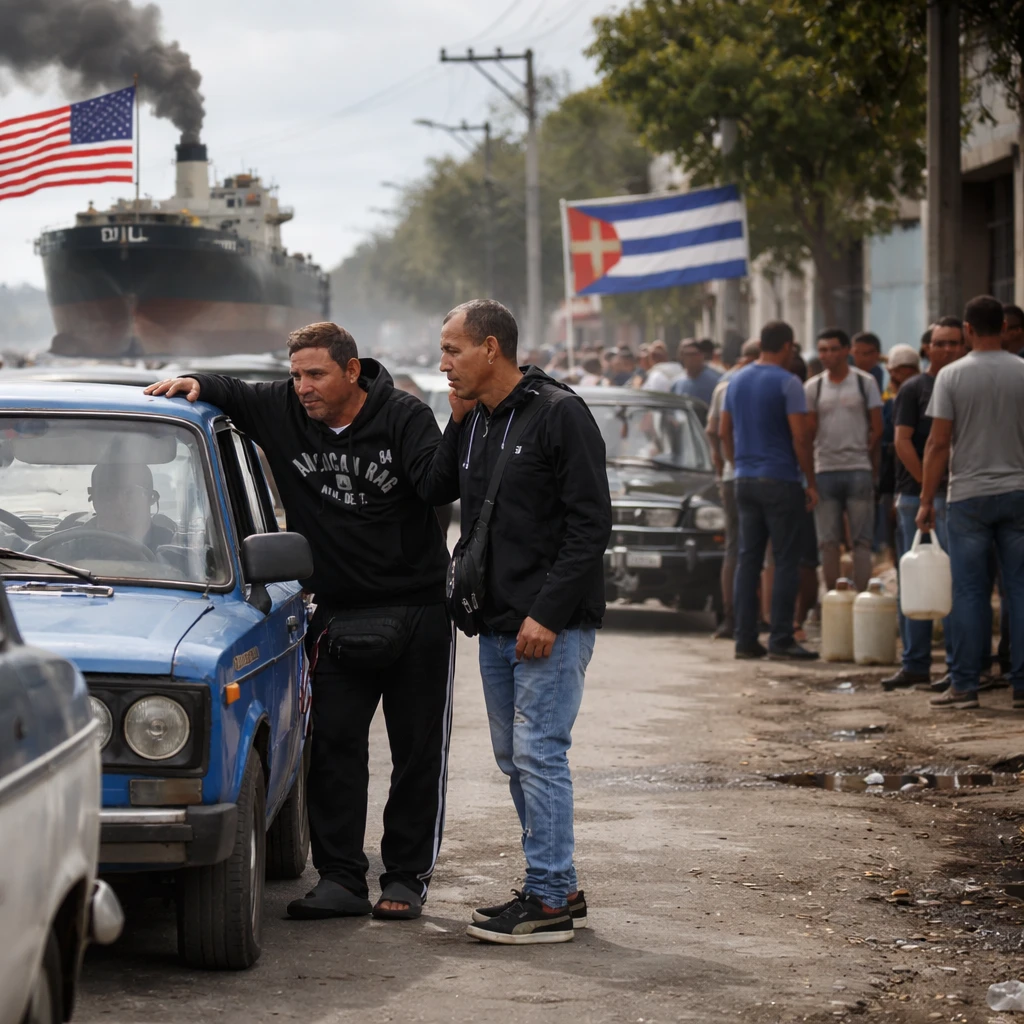
In Havana and across Cuba, widespread electricity blackouts recently concealed the U.S. government's threat to impose tariffs on any country that sells or supplies oil to Cuba. Citizens awakened to the news with growing resentment and distress over the implications of such a policy, as the island already grapples with an evolving economic crisis.
Donald Trump labeled Cuba a "failing nation," predicting its survival is doubtful. The president’s statement late on Thursday intensified concerns for Cubans confronting humanitarian difficulties. Among those affected, Lázaro Alfonso, an 89-year-old retired graphic designer, described the situation as akin to "living in the Wild West," with the U.S. portrayed as the global enforcer imposing severe pressures.
Alfonso, who experienced the "Special Period" during the 1990s—a time marked by economic collapse following the withdrawal of Soviet support—believes current conditions surpass that era in severity. He cited prolonged power blackouts, scarcity of essential goods, and critical fuel shortfalls as indicators of Cuba’s dire state. "The only thing missing here is for bombs to start falling," he remarked.
Cuba endures daily power outages attributed to fuel deficiencies and dilapidated infrastructure, factors exacerbating economic challenges intensified by reduced tourism, escalated U.S. sanctions, and a flawed internal monetary reform aimed at currency unification. The looming threat of decreased oil imports is expected to aggravate these conditions further.
In response to the U.S. announcement, Cuban President Miguel Díaz-Canel condemned the move on social media, branding it as "fascist, criminal and genocidal." He argued that the policy serves personal interests over those of the American populace. Foreign Minister Bruno Rodríguez also publicly criticized the step, declaring it an "unusual and extraordinary threat" and maintaining an international emergency status.
The Venezuelan government joined in denouncing the tariff threat, stating that it violates international law and undermines principles governing global commerce. The United States has signaled intentions to halt oil shipments from Venezuela, Cuba's principal ally, following political conflicts and sanctions imposed on the South American country.
Amid speculation that Mexico may reduce its oil shipments to Cuba, Mexican President Claudia Sheinbaum expressed her commitment to identify alternatives to support the island nation and avert a humanitarian crisis. She mentioned the possibility of the United States overseeing Mexican oil shipments to Cuba, contingent upon clarifications regarding the details of the new U.S. directive.
Mexico, alongside Russia, has become a key supplier of fuel following U.S. sanctions that constrained Venezuelan oil deliveries. Cuban residents voice acute concern about these developments, noting the immediate impact on daily life. Street vendor Yanius Cabrera Macías said, "It's impossible to live like this," emphasizing that U.S. sanctions primarily affect ordinary citizens rather than their governments. He considers the Cuban government itself more threatening to its people than external forces.
Energy expert Jorge Piñón from the University of Texas Energy Institute highlights the critical uncertainty surrounding Cuba’s fuel reserves. He notes that Cuba's economic viability depends heavily on diesel, which fuels the island’s operations. Without timely tanker deliveries in the coming weeks, he warns, the outlook could become dire.
Piñón discussed international dynamics affecting Cuba's oil supply, pointing out that China, lacking oil reserves, can only provide financial credit, while Russia represents an unpredictable factor given its sanctions and the potential for redirected oil exports.
Meanwhile, Cuban daily life remains challenged by persistent power shortages. Luis Alberto Mesa Acosta, a 56-year-old welder, reports frequent work disruptions due to the outages reminiscent of the hardships during the Special Period. He calls for communal solidarity to confront these difficulties.
For families like that of Dayanira Herrera, a mother of a small child, the blackouts severely complicate caregiving, forcing them to spend evenings outside due to lack of electricity. Herrara described the effect of the U.S. announcement as "the end of the world" for Cuba, underscoring the pervasive anxiety across the population.
Reporting contributions from correspondents in Havana and Mexico City provide a comprehensive view of the multi-faceted challenges Cuba faces as geopolitical decisions impact its fragile infrastructure and economy.