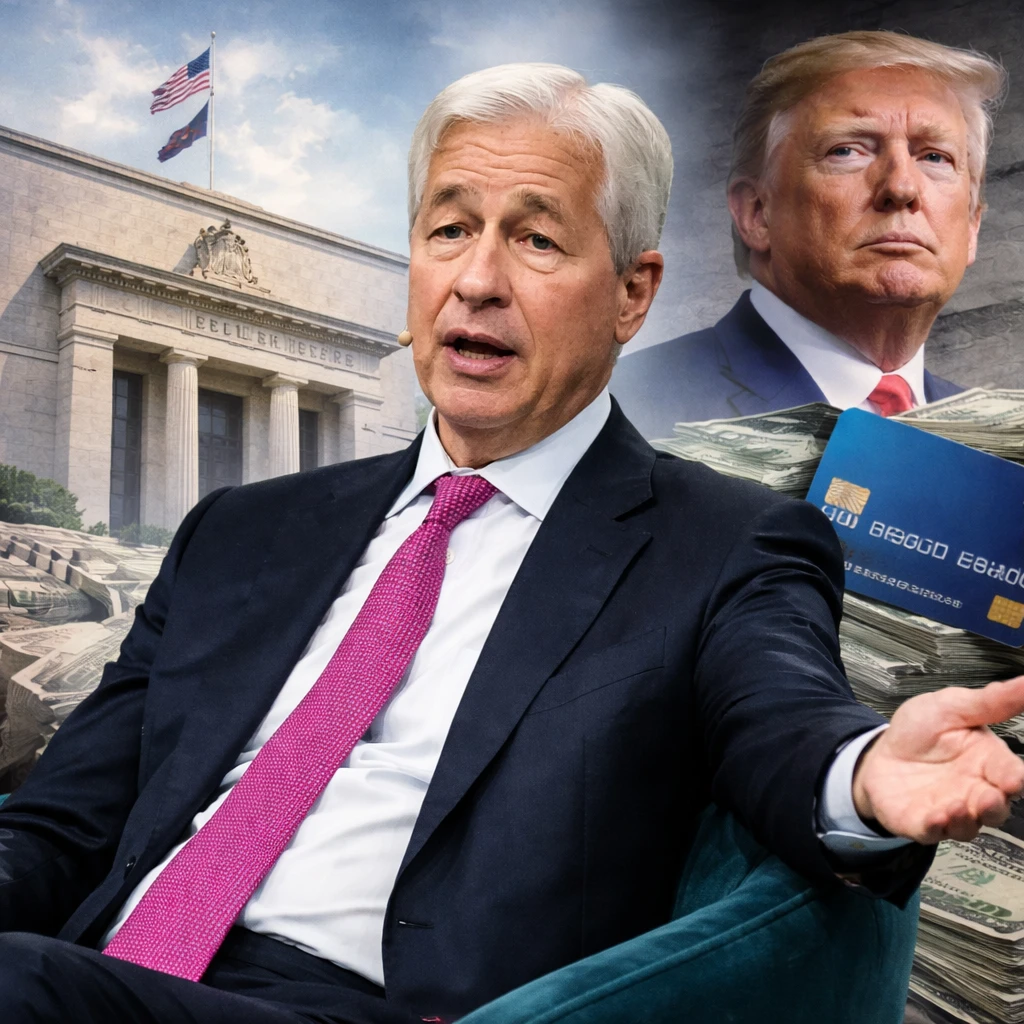

For much of the Trump presidency, Wall Street has largely benefitted from policies enacted by the administration and maintained a supportive stance toward the president. However, recent developments have strained this historically cooperative relationship.
In July, President Donald Trump enacted the One Big Beautiful Bill, which ushered in a new wave of tax reductions and sharply curtailed the Consumer Financial Protection Bureau’s budget by nearly fifty percent. The bureau has often been adversarial toward the banking sector. Concurrently, the administration's banking regulators have championed an agenda favoring deregulation, welcomed by both financial institutions and large corporations.
Nonetheless, tensions escalated when President Trump proposed implementing a one-year limitation on credit card interest rates, capping them at 10%. This initiative targets a revenue-rich segment for banks. Additionally, the Department of Justice initiated an inquiry into Federal Reserve Chair Jerome Powell, an action critics contend threatens the independence of the key institution responsible for setting interest rates apart from political pressures.
In response, CEOs from leading banks convened with White House officials on Tuesday, cautioning that these steps may inflict more damage than benefit on the broader U.S. economy. Robin Vince, CEO of BNY Mellon, emphasized to reporters that compromising the Federal Reserve’s independence seemed counterproductive to the administration’s primary objectives, such as enhancing affordability, lowering borrowing expenses, and easing costs for daily American consumers.
Vince further warned against undermining the foundational stability of the bond market, noting the possibility that such actions could inadvertently elevate interest rates due to shaken confidence in the Fed’s autonomy.
The sanctity of the Federal Reserve's independence remains paramount among major banks. While some bankers have expressed disagreement with certain policy moves by Powell, a substantial respect for his leadership persists. Jamie Dimon, CEO of JPMorgan Chase, acknowledged not aligning with every Fed decision but underlined his high regard for Powell's stewardship during a press briefing on Tuesday.
Beyond the focus on the Fed, the Trump administration has targeted the credit card sector. Amidst concerns over affordability heading into the midterm elections, the president advocates for a 10% ceiling on credit card interest rates, with a goal of enforcement by January 20. Trump's approach—whether relying on voluntary restraint by credit card companies or compelling action through executive authority—remains unspecified.
Current average credit card interest rates hover between approximately 19.65% and 21.5%, as reported by the Federal Reserve and industry tracking entities. Research conducted by Vanderbilt University suggests that enforcing a 10% cap could deprive banks of close to $100 billion annually in revenue. This prospect precipitated a sharp decline in share prices for major credit card issuers including American Express, JPMorgan Chase, Citigroup, and Capital One on Monday, reflecting investor concern over profitability.
In a media conference, JPMorgan Chase’s Chief Financial Officer Jeffrey Barnum indicated robust opposition from the credit card industry regarding any interest rate ceilings, affirming their readiness to mobilize all available means to block such measures. As one of the largest credit card issuers nationwide—with cardholder balances totaling $239.4 billion—and beneficiary of substantial co-brand partnerships with companies like United Airlines and Amazon, JPMorgan has a vested interest in preserving current rate structures. Notably, JPMorgan also recently expanded its credit card portfolio through the acquisition of the Apple Card from Goldman Sachs.
Barnum articulated the industry's view that the administration's attempts to limit interest rates could backfire, potentially reducing credit supply rather than lowering consumers’ borrowing costs. He cautioned that such outcomes would negatively affect consumers, the wider economy, and the banks themselves.
Moreover, key airline and hotel partners associated with banks’ co-branded cards have voiced dissatisfaction with the administration's push to cap rates. Ed Bastion, CEO of Delta Air Lines, highlighted concerns that such caps would restrict low-income consumers’ access to credit altogether—impacting not just interest charges but the availability of credit products—and potentially disrupting the credit card market’s fundamental dynamics. Delta benefits significantly from its partnership with American Express, which generates billions in revenue through co-branded cards.
Further intensifying the administration's stance, President Trump endorsed a bill authored by Senator Roger Marshall aimed at curbing the fees that banks charge merchants when processing credit card transactions. Trump proclaimed support for this legislation on his platform Truth Social, framing it as an effort to end excessive merchant swipe fees.
The statements from Wall Street come as major banks report quarterly earnings, with JPMorgan Chase and The Bank of New York Mellon releasing results on Tuesday. Other leading banks, including Citigroup, Bank of America, and Wells Fargo, are scheduled to report later in the week.