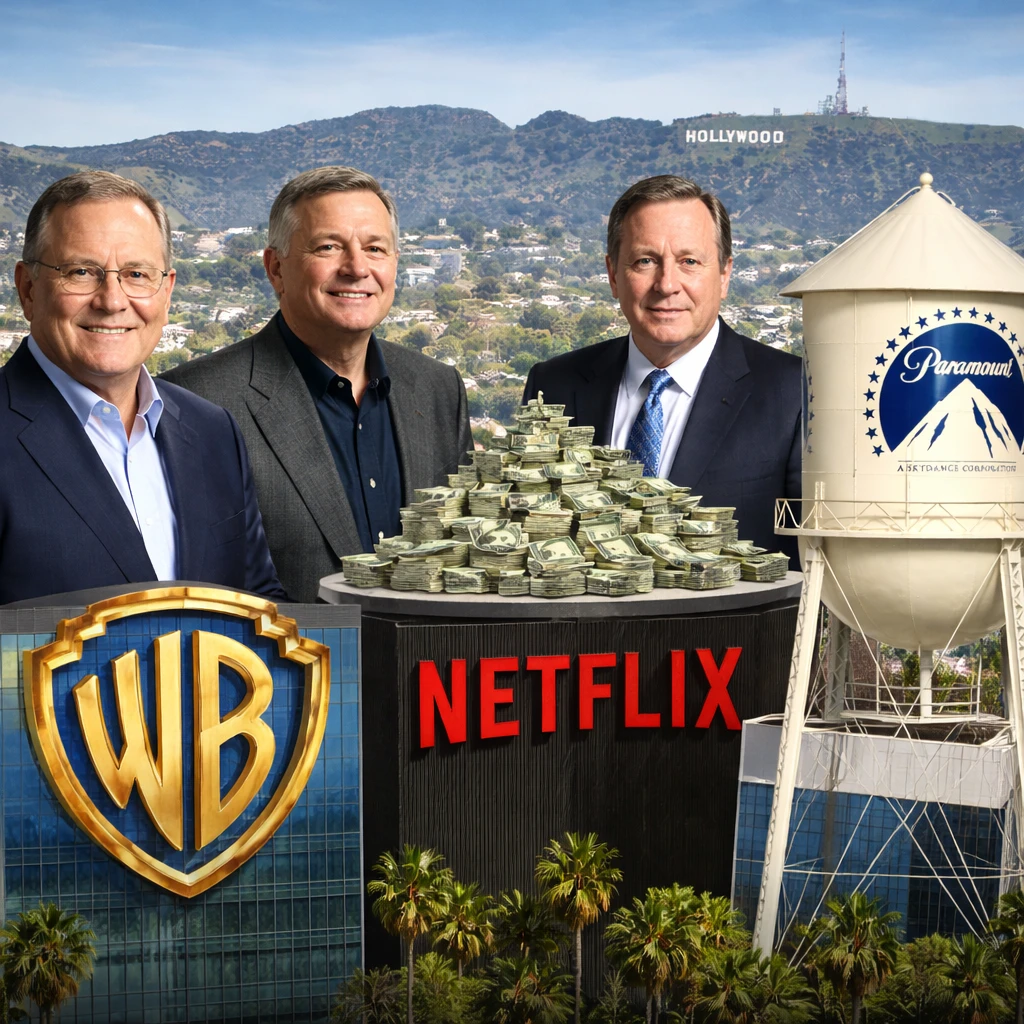

Warner Bros Discovery has once again declined a takeover proposal from Paramount Global, directing its shareholders to endorse instead the company's agreement with Netflix. Paramount, owned by Skydance, has persistently pursued Warner Bros with multiple bid attempts, including a hostile offer valuing the entire company at $77.9 billion. Warner's management has consistently resisted these advances, recently reaffirming support for Netflix's $72 billion acquisition bid targeting Warner's streaming and studio divisions.
On Wednesday, Warner Bros Discovery's board issued a statement declaring Paramount's proposal unfavorable both to the corporation and its shareholders. The board emphasized that Paramount's bid contained terms that pose significant risks, notably extensive debt financing contingencies that could impede deal closure and insufficient shareholder protections if the transaction fails.
Samuel Di Piazza Jr., Chair of Warner Bros Discovery, highlighted these concerns, stating: "Paramount's offer continues to provide insufficient value, including terms such as an extraordinary amount of debt financing that create risks to close and lack of protections for our shareholders if a transaction is not completed." He contrasted this with the Netflix agreement, which he described as "offering superior value at greater levels of certainty."
Paramount has yet to issue a public response to the latest rejection, with its hostile takeover attempt remaining in effect. Shareholders have until January 21 to tender their shares, enabling them to accept an acquisition proposal.
In an effort to reinforce its bid, Paramount recently secured an "irrevocable personal guarantee" from Oracle founder Larry Ellison, who is the father of Paramount CEO David Ellison. This guarantee supports $40.4 billion in equity financing for Paramount's offer. Additionally, Paramount matched Netflix's breakup fee by increasing its promised payout to shareholders to $5.8 billion if regulatory bodies block the deal.
Warner Bros Discovery's letter to its shareholders articulated apprehensions over the structure of Paramount's proposal, characterizing it effectively as a leveraged buyout laden with debt. The letter also noted that Paramount's offer contains operational restrictions that could inhibit Warner Bros Discovery's performance and flexibility during the transaction process.
The competitive dynamics between the offers stem notably from their differing targets. Netflix seeks to acquire only Warner Bros Discovery's entertainment assets, including the studio and streaming segments such as HBO Max, along with the legacy TV and movie production components. On the other hand, Paramount aims to purchase the entire corporation, encompassing networks like CNN and the Discovery cable channels.
Under the Netflix deal, Warner's news and cable assets would be separated into a standalone entity, in line with previously announced plans. Any merger with either Paramount or Netflix is projected to take over a year to finalize and is expected to encounter significant antitrust examination.
Given the size and implications of the acquisitions, an in-depth review by the U.S. Department of Justice is anticipated, with the possibility of legal challenges or calls for transaction modifications. Regulatory agencies internationally may also scrutinize the deals. Moreover, political factors could influence the outcome, amid comments from former President Donald Trump indicating unusual personal interest in the approval process for such transactions.