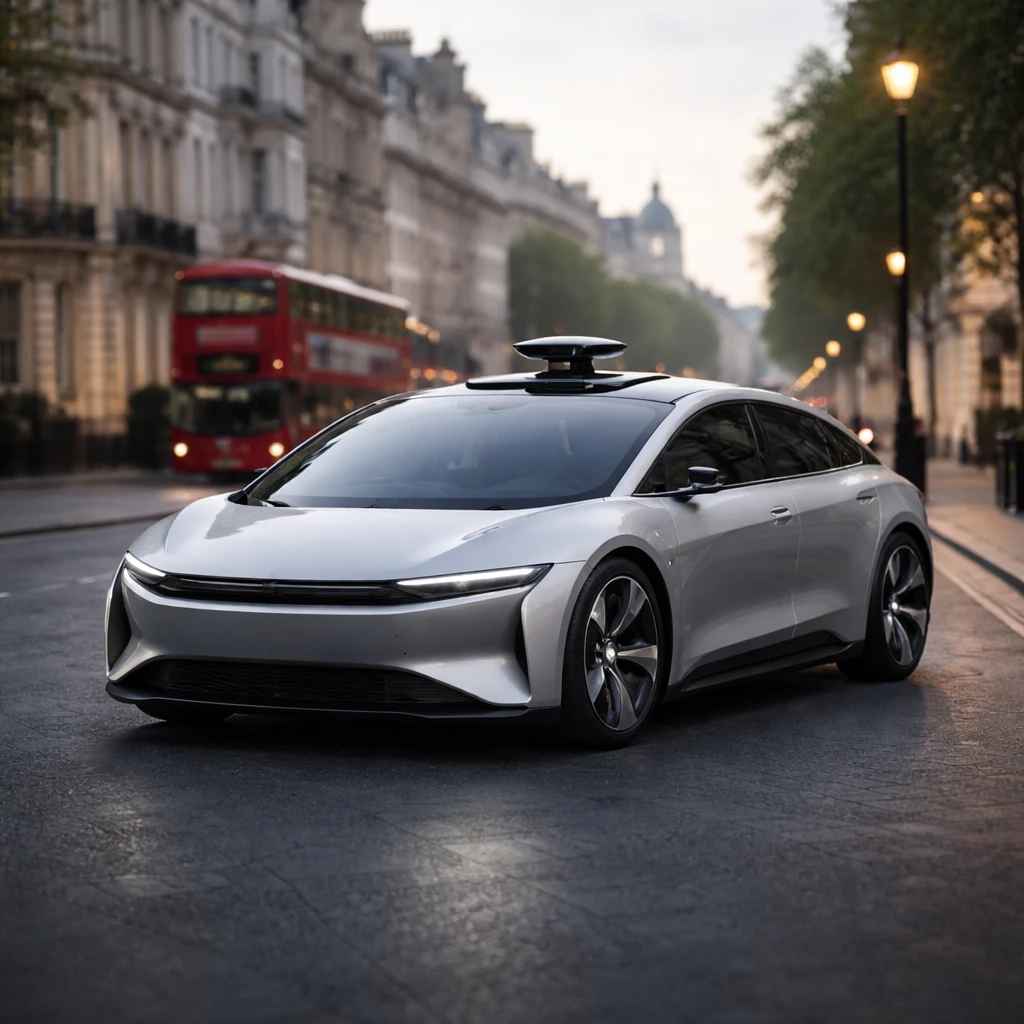

On Wednesday evening, Waymo convened a press briefing in London to announce the company’s intention to provide driverless taxi services to London residents by the fourth quarter of 2026. While Waymo’s autonomous vehicles have been active in select U.S. cities for several years, the launch in London is particularly consequential as it may represent the company’s first European market introduction, and potentially its first outside the United States, depending on developments in Tokyo where testing is ongoing.
The significance of London’s selection lies in its urban complexity and divergence from typical American city layouts. Unlike the grid-like planning common to many U.S. metropolitan areas, London’s design is the product of roughly two millennia of incremental construction, resulting in a dense, intricate network of narrow and winding streets. Jaywalking is lawful, cycling is prevalent, and the overall population density is higher than in many American cities where Waymo currently operates. These factors create a demanding environment for autonomous vehicle navigation.
Despite these challenges, Waymo executives voiced strong confidence in the robustness of their AI systems. Drawing from data compiled over approximately 20 million rides, they assert that their technology has developed a sophisticated understanding of dynamic traffic scenarios, enabling real-time adaptation. Adjusting the system for London’s unique traffic rules is regarded internally as relatively straightforward.
Waymo is implementing a tripartite phased rollout strategy. The initial phase involves approximately two dozen vehicles driven by human operators, tasked with road mapping and AI data collection to apprehend local nuances. The second phase will see autonomous test drives conducted under human supervision to ensure safety protocols before transitioning to an unmonitored public operation expected in phase three, contingent upon regulatory clearance.
This measured strategy emphasizes collaboration with governmental authorities. Unlike earlier disruptive transportation services like Uber, which rapidly expanded and compelled regulatory entities to react post hoc, Waymo has pursued methodical engagement with policymakers. This approach acknowledges the necessity of transitioning autonomous vehicles from an illegal status in most jurisdictions to a fully sanctioned mode of public transport. The critical importance of safety is highlighted by the fact that even a single fatality could imperil the entire program.
Supporting this cautious strategy, Waymo presented data indicating that their autonomous vehicles have been involved in 90% fewer serious crashes per mile compared to human drivers in the United States. Ben Loewenstein, overseeing Waymo’s U.K. and European public policy, expressed a commitment to establishing a strong partnership with the city of London, reflecting a proactive stance on public integration and safety assurance.
In related artificial intelligence discourse, Anthropic CEO Dario Amodei recently published an essay entitled "The Adolescence of Technology," which offers an analytical perspective on the societal risks posed by rapidly advancing AI systems. The piece delineates potential dangers encompassing AI alignment failures, malicious misuse, amplification of surveillance and authoritarianism, large-scale employment disruption, and unforeseen challenges. Despite the sobering outlook, Amodei concludes on an optimistic note regarding humanity’s capacity to navigate these complex issues.
Meanwhile, Tesla has announced a strategic pivot toward robotics by repurposing its California car manufacturing facility to produce the Optimus humanoid robot line, discontinuing production of the Model S and Model X to focus resources on robotics endeavors. Nonetheless, Tesla faces significant competition from both Chinese entities producing cost-effective robots and smaller U.S. startups developing capable humanoid robots.
The evolving landscape of AI and robotics is also reflected in recent white papers such as one from the White House President Trump’s Council of Economic Advisers, which warns of a potential "great divergence" among nations driven by disparities in AI capabilities, with those controlling advanced AI infrastructures possibly outpacing others economically.