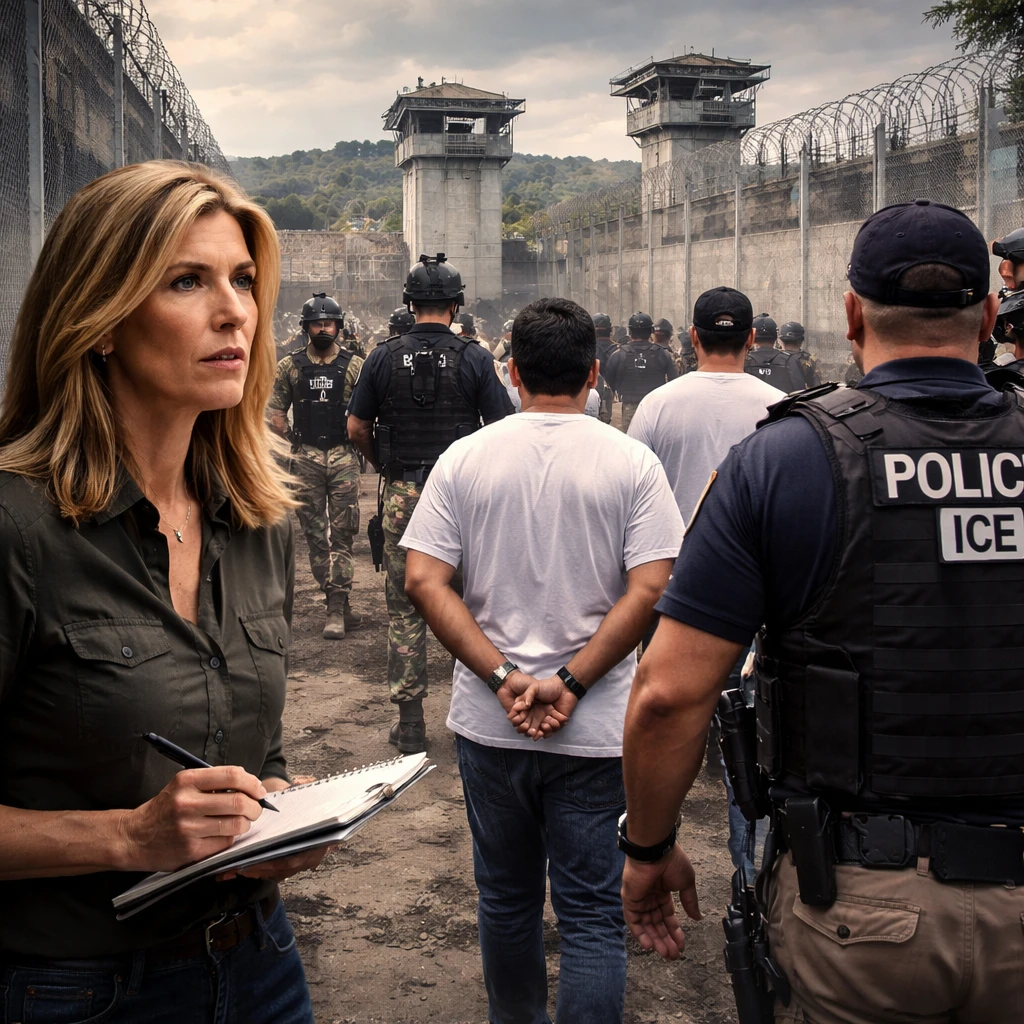

On Sunday, "60 Minutes" finally presented a story about deportations under the Trump administration that had been removed from its December broadcast lineup, a last-minute decision that sparked internal controversy at CBS News focusing on allegations of political interference. The segment documents individuals deported to El Salvador’s infamous and severe CECOT prison facility.
Correspondent Sharyn Alfonsi, who produced the feature, did not discuss the prior dispute in the program. However, it was previously revealed that when the story was removed from the December 21 broadcast upon the directive of CBS News editor-in-chief Bari Weiss, Alfonsi informed colleagues she believed the removal was politically motivated rather than based on editorial judgment. Weiss contended that the segment lacked representation of the Trump administration’s perspective and did not add new investigative information beyond existing media reports.
The broadcast aired Sunday did not include on-camera interviews with Trump administration officials. However, it incorporated statements from the White House and the Department of Homeland Security that were absent in earlier versions compiled by Alfonsi prior to the segment's cancellation. These official comments, fully published on the "60 Minutes" website, dated from before the initial December 21 air date.
Alfonsi commented that "since November, '60 Minutes' has repeatedly sought to secure interviews with key officials from the Trump administration to discuss the report, but our requests were declined." In a communication to The Associated Press, she attributed the administration's refusal for on-camera interviews to a strategic tactic aimed at undermining the story’s publication.
CBS News issued a statement affirming that network leadership had consistently intended to broadcast the "60 Minutes" segment on the CECOT issue once ready. The statement emphasized that the Sunday airing, alongside other reports, demonstrated CBS News' dedication to editorial independence and compelling journalism.
Alfonsi’s report, placed as the second story on the Sunday episode, followed Cecilia Vega’s lead report from Minneapolis covering ICE enforcement operations and public protests opposing its methods.
The original shelving of Alfonsi’s story caused backlash from critics who viewed Weiss's appointment—given her background founding the Free Press website but limited television news experience—as indicative of new corporate management seeking political alignment with former President Trump.
Although removed from the December broadcast, a version of Alfonsi’s initial story was inadvertently made available online after CBS News distributed a copy to Global Television in Canada, which promptly posted it ahead of the last-minute change. This permitted astute viewers to review the omitted segment and compare it with the version ultimately aired.
The content remained mostly consistent, including clips of President Trump remarking that the prison operators "don’t play games," alongside statements from White House press secretary Karoline Leavitt labeling those deported there as "heinous monsters, rapists, murderers, sexual assaulters, predators who have no right to be in this country."
Adjustments to Alfonsi’s introduction noted a recent U.S. raid on January 3 that resulted in capturing Venezuelan President Nicolas Maduro, currently detained in U.S. custody. The story’s conclusion incorporated official administration commentary explaining their refusal to provide detailed records on migrants transferred to El Salvador. Additionally, authorities supplied tattoo photographs of two migrants interviewed by Alfonsi, including a swastika tattoo which one individual said was acquired during adolescence without understanding its significance.
Relations between CBS News and the Trump administration have evolved notably since Weiss’s appointment. Administration representatives have received greater airtime in interviews that Weiss occasionally facilitated. The former president was interviewed by Norah O’Donnell on "60 Minutes" on November 2.
According to reports, after an interview with Trump conducted by the new "CBS Evening News" anchor Tony Dokoupil last week, White House press secretary Leavitt warned CBS that it would pursue legal action if the interview was not aired in its entirety. CBS subsequently broadcast the full 13-minute interview on Tuesday, an uncommon practice for evening network newscasts, which typically condense major stories.
Trump has previously expressed dissatisfaction with edits to his interviews, including the distribution of an unedited transcript of his 2020 interview with "60 Minutes" correspondent Lesley Stahl.