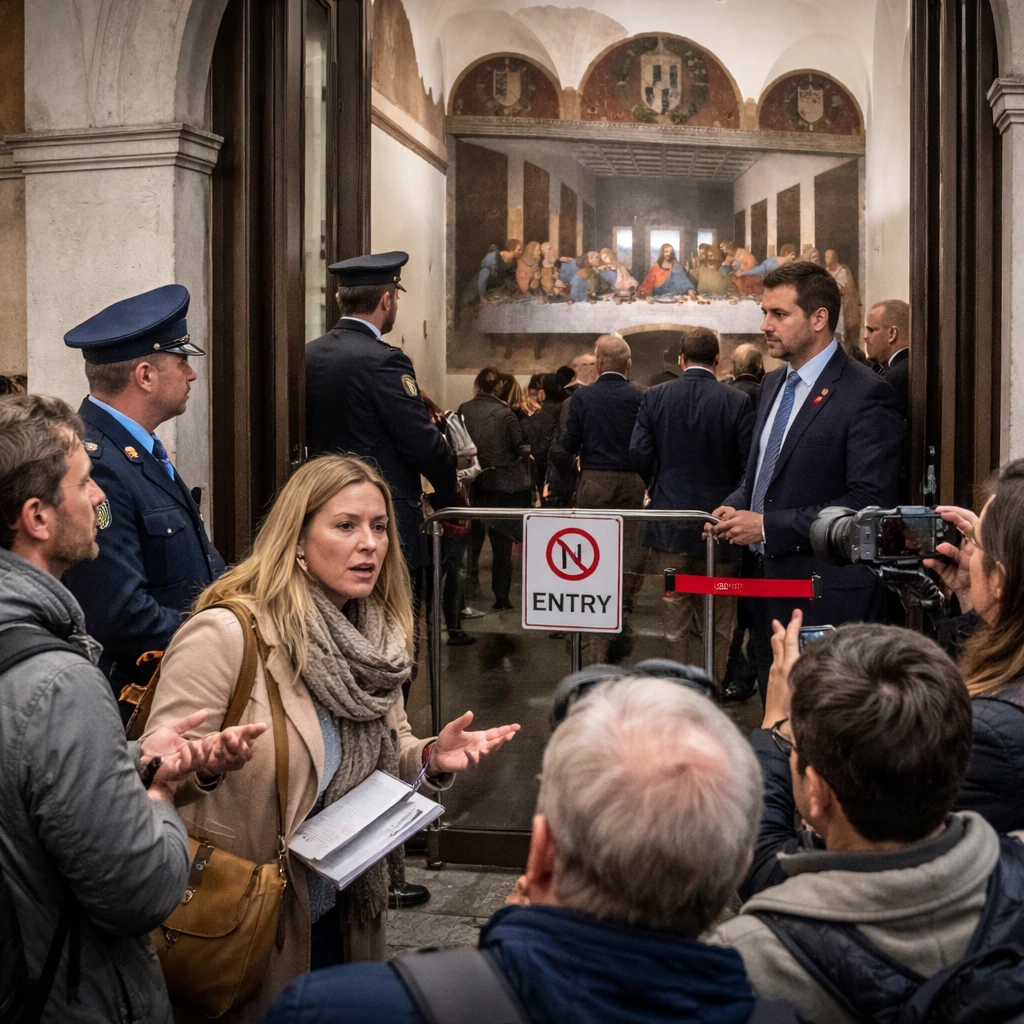

Visitors to Milan during the 2026 Winter Olympics anticipating to view Leonardo da Vinci's iconic painting, The Last Supper, encountered unexpected closures. The cherished mural, painstakingly created between 1494 and 1498, adorns the refectory wall of Santa Maria delle Grazie, a church and active convent housing Dominican friars. This site remains a pivotal destination for art enthusiasts and devoted Catholics globally.
Between February 5 and the morning of February 8, 2026, access to the painting was suspended, as indicated by notices posted at Il Cenacolo Vinciano. However, these signs offered no explanation for the closure. Staff members at the site were instructed not to disclose information regarding this temporary restriction. Consequently, numerous tourists, including groups arriving from abroad, found themselves barred from viewing the masterpiece.
One such visitor, Antonio Rodríguez from Spain, expressed dismay at the unforeseen limitation. He noted that his group’s visit was brief, confined to a weekend, leaving no alternative opportunity to tour Santa Maria delle Grazie or see the mural. Rodríguez remarked that had they anticipated the closure, they might have redirected their itinerary to other Milan locales.
Despite the blanket restriction to the public, certain VIPs were afforded entry during this period. Notably, U.S. Vice President JD Vance and his family visited on February 7, shortly after he held discussions with Italian Prime Minister Giorgia Meloni and participated in the Olympic opening ceremony. This exception highlights the privileged access some dignitaries receive amid public closures.
Vice President Vance, who embraced Catholicism in 2019 seeking spiritual enrichment, has a history of engaging with religious sites. His recent trips included visiting Rome and Vatican City during Holy Week and meeting with Pope Francis prior to the pontiff's passing. These personal affiliations add context to his interest in viewing The Last Supper.
Angelo Crespi, director of Grande Brera—managing both The Last Supper and the Brera Art Gallery—indicated that multiple foreign delegations, including representatives from China, Poland, Hungary, and Bulgaria, have also toured these sites amid the Olympics. Crespi stressed the institution's role not only in tourism but in nurturing international relations.
Local infrastructure was notably affected during the closure. Traffic diversions around Santa Maria delle Grazie disrupted normal routes, and public transportation experienced unannounced modifications, causing inconvenience among Milan residents. One local, Fedeli Gioia, criticized the disruptions and questioned the prioritization of access to the artwork over citizen convenience.
The Last Supper itself is a highly fragile artifact, due to Leonardo's unconventional technique for its application. Instead of fresco methods, he painted on dry plaster, rendering the mural more susceptible to decay. Over centuries, environmental factors and efforts at restoration have altered its original appearance. Visits are currently tightly controlled with limited seating capacity and regulated environmental conditions to preserve its integrity.
The artwork captures the moment Christ reveals that one apostle will betray him, with Leonardo uniquely placing Jesus at the center framed by groups of apostles arranged in threes. The painting endured past damages, including its use as a stable during the late 1700s and bomb damage during World War II.
Tour groups unable to enter gathered outside the closing perimeter, with some taking photographs from afar and listening to guides narrate from a distance. Residents and visitors alike voiced frustration. Luisa Castro, a long-time Milan resident of Filipino descent, lamented missing the opportunity to visit due to the VIP-related closure, underscoring the public sentiment caught between reverence for the artwork and feelings of exclusion.