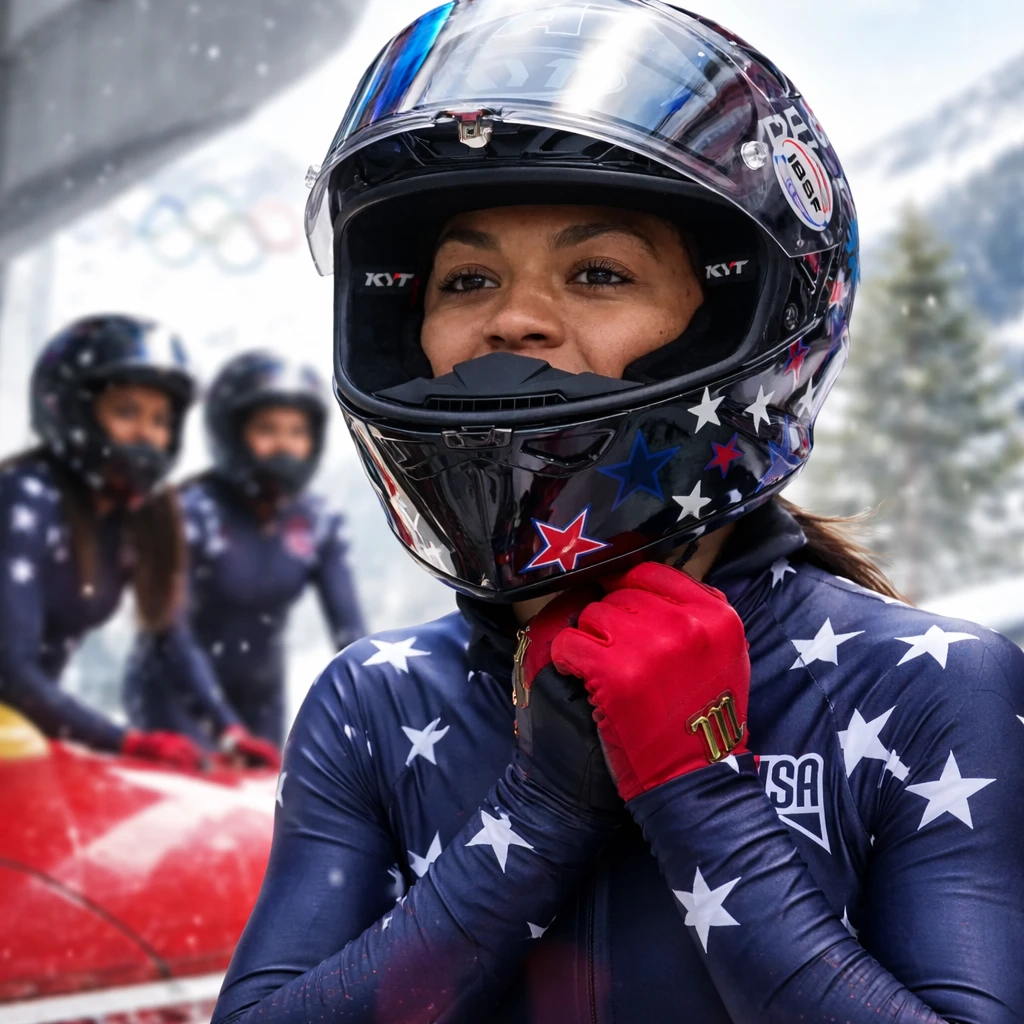

In preparations for the 2026 Winter Olympics at Milan-Cortina, the United States' Bobsled and Skeleton Federation is expected to field a notably diverse group of competitors, particularly among female athletes. Projections suggest that eight or nine women, most of whom are women of color, will represent the U.S. in these sliding sports, signaling potentially the most racially diverse American Winter Olympic roster to date.
To put this into context, the 2018 U.S. Winter Olympic contingent comprised 21 athletes of Black or Asian heritage, representing around 8% of the team. The 2026 delegation is on track to exceed these figures, reflecting incremental strides towards broader inclusion. While there remains significant room for expanded diversity, many athletes acknowledge that meaningful progress is underway.
Mystique Ro, a skeleton athlete of mixed Black and Korean descent and a recent world champion in the sport’s mixed event with teammate Austin Florian, voiced optimism: “The train has left the station. We’re going. And it’s such a surreal feeling. We’re really making history out here and it’s not slowing down at all.”
Despite the increasing diversification in U.S. winter sports, it's notable that many dominant teams from European countries—and even within the U.S. at large—are predominantly white. However, some of America’s foremost medal contenders at these Games will be Black women, continuing a legacy particularly visible in bobsledding.
Elana Meyers Taylor stands out as a five-time Olympic medalist and is regarded as the most decorated Black athlete in Winter Games history. Kaysha Love holds the distinction of being the reigning world champion in monobob, the first Black woman to claim the title. Erin Jackson, who made history in 2022 as the first Black woman to win Olympic winter gold in an individual event, is returning for the 2026 competition. Additionally, Laila Edwards is set to become the first Black woman to play for the U.S. women’s ice hockey team on the Olympic stage, an achievement she highlighted as significant, noting the importance of representation and her aim to be a motivating role model.
The structure and economics of winter sports continue to pose barriers to broader participation. The National Ski Areas Association noted in 2024 that only approximately 1% of visitors to U.S. ski resorts identify as Black, a figure influenced primarily by the high costs and remote locations associated with many winter disciplines.
At the 2022 Winter Olympics in Beijing, the vast majority of the roughly 2,900 athletes were white, though the participation of competitors from non-traditional winter sport nations such as Ghana, Nigeria, and Haiti was a notable positive trend. The impact of Jamaica’s bobsled team, famously depicted in popular media decades ago, remains evident in inspiring recruitment and growth within the sport today.
Adanna Johnson, a bobsledder who represented Jamaica at the 2025 world championships at age 17, expressed surprise at her pathway into the sport, emphasizing its developmental trajectory and expanding opportunities.
Ro underscored the need for sustained attention and growth in diversity, particularly outside Olympic years, to maintain and build momentum. She stressed the importance of making athletes visible by name and without helmets to foster genuine recognition among the public year-round, as athletes compete annually despite the Winter Olympics occurring every four years.
Many U.S. athletes entering bobsled come from backgrounds in other sports like track, given the requirements for speed and power in sliding sports. Vonetta Flowers made history as the first Black woman to secure a bobsled medal for the United States with her gold performance in the 2002 Salt Lake City Games, and since then, women of color have consistently maintained a presence on podiums.
Meyers Taylor counts Flowers as a key influence, with Kaysha Love sharing similar sentiments. Love, originally a record-setting sprinter at UNLV, transitioned into bobsled and is on the verge of competing in her second Olympics. Despite initially anticipating a future in gymnastics due to the visibility of Black athletes in traditional summer sports, Love is motivated by the opportunity to represent and inspire in winter sports.
This evolving dynamic suggests an ongoing shift in the racial and ethnic composition of U.S. Winter Olympic athletes, reflecting broader societal calls for inclusivity and representation, while also illuminating persistent challenges related to access, exposure, and long-term engagement in winter sports arenas.