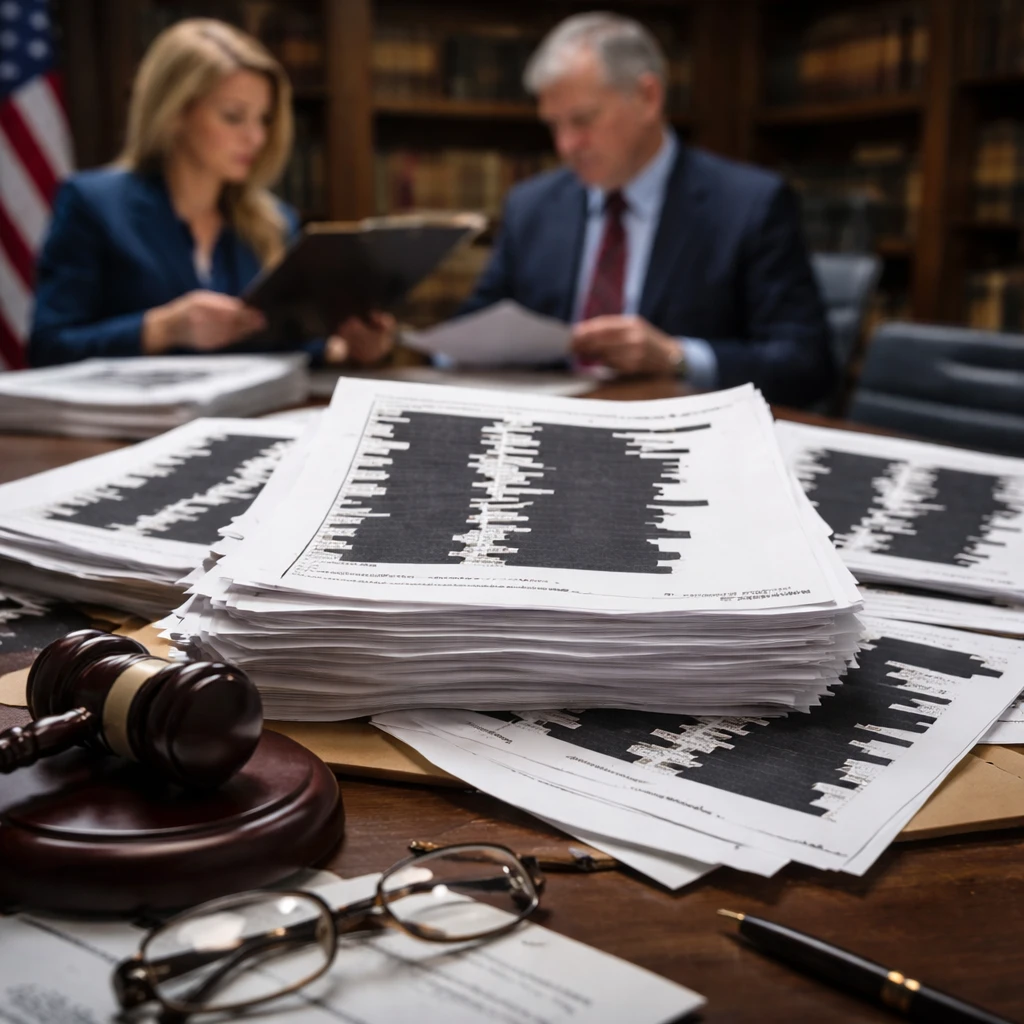

In New York, lawyers advocating for victims of Jeffrey Epstein successfully negotiated an agreement with the Justice Department to enhance privacy protections following a significant document release. Nearly one hundred female victims, who had been allegedly harmed during Epstein's criminal activities, were at risk of having their identities disclosed due to incomplete redactions implemented during the government's public disclosure last week.
The federal judge overseeing related proceedings, Richard M. Berman of Manhattan, canceled a hearing originally arranged for Wednesday after being informed by Florida-based attorney Brittany Henderson on Tuesday about "extensive and constructive discussions" leading to a formal agreement with the Justice Department.
Henderson, alongside fellow attorney Brad Edwards, previously voiced urgent concerns in a letter to Judge Berman on Sunday, citing incidents where thousands of personal identifiers such as victims' names remained visible despite expectations for confidentiality. Among eight victims whose statements were referenced in that correspondence, one characterized the release as "life threatening," while another reported facing death threats and subsequently shutting down her credit and banking accounts due to compromised security.
The attorneys had formally demanded a temporary shutdown of the Justice Department's website to prevent additional disclosure errors and requested appointment of an independent monitor to oversee the correctness of future releases.
Henderson did not disclose the precise content or stipulations of the agreement with government lawyers but expressed confidence in a prompt correction of redaction deficiencies in a letter to the judge, emphasizing protection of victims from further harm. The Justice Department has yet to issue an official statement regarding these developments.
Judge Berman expressed satisfaction and lack of surprise at the resolution in his cancellation order, signaling constructive progress regarding victim privacy concerns.
Earlier, on Monday, U.S. Attorney Jay Clayton, representing the Manhattan federal court, acknowledged that redaction errors were attributable to technical or human mistakes during the document dissemination process. He confirmed that enhanced protocols have been implemented, including removal of nearly all documents identified by victims or their legal teams and additional materials flagged internally.
The errors in question affected a broad compilation of the largest set of Epstein-related documents released to date, revealing sensitive details such as nude images featuring victims’ faces, personal names, and detailed contact information that were either fully visible or inadequately censored.
The material originated primarily from ongoing investigations into alleged sex trafficking involving Epstein and his former associate Ghislaine Maxwell, the latter now serving a 20-year prison term following a December 2021 conviction in New York.
Epstein himself died by suicide in a federal detention facility in August 2019 while awaiting trial on sex trafficking accusations.