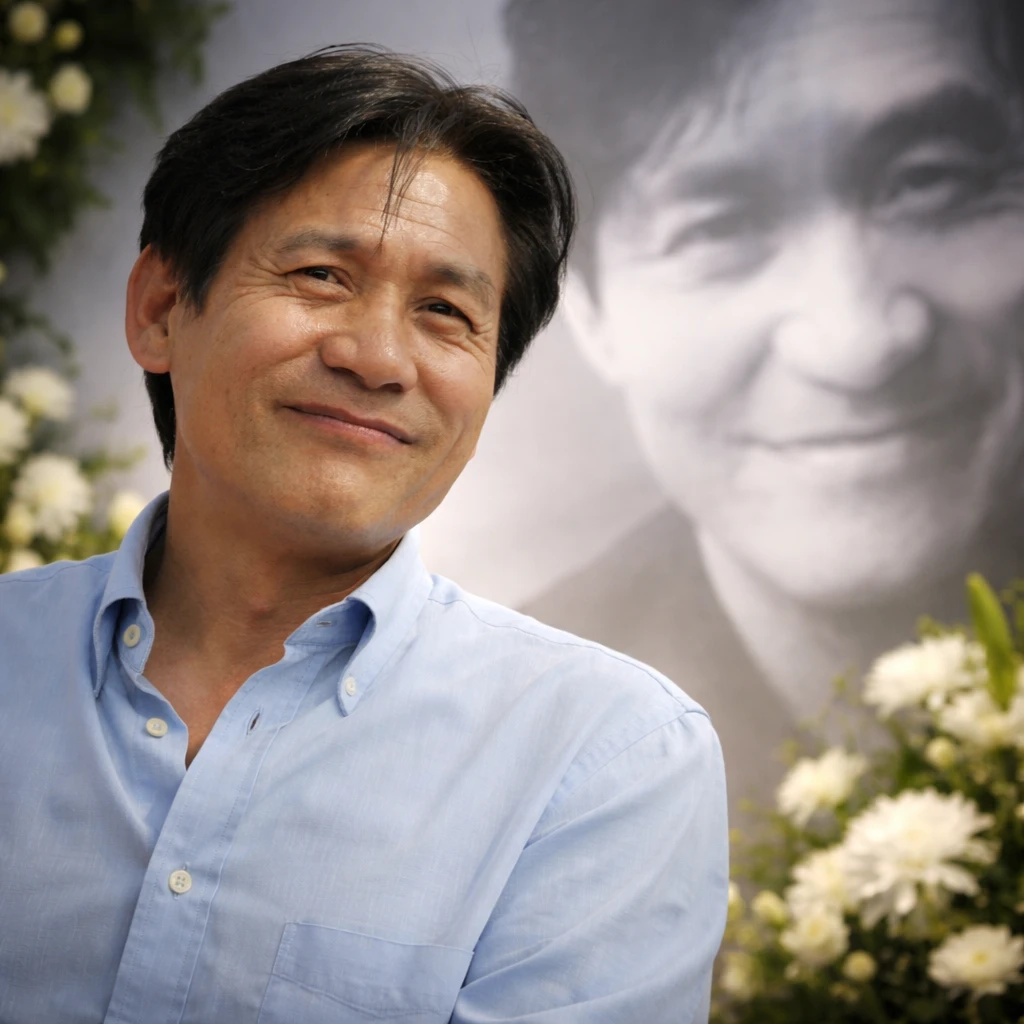

Ahn Sung-ki, one of South Korea’s most distinguished actors, passed away on Monday at the age of 74 after a prolonged battle with blood cancer, as confirmed by his agency, the Artist Company, and Soonchunhyang University Hospital in Seoul. Renowned for his extensive six-decade career and a gentle, well-regarded public image, Ahn earned the affectionate title "The Nation’s Actor."
Born in 1952 in Daegu, a southeastern city in South Korea, Ahn entered the world of cinema under the guidance of a filmmaker father. His acting career began remarkably early, with a debut as a child actor in the 1957 film "The Twilight Train." Building on this early start, Ahn amassed approximately 70 child acting credits before briefly stepping away from the film industry to experience a life outside the spotlight.
In 1970, he enrolled in Seoul’s Hankuk University of Foreign Studies, choosing to major in Vietnamese. Despite graduating with top honors, Ahn encountered challenges entering the workforce, as graduating with a Vietnamese major was less advantageous following the culmination of the Vietnam War with a communist victory in 1975.
After several years without employment, Ahn reignited his acting career in 1977, convinced he could reclaim success in the field. His efforts bore fruit in 1980, when he gained widespread fame for his lead role in Lee Jang-ho’s "Good, Windy Days," a coming-of-age film focusing on rural working-class struggles amid South Korea’s rapid modernization. This role won him the best new actor award at the prestigious Grand Bell Awards, often likened to South Korea’s Academy Awards.
Throughout the 1980s and 1990s, Ahn cemented his reputation as a leading figure in the industry, starring in numerous critically acclaimed and commercially successful movies. His versatility was evident through an array of complex roles, including a Buddhist monk in the 1981 film "Mandara," a beggar in 1984’s "Whale Hunting," and a war veteran turned novelist in 1992’s "White Badge." His portrayals also included a corrupt police officer in "Two Cops" (1993), a murderer in "No Where To Hide" (1999), a special forces trainer in the 2003 film "Silmido," and a dedicated celebrity manager in 2006’s "Radio Star."
Ahn's artistic achievements were recognized repeatedly, with over 20 major South Korean film awards to his name, including a record five best actor wins at the Grand Bell Awards, a milestone yet unmatched by other actors in the country's film industry.
Ahn was also admired off-screen for his humble demeanor, reliability, focus on family, and avoidance of controversy, all factors contributing to his enduring popularity. Public opinion regularly placed him first among beloved actors in South Korea, affirming his title as "The Nation’s Actor."
Reflecting on his career in interviews, Ahn expressed difficulty singling out a favorite film. However, he noted that his role as the devoted manager of a fading rock star in "Radio Star," a character sharing qualities of dedication and hard work, resonated closely with his own life experience.