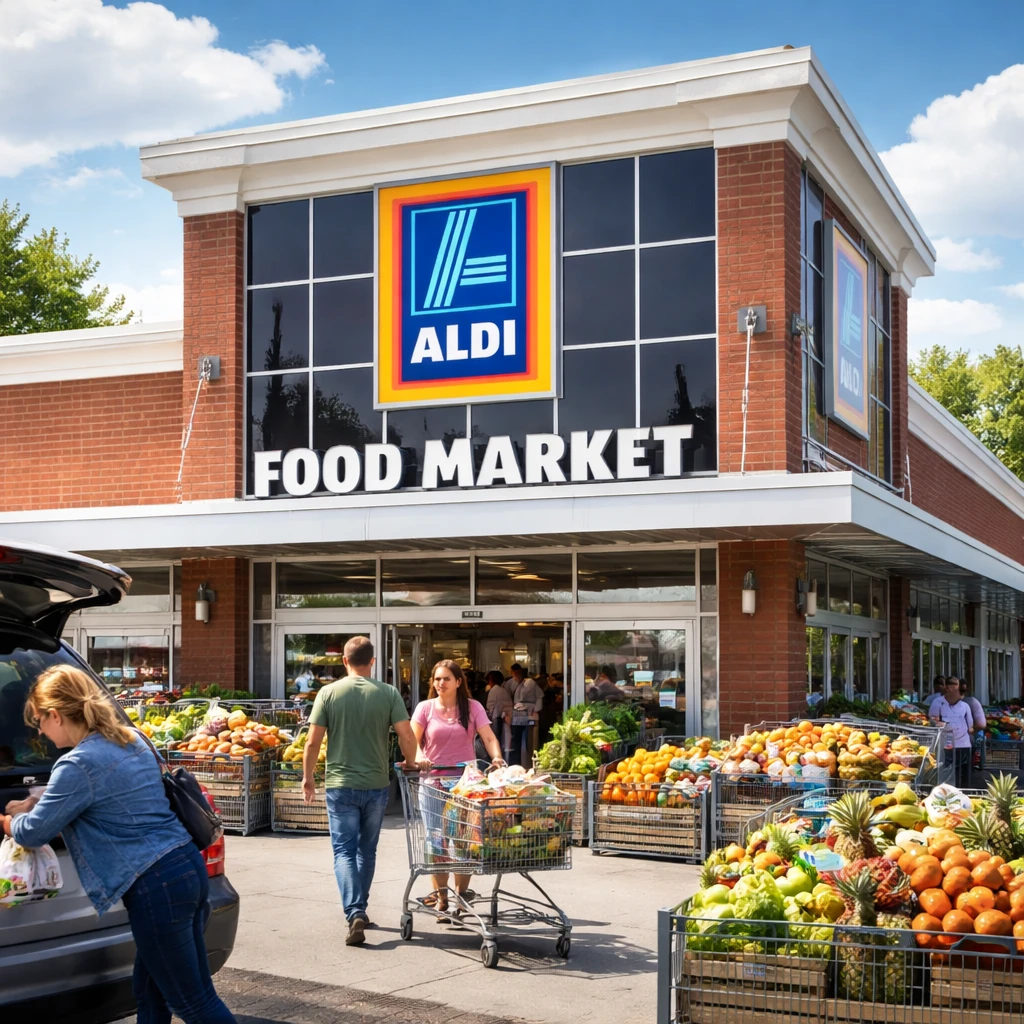

Aldi, a discount grocery chain with operations headquartered near Chicago, is accelerating its growth in the United States in response to ongoing economic pressures influencing consumer behavior. Following a surge in inflation starting in 2021, the company began rapidly opening stores and set a record for new store launches last year. Continuing this momentum, Aldi has announced plans to open more than 180 stores throughout the U.S. in 2024.
Even though food inflation has slowed somewhat, it remained elevated with a 2.4% increase reported for the previous year based on U.S. government statistics. Since the onset of the pandemic, food prices have jumped roughly 25%. Recently, the U.S. Labor Department reported a 0.7% rise in grocery prices in December alone compared to November. This increase marked a faster rate of inflation for groceries in 2025 than seen in the previous two years.
More specific data shows that beef and veal prices in December rose 1% from November, while reaching a 16.4% increase compared to the preceding year. Coffee prices climbed 1.9% over a single month and are approximately 20% higher year-over-year. In contrast, egg prices decreased by 8.2% in December, reversing part of the previous surge caused by a bird flu epidemic affecting production.
Meanwhile, political discourse includes criticisms regarding earlier campaign promises about addressing inflation — some Americans feel the issue has not been prioritized as expected.
A recent survey by the Associated Press-NORC Center for Public Affairs Research found that most U.S. adults have noticed significantly higher prices for groceries and utilities like electricity during recent months.
These price pressures have led many households to adjust their purchasing patterns. More families are "trading down" by changing their usual shopping destinations and switching from familiar national brands to less expensive store-brand alternatives. This consumer shift away from traditional premium brands and established retailers towards discount and thrift stores has benefited chains like Aldi, Dollar General, and Dollar Tree.
While this trend existed prior to President Donald Trump’s trade policies, it appears to have accelerated within the past year.
Looking ahead, Aldi has articulated plans to substantially increase its U.S. presence. The retailer pledged to open 800 new stores by 2028, building on the record 225 opened in 2023. Current strategies include the addition of new distribution centers in states including Florida, Arizona, and Colorado, as well as a commitment of $9 billion investment in the U.S. through 2028.
Aldi’s regional ambitions include opening over 50 new stores in Colorado within five years and doubling its number of outlets in Las Vegas by 2030. If these goals are met, the company projects operating nearly 2,800 stores in the U.S. by the end of this year, edging closer to its 3,200-store target for 2028.
Traditional grocery retailers are facing intensified competition not only from discount chains but also from large operators such as Walmart and emerging grocery delivery services. For instance, Amazon recently announced a significant expansion of same-day perishable grocery delivery to over 2,300 cities and towns, with further expansion planned in 2024.