
American Public Opinion Divides on President Trump's Foreign Military Actions
January 14, 2026
News & Politics

American Public Opinion Divides on President Trump's Foreign Military Actions

Poll Reveals Majority Disapproval of Trump's Military Interventions Abroad and Handling of Venezuela

Summary

A recent poll indicates that most American adults feel President Trump's use of U.S. military power in foreign countries has exceeded appropriate limits. The survey highlights widespread disapproval, particularly among Democrats and independents, regarding Trump’s foreign policy decisions, especially in relation to Venezuela. Despite mixed feelings about interventions benefiting anti-drug efforts and Venezuelan citizens, views remain skeptical about gains to U.S. national security and economic interests.

Key Points

A majority of U.S. adults believe President Trump has overstepped in using military force abroad, signaling broad public concern regarding current intervention policies. This sentiment especially influences the public's confidence in foreign policy management and has implications for defense and government sectors.
The poll highlights partisan divides with Republicans mostly supporting Trump's military actions as appropriate, whereas Democrats and independents largely oppose, indicating political challenges for bipartisan foreign policy consensus. This polarization can affect legislative dynamics related to defense spending and international diplomacy.
While some Americans acknowledge the potential benefits of U.S. intervention in Venezuela for curbing illicit drug flow and aiding Venezuelan citizens, skepticism remains about the overall positive impact on U.S. national security and economy, carrying consequences for sectors connected to national security, international trade, and energy interests.

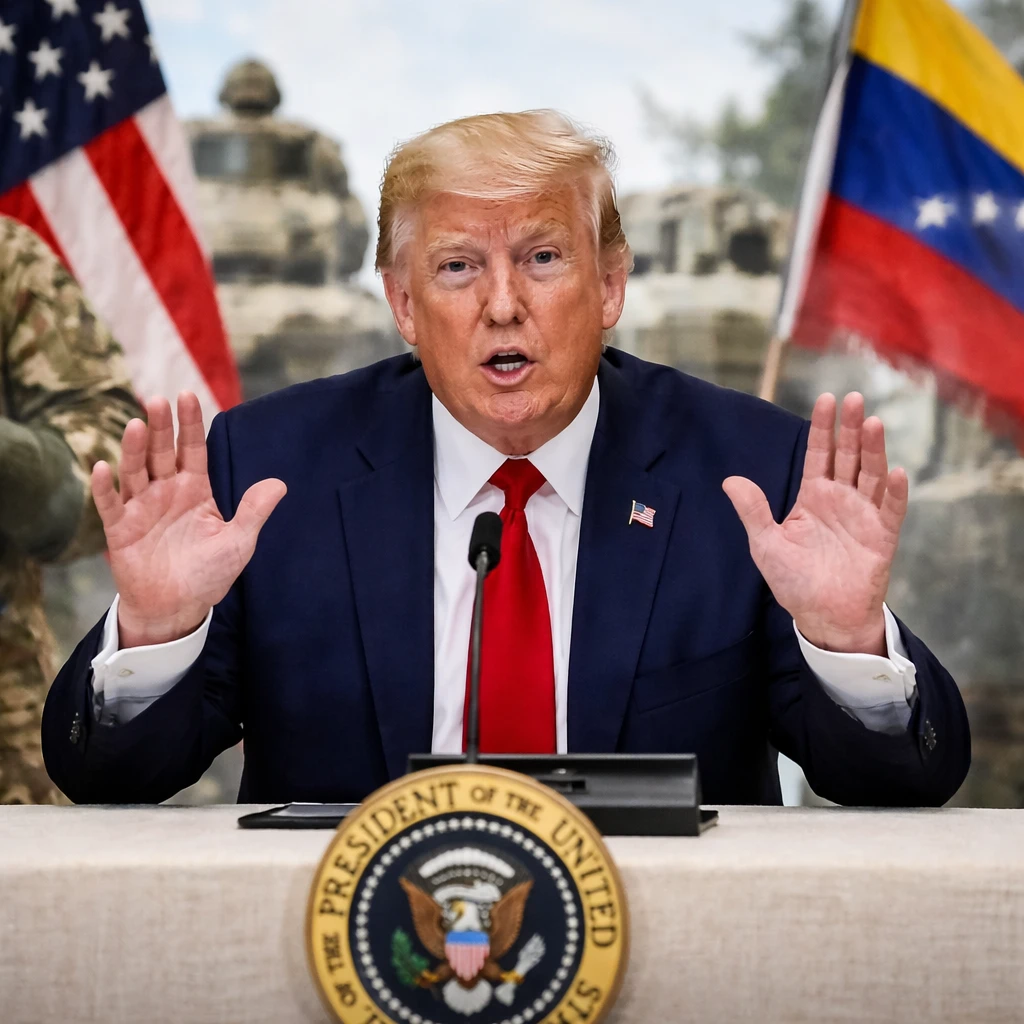
WASHINGTON - According to results from a January poll conducted by a reputable public affairs research organization, a majority of adults in the United States believe that President Donald Trump has extended American military involvement beyond acceptable boundaries. The survey, carried out between January 8 and 11, shortly after the U.S.-led efforts to detain Venezuelan President Nicolás Maduro, reveals that 56 percent of respondents consider Trump's military interventions overseas to have gone too far.

In addition to this prevailing view, the poll uncovers a general dissatisfaction among U.S. citizens concerning President Trump's approach to foreign policy, both broadly and with specific regard to Venezuela. This disconnect contrasts with Trump's recent assertive international posture, which includes ambitions to control Venezuelan oil resources, propositions for territorial acquisition of Greenland, and declarations promising U.S. assistance to Iranian protesters.

Respondents recognized some advantages to the Venezuelan intervention, notably as a measure to curb illegal drug trafficking into the United States and as potentially beneficial to the Venezuelan population itself. Nonetheless, fewer participants perceived these actions as enhancing U.S. national security or bolstering the country’s economic position. Notably, while most Republicans align with Trump's military initiatives, their support generally does not extend to advocating for expanded intervention, reflecting a nuanced stance in light of Trump's "America First" campaign rhetoric.

Among partisan groups, opposition to military overreach is predominantly voiced by Democrats and independents, with about 90 percent of Democrats and around 60 percent of independents expressing concern that Trump has exceeded prudent limits on military involvement. In contrast, approximately 20 percent of Republicans share this view, evidencing the partisan divide in perception of foreign military engagement. This dynamic is significant amid ongoing foreign policy decisions, including Trump's remarks about forcibly acquiring Greenland should diplomatic negotiations with Denmark fail and assurances to protect peaceful demonstrators in Iran.

Risks
  • Continued divergence in public opinion and partisan disagreement over foreign military interventions presents risks of political instability and unpredictable policy shifts, impacting government and defense contractors reliant on consistent strategic direction.
  • The relatively low approval of Trump's foreign policy approach risks alienating important segments of the electorate, potentially influencing future elections and national security strategy, which can affect related market sectors like defense, international relations, and energy resource management.
  • President Trump's commentary on aggressive territorial acquisitions and foreign involvement introduces uncertainties in diplomatic relations, potentially straining ties with other nations and complicating economic and security interests tied to foreign policy actions, with consequential effects on international trade and geopolitical stability.
Disclosure
This analysis is based exclusively on data collected between January 8-11 through a public affairs research poll. No additional information or speculation beyond the scope of the collected survey data is included.
Search Articles
Category
News & Politics

News & Politics

Related Articles
FDA Initiates Review of BHA Food Additive Safety

The U.S. Food and Drug Administration (FDA) has announced plans to conduct a comprehensive reassessm...

Partisan Divide Deepens as White House Excludes Democratic Governors from NGA Meeting

The longstanding bipartisan forum of the National Governors Association (NGA) is facing disruption a...

Using Fireplace Ashes in Your Garden: Benefits and Considerations

Amidst a notably cold winter leading to increased fireplace use, many homeowners are seeking sustain...