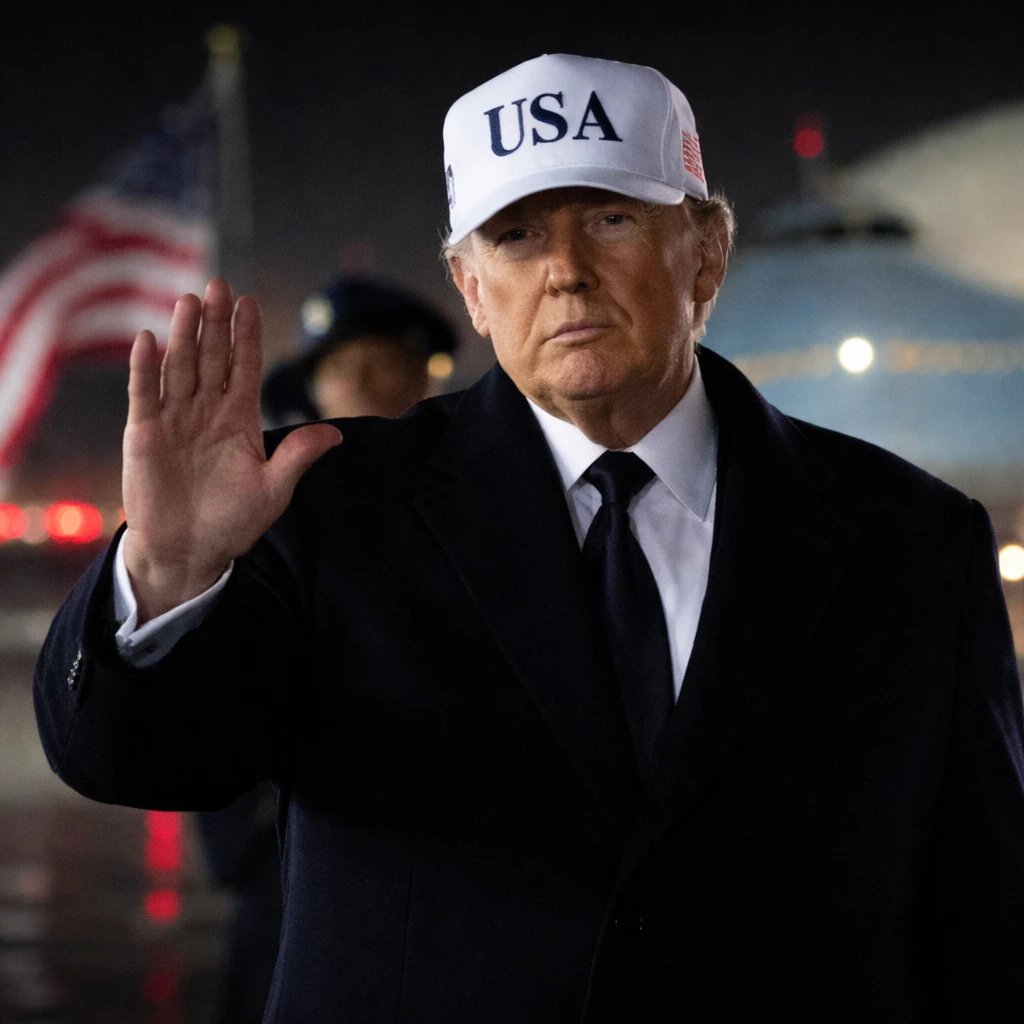

President Donald Trump's return to the White House for a second term has unfolded under considerable public scrutiny, yet his approval ratings show remarkable steadiness. According to a January poll conducted by a reputable public affairs research center, roughly 40% of U.S. adults endorse his presidential performance. This figure remains nearly identical to measurements taken shortly after he commenced his second tenure in March 2025.
Delving deeper, subtle vulnerabilities in Trump's public standing come to light. Many Americans remain unconvinced about the state of the economy under his leadership, and there is widespread uncertainty regarding his prioritization of issues, especially as his administration increasingly emphasizes foreign policy initiatives. Additionally, approval related to his signature immigration policies has diminished since he took office this term.
Steady approval despite an unpredictable presidency
Trump's approval ratings demonstrate a unique consistency amidst a historically volatile political environment. During his first term, his approval hovered around 42% early on, experienced minor fluctuations over the years, and ultimately aligned closely with that initial number at the term's close. This pattern stands in contrast to trends observed in previous presidencies, where approval ratings have tended to vary more significantly over time.
While empirical data show a trend toward decreasing variability in presidential approval ratings since the mid-20th century, President Joe Biden encountered a different trajectory. Biden entered office with initial approval ratings higher than any Trump received during his terms but saw a notable and sustained decline over his first two years.
Public perception of Trump’s priorities
Evaluations of Trump's focus reveal a predominantly critical disposition. Approximately half of the adults surveyed perceive his priorities as largely misguided, with only about 20% affirming that he concentrates on suitable priorities. Another 20% attribute a balanced approach, while 14% remain undecided or without a clear opinion.
Economic challenges shadow leadership
Economic management emerges as a considerable obstacle in Trump's second year in office. Despite declarations signaling the onset of a 'Trump economic boom,' only 37% of Americans express confidence in his handling of economic matters, a slight improvement from a December low but still reflective of widespread dissatisfaction. This marks a departure from his earlier tenure where approval on economic policies generally enjoyed support from close to half the populace.
Economic concerns revolve strongly around living costs, which have taken on heightened importance among the electorate compared to Trump’s first term. Approximately 60% of respondents attribute rising living expenses to actions taken by Trump during his current term, while only about 20% believe he has contributed to relieving these pressures. Around a quarter of those surveyed feel the president's economic impact has been neutral.
Immigration approval declines amidst controversy
Immigration, once a cornerstone of Trump's platform, has seen a decline in public approval since the start of this term. Current approval stands at 38%, down from nearly half in March. The timing of the poll coincided with intensified attention following a fatal incident involving U.S. Immigration and Customs Enforcement in Minneapolis, which may influence public sentiments.
Despite this downward trend, roughly half of the public maintains concern that immigration enforcement has been excessive, a figure stable over recent months. This perspective persists even as enforcement actions have expanded elsewhere in the country. Nearly 45% acknowledge some level of positive contribution by Trump toward immigration and border security during his second term, a topic that unusual garners a degree of acknowledgment from members of the Democratic Party.
Foreign policy focus generates disapproval
Trump's increasing focus on international affairs contrasts with his 'America First' campaign messaging. The public reaction tends to be unfavorable, with about 60% disapproving of his foreign policy management and 56% expressing concern that his use of military intervention has overreached. This shift towards global engagement introduces complexity given the economic worries many Americans face domestically.
Nonetheless, public opinions on foreign policy have exhibited limited change throughout the president's recent actions, which include strategic moves such as attempts to influence Greenland's status and the military operation capturing President Nicolás Maduro of Venezuela.
Polling methodology and representation
The findings summarized here stem from a poll of 1,203 adults conducted January 8-11, employing a nationally representative sample drawn from a comprehensive population panel. The margin of error identified for general adult respondents is plus or minus 3.9 percentage points.