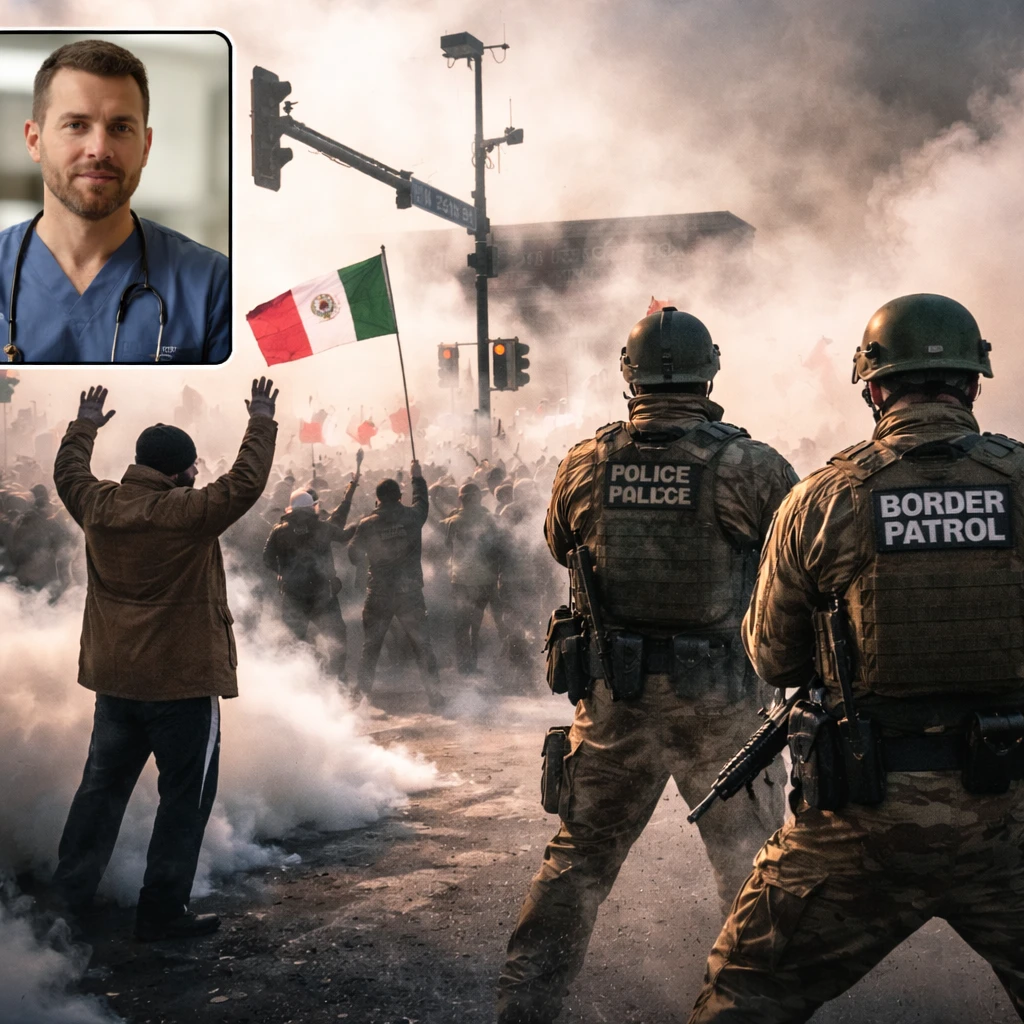

Minneapolis again found itself at the center of national debate following the fatal shooting of Alex Pretti, a 37-year-old intensive care nurse, by a U.S. Border Patrol agent. The incident, which occurred on a commercial street in south Minneapolis, provoked immediate calls by local leaders and Democrats across the country for the withdrawal of federal immigration officers from the state.
Pretti was shot early on a Saturday morning amidst a tense confrontation with immigration agents who had recently increased their presence in Minneapolis amid a surge in immigration enforcement. Bystander videos reviewed show Pretti seemingly unarmed, holding only his cell phone as he stepped between an immigration agent and a woman who was pushed to the ground by officers. These videos appear to contradict assertions made by the Trump administration officials, who characterized the agents' gunfire as defensive actions following an alleged attack by Pretti.
During the altercation, agents discovered a 9 mm semiautomatic handgun on Pretti, who reportedly possessed a valid concealed carry permit. Video footage depicts officers disarming him before shots were fired multiple times. However, no visible evidence from the videos reviewed indicates that Pretti brandished the weapon or posed a clear threat to any officers at the time of shooting.
Authorities including Homeland Security Secretary Kristi Noem and U.S. Border Patrol Commander Gregory Bovino publicly framed Pretti as the aggressor, with claims that he assaulted officers and had intentions to "massacre law enforcement." Further intensifying the rhetoric, White House Deputy Chief of Staff Stephen Miller labeled Pretti a "would-be assassin" on social media platform X.
Pretti’s family has challenged the official narrative, expressing deep sorrow and anger toward federal officials. They condemned what they called "sickening lies" spread about their son, emphasizing that he was holding only a phone with an empty hand raised in a protective gesture, while also noting that agents had pushed a woman to the ground and deployed pepper spray during the incident.
Adding to the complexities of the case, a federal judge has issued an order preventing the destruction or alteration of evidence related to the shooting. This order followed legal action by Minnesota state and Hennepin County authorities seeking access to materials collected by federal officers, which state investigators have reportedly not been permitted to review.
Minnesota Attorney General Keith Ellison emphasized the necessity of a comprehensive, impartial, and transparent inquiry, criticizing obstruction by federal personnel who, despite having a judicial warrant, initially barred the state's Bureau of Criminal Apprehension officers from the scene. Federal agencies named in the lawsuit have not responded to requests for comment.
The Minnesota National Guard temporarily assisted local law enforcement at Governor Tim Walz’s request, deploying troops to both the shooting location and a federal building where confrontations have arisen amid the ongoing immigration enforcement actions. Minneapolis Police Chief Brian O’Hara later noted a reduction in federal involvement, stating that routine responses had reverted primarily to the local police department, which is contending with significant operational burdens from the combined pressures of immigration enforcement clashes and maintaining regular city policing duties.
The circumstances surrounding Pretti's carrying of a firearm have drawn statements from gun rights groups, underscoring the legality of bearing arms during protests and public gatherings, provided statutory requirements such as permits are met. The Minnesota Gun Owners Caucus highlighted citizens' rights to bear arms while lawfully engaging in protests or exercising their First Amendment protections.
National political figures have also weighed in. Former President Barack Obama described Pretti’s death as a heartbreaking tragedy and urged cooperation among federal, state, and city officials to prevent further upheaval while pursuing legitimate law enforcement objectives. Conversely, then-President Donald Trump criticized Minnesota’s governor and mayor, accusing them of fomenting insurrection and questioning local police involvement, while publicizing images of the handgun recovered by immigration officials.
Democrats, including Representative Alexandria Ocasio-Cortez and Senate Democratic Leader Chuck Schumer, have called for a halt to funding for Immigration and Customs Enforcement, linking the shooting to broader concerns about federal immigration enforcement's impact on local communities and civil liberties. These political stances raise the possibility of significant implications for federal budgeting and government operations if funds are withheld.
The shooting took place less than two miles from where another fatal encounter involving a federal immigration officer occurred earlier in January, leading to widespread protests in the region. Following Pretti's shooting, protests erupted in multiple cities, including New York, Washington, and Los Angeles, with Minneapolis seeing an influx of demonstrators braving severe cold to demand the departure of federal immigration agents.
Footage of the initial confrontation shows officers pepper spraying Pretti and another woman after an agent shoved her to the street. Pretti is seen attempting to intervene, holding his phone toward the officers, with no discernible weapon display. The situation escalated quickly with officers pinning Pretti to the ground, using force that included striking him near the head with a canister before gunfire ensued. The source of the first gunshot remains unclear, though officers began to fire several shots in rapid succession, ultimately resulting in Pretti's death.
Bovino defended the officers' actions in public statements, asserting that Pretti disregarded police commands and injected himself into a dangerous situation with fatal outcomes. However, these assertions are disputed by witness video and statements from local officials and Pretti's family.
In the immediate aftermath, demonstrators voiced their outrage by calling federal agents "cowards" and erecting barricades with set fires, although quiet vigils honoring Pretti were also held near the shooting site. Community members have expressed solidarity with Pretti and concern over the ongoing federal law enforcement presence, emphasizing the growing tensions between local populations and immigration authorities.