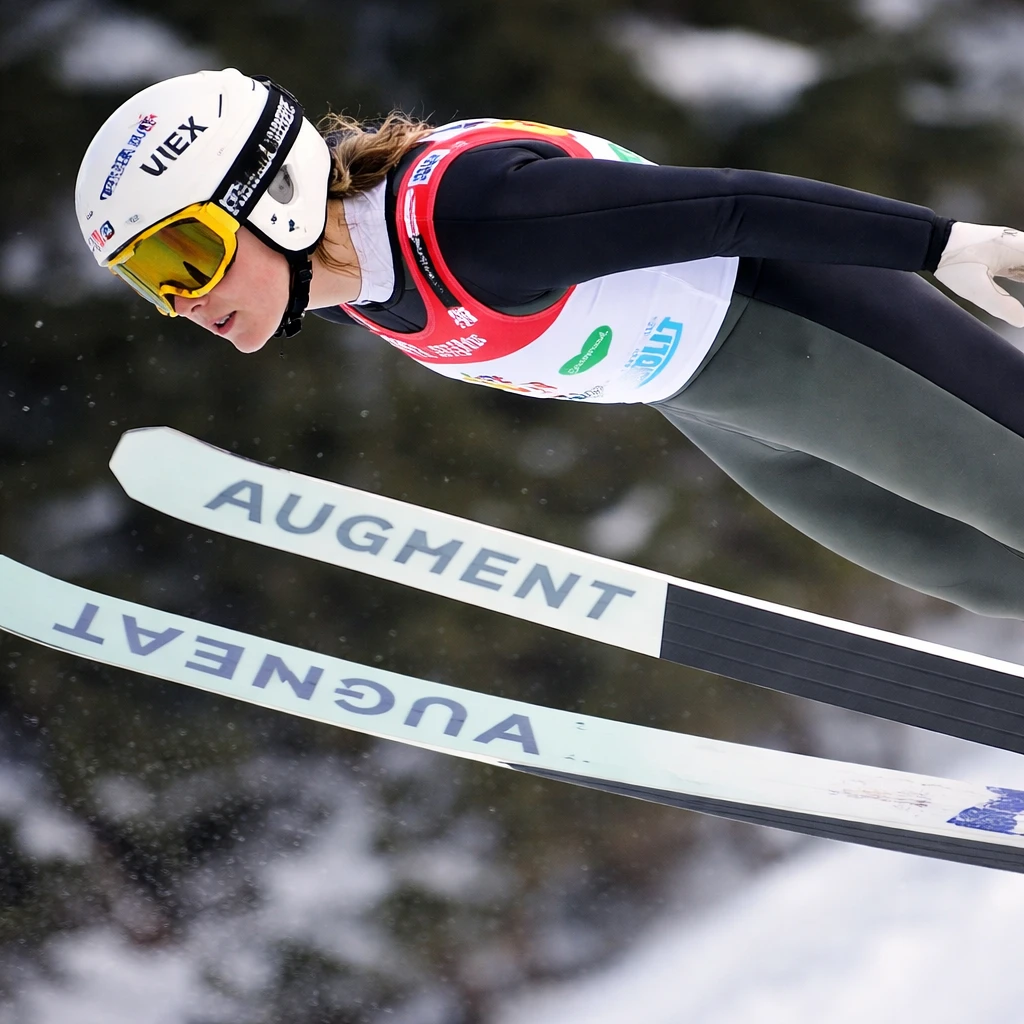

During a flight from Munich to Denver in June 2022, Annika Malacinski, a 24-year-old Nordic combined athlete from Colorado, braced herself for a pivotal moment in her sporting career. Purchasing Wi-Fi on the plane to participate in an International Olympic Committee (IOC) conference call, she was hopeful that the decision would finally come through to permit female competitors in Nordic combined at the Winter Olympics. Instead, the response was a definitive rejection: "No," offered without further explanation or debate, and then a swift transition to other matters. The emotional impact was overwhelming. Malacinski recounted to TradeIQAI how she spent eight hours in tears, disembarking in Denver with swollen eyes, feeling as though her world had abruptly collapsed.
Despite this setback, and ongoing efforts to advocate for women's participation, Nordic combined continues to exclude female athletes at the highest level. This stands in stark contrast to the Milan Cortina Winter Olympics, which has seen a historic 47% female athlete representation – the highest ever in the history of the Winter Games.
Malacinski, who consistently ranks within the top 10 in elite Nordic combined competitions, trains year-round in a demanding sport that integrates ski jumping with cross-country skiing. Her younger brother Niklas competes in the men’s Nordic combined event for the United States at Milan Cortina, an occasion she will attend to support him. She described the experience as bittersweet, recognizing the equal dedication and effort they both invest. "I do the same sport as him. I jump the same ski jumps and ski the same courses. The only difference is that I’m a woman," she stated.
Recently, female Nordic combined skiers staged a visible protest during a race in Seefeld, Austria, gesturing an "X" by raising their poles overhead to signal their exclusion from the sport.
Notably, men have competed in Nordic combined since the first Winter Olympics in Chamonix in 1924. However, the discipline now faces the risk of elimination from the Olympic program as early as 2030. The IOC cites challenges including insufficient international participation and limited television viewership as reasons for this potential outcome.
The path toward inclusion in Olympic disciplines has historically been protracted. Women were barred from the earliest modern Olympics in 1896 and only participated in a few sports by 1900, such as tennis, archery, and croquet. Systemic restrictions limited their involvement in other events over the decades due to perceptions about female physical fragility. For instance, although women competed in the 800-meter track event in 1928, it was removed for more than 30 years following concerns about its suitability.
Over time, most such inequalities have been reduced or eliminated. In the Summer Olympics, differences remain primarily in the combined events, where women compete in the heptathlon (seven events) and men in the decathlon (ten events).
At the Winter Olympics, progress has been comparatively slow. Women's ski jumping was prohibited at the 2010 Vancouver Olympics and only introduced in Sochi in 2014. Cross-country skiing has seen recent changes bringing parity; at Milan Cortina, men and women are competing over identical distances for the first time in Olympic history. Previously, the longest race for women was 30 kilometers, and for men, it was 50 kilometers. Both genders now contest the 50-kilometer mass start, consistent with adjustments from the Nordic Ski World Championships in 2023.
Malacinski remains steadfast in her commitment to winning Olympic inclusion for women in Nordic combined. Her sights are set on the 2030 Winter Games in the French Alps, where she intends to press her case. "I’m a very gritty person," she said. "If I put my mind to something, I know I can do it." This resolve fuels her ongoing activism, with the conviction that women deserve equal participation in the sport at the Olympic level. "We deserve to be there, and I’ll fight until 2030 because that’s our rightful place," she affirmed.