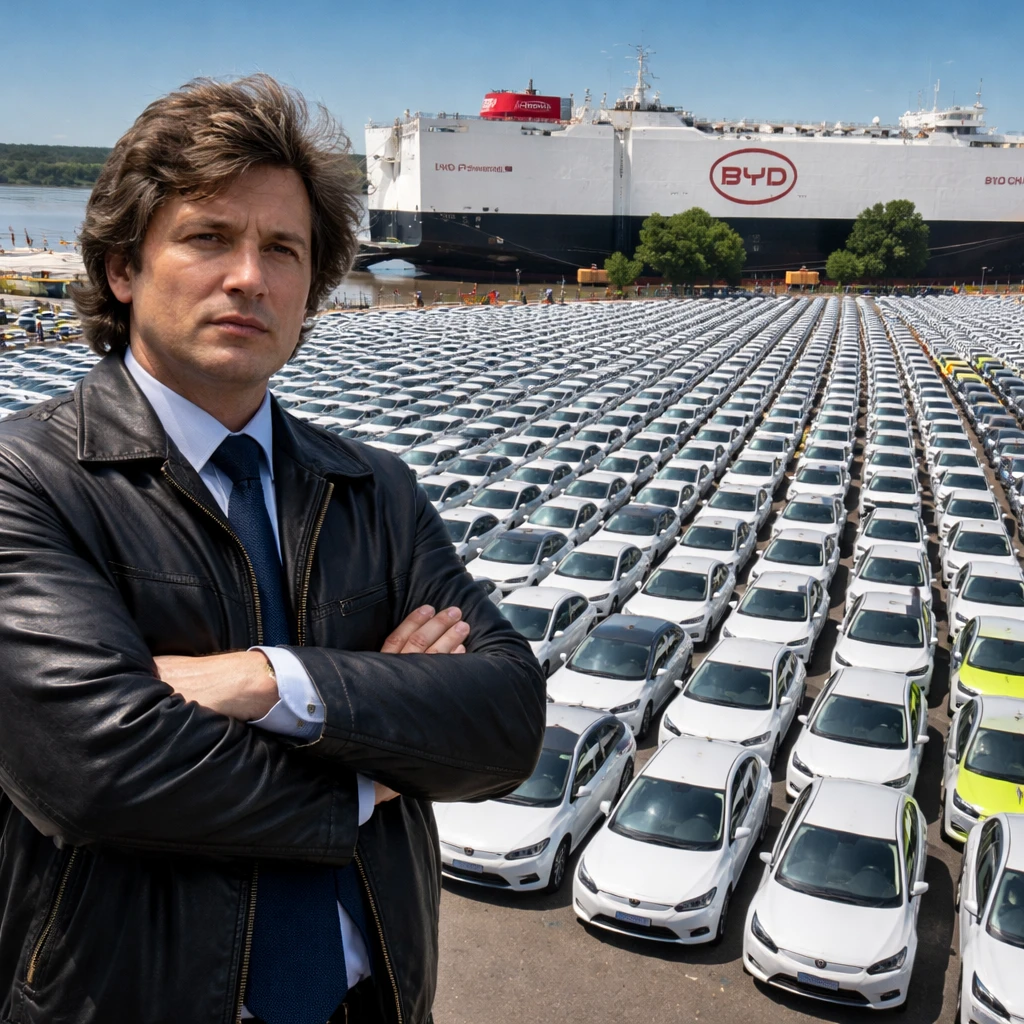

At the port of Zárate in eastern Argentina, a shipment of over 5,800 electric and hybrid vehicles arrived onboard the Chinese container ship BYD Changzhou, marking a distinctive moment in Argentine commerce. This large delivery of Chinese-made electric vehicles (EVs) highlights the rapid expansion of exports from Chinese automakers, who have increasingly disrupted global markets by offering competitively priced models. The landscape this creates has raised concerns in Washington, unsettled Western and Japanese automobile producers, and caused unease among domestic industries spanning Southeast Asia, Africa, and Latin America.
For Argentina, this cargo's arrival is unprecedented given the country's prolonged period of economic crisis dominated by left-wing populism, particularly under Kirchnerism—an ideology that prioritized local manufacturing through strict tariffs and import controls. Claudio Damiano, a transportation professor at Argentina’s National University of San Martin, notes that for decades "the common perception in Argentina was that production must occur domestically." He remarked, "This shipment symbolically represents the first significant step for BYD in Argentina. There is widespread curiosity about how extensive this presence will become."
This event notably contrasts with developments in Brussels, where European Union legislators opted to postpone approval of a notable trade agreement with the Mercosur bloc, including Argentina. The agreement aims to dismantle trade barriers, thereby increasing imports from Europe and potentially augmenting the presence of German electric vehicles. Damiano emphasized, "European automakers simply cannot compete against the Chinese in this environment."
Historically recognized for its economic isolationism, Argentina solidified its closed-market status under Kirchnerism—a political movement spearheaded by former Presidents Cristina Fernández de Kirchner and Néstor Kirchner. Their approach championed populist ideals, defaulted on sovereign debts, and took a skeptical stance against global trade, considering it detrimental to domestic development. This isolation has resulted in devaluations of the Argentine peso and high taxation, limiting consumer options and prompting affluent Argentines to smuggle imported goods like iPhones and apparel during international travel.
Responding to persistent economic challenges, voters elected Javier Milei, a radical libertarian, to the presidency in 2023. His rhetoric sharply contrasts with Kirchnerism, as he campaigned to dismantle state power and aligned ideologically with former U.S. President Donald Trump, whom he praises as a kindred spirit.
Under Milei’s leadership, Argentina has reversed previous protectionist tendencies by dramatically lowering trade barriers, streamlining customs procedures, and stabilizing the local currency to facilitate consumer access to foreign products. Notably, Argentina experienced a 30% growth in imports last year compared to the previous year, including affordable consumer goods from Asian e-commerce giants. Most recently, Chinese automakers benefited from government policies permitting 50,000 electric and hybrid vehicles to enter Argentina tariff-free in 2024, a significant reduction from the prior 35% import levies. The initial shipment reached Zárate Port after a 23-day sea voyage from Singapore.
At the World Economic Forum in Davos, Milei highlighted the deregulation's economic impact, asserting it fostered a "more dynamically efficient economy" and framed his policies as Argentina’s version of "Make America Great Again" or MAGA.
Both Milei and Trump share skepticism toward so-called "wokeness," question the efficacy of multilateral institutions such as the United Nations, reject mainstream climate change narratives, and advocate substantial budget reductions. Their ideological alignment has materially benefited Milei, with the U.S. extending financial support in the form of a $20 billion credit swap aimed at strengthening Milei’s position ahead of key legislative elections. Despite shared views, their approaches diverge, as Milei promotes libertarian non-interventionism while Trump has demonstrated more aggressive trade and foreign policy stances.
China appears as perhaps the most significant economic beneficiary of Milei's open-market reforms. Chinese imports to Argentina surged over 57% in the previous year, complemented by increased investment from Chinese firms in Argentina’s energy and mining sectors. Government spokesperson Javier Lanari reflected on Monday's arrival of Chinese vehicles as Argentina's reintegration into global markets, dismissing past industrial shortcomings associated with Kirchnerism as relics of a