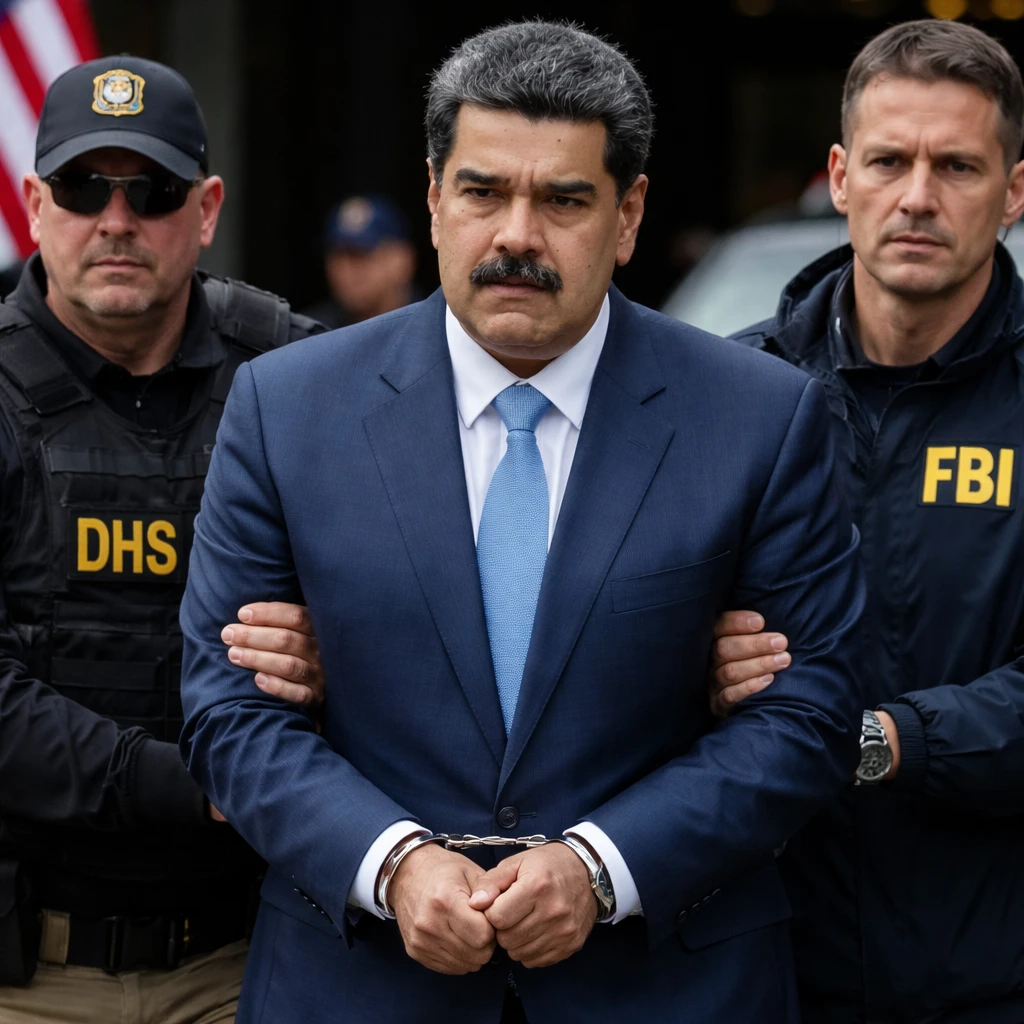
On a recent Wednesday in Buenos Aires, Argentine federal judge Sebastián Ramos issued a formal request for the extradition of Nicolás Maduro, the former president of Venezuela, to the United States where he has been held since early January. This move seeks to advance judicial proceedings against Maduro regarding allegations of crimes against humanity purportedly committed under his administration.
The inquiry, launched in 2023 after a submission by a non-governmental organization advocating for Venezuelan victims, is currently overseen by Judge Ramos. The extradition application will be processed through Argentina's Ministry of Foreign Affairs and presented to the US government. As per Judge Ramos’s official order, which references the extradition treaty between Argentina and the United States, a formal international request has been made to facilitate Maduro's transfer to Argentine jurisdiction for further questioning.
Argentina’s legal system has a history of exercising universal jurisdiction principles, allowing for the prosecution of serious crimes such as crimes against humanity committed beyond its borders. This approach has seen the country pursue cases against foreign leaders and prominent individuals suspected of such violations, although results have predominantly seen limited extraditions or arrests.
The present case originates from acts alleged to have taken place during Venezuela's widespread protests. Prosecutors accuse Maduro and associates—including Justo José Noguera Pietri, an ex-commander in the Venezuelan National Guard, and Diosdado Cabello, Venezuela’s interior minister—of orchestrating illegal detentions, torture, and systematic repression of political dissenters beginning in 2014.
This legal process was championed by the Argentine Forum in Defense of Democracy (FADER), a human rights NGO active in the region. FADER alleges the existence of a coordinated state-led campaign in Venezuela involving disappearances, torture, murder, and the persecution of opposition voices. A federal court in Argentina escalated these allegations in September 2024 by issuing international arrest warrants for Maduro and his implicated officials.
Following the US military operation in Venezuela on January 3 that resulted in Maduro’s capture, Argentine federal prosecutor Carlos Stornelli initiated a request urging Judge Ramos to seek Maduro’s extradition for interrogation related to these grave accusations. The judge approved the extradition request, reinforcing Argentina's commitment to justice in these matters.
This development coincides with Argentine President Javier Milei publicly praising the US intervention in Venezuela, signaling a closer diplomatic alignment with the Trump administration’s policies.
Additional precedents for such investigations include 2022 criminal probes initiated in Argentina against Nicaragua’s President Daniel Ortega and Vice President Rosario María Murillo regarding potential crimes against humanity. Moreover, Argentina has conducted inquiries into abuses connected to the Spanish Civil War era and subsequent Franco dictatorship, grounded in constitutional recognition of universal jurisdiction principles.
Despite the pursuit of justice through these channels, many international cases have yet to result in significant detentions or extraditions to Argentine courts. Nonetheless, the country's legal legacy, notably its prosecution of military rulers responsible for human rights abuses during the 1976-1983 dictatorship, sets a potent example of commitment to human rights accountability.
The current extradition request represents an extension of this legacy into contemporary geopolitical and humanitarian concerns involving Venezuela and the broader Latin American region.
Correspondence from Buenos Aires contributed to this report.