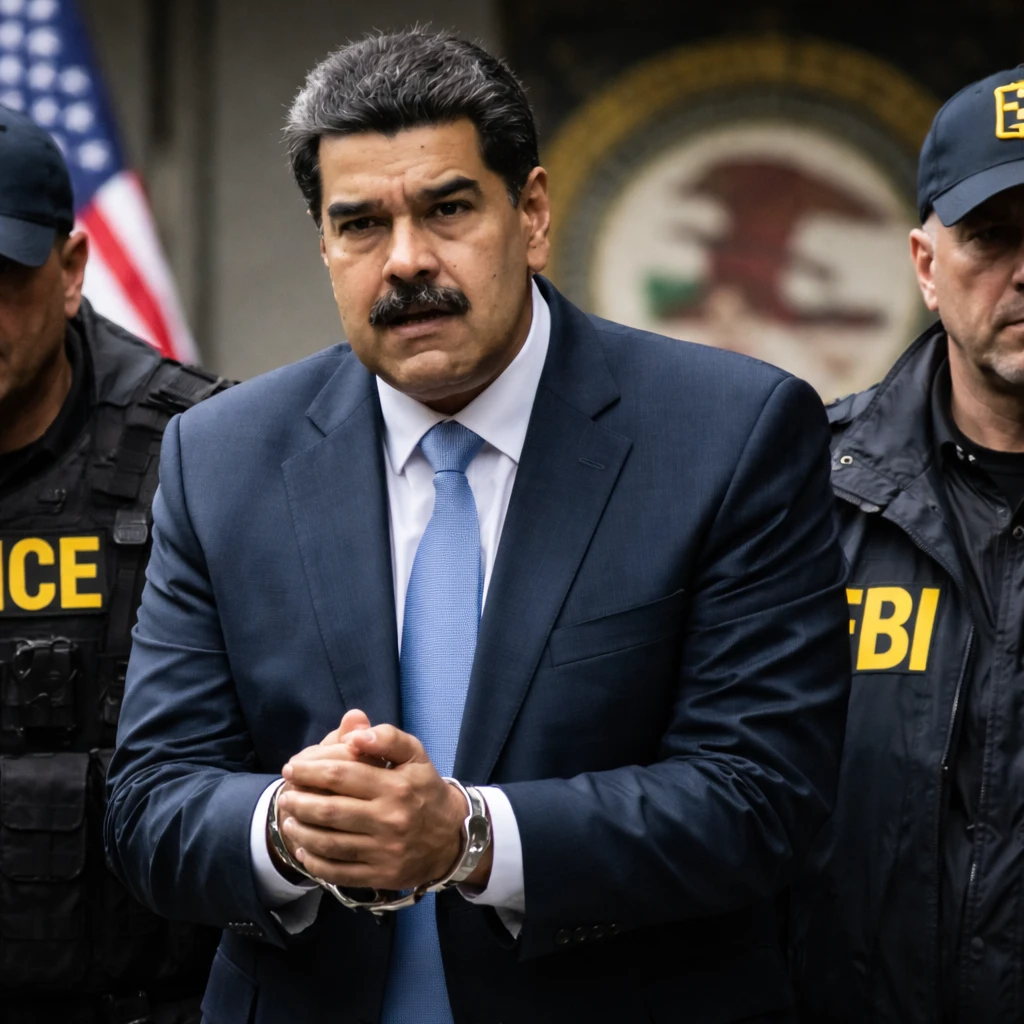

BUENOS AIRES — An Argentine federal judge has initiated a legal move to extradite Nicolás Maduro, Venezuela's former president, from the United States to Argentina, where he faces allegations of crimes against humanity. This development emerges shortly after Maduro's capture by U.S. forces and subsequent federal indictments in New York, including narco-terrorism and conspiracy to import cocaine. Argentine judicial authorities, recognized for their active stance on prosecuting human rights violations regardless of geographical boundaries, have formally charged Maduro with authoritarian repressions targeting demonstrators and political opponents during his presidency.
In an official document, Argentine federal judge Sebastián Ramos mandated the expedited translation of this international requisition along with corroborating evidence. The case is founded on testimony from Venezuelan victims who suffered various abuses, such as torture, arbitrary arrests, and enforced disappearances, perpetrated by state security and intelligence operatives.
Filed in 2023 by human rights advocacy groups representing these victims, the case is anchored in the principle of universal jurisdiction. This legal doctrine permits Argentina to prosecute individuals accused of severe offenses like genocide and terrorism irrespective of where the crimes occurred or the accused's nationality.
Argentina’s Foreign Ministry is tasked with forwarding the extradition request through diplomatic channels to the U.S. government. Despite its formal submission, compliance is expected to be improbable given Maduro and his wife Cilia Flores are currently detained in a Brooklyn correctional facility, awaiting trial. They face allegations of colluding with narcotics cartels to traffic substantial quantities of cocaine into the United States over approximately twenty-five years.
Notwithstanding potential diplomatic resistance, Argentine human rights organizations acknowledge the extradition request as a landmark achievement. The Argentine Forum for the Defense of Democracy praised the measure as a critical step in the pursuit of justice and a tribute to Venezuelan victims who have courageously testified against abuses. The organization emphasized the broader significance of confronting powerful figures to uphold human rights.
The extradition petition stresses the 1997 treaty between Argentina and the United States as the legal foundation for the request. It also explicitly references the recent military operation by the U.S. that resulted in Maduro's apprehension. Argentine judicial authorities initially issued an international arrest warrant for Maduro earlier in 2024. Following the U.S. military intervention on January 3, prosecutors petitioned Judge Ramos to proceed formally with extradition proceedings connected to the crimes-against-humanity case.
Argentina’s legal system is among a select few worldwide that authorize investigations into crimes against humanity beyond national borders, positioning the country as a pivotal jurisdiction for cases involving abuses such as the repression of dissidents during Franco’s era in Spain or military violence against the Rohingya in Myanmar.
President Javier Milei of Argentina, a prominent right-wing leader in Latin America and ally to former U.S. President Donald Trump, publicly supported the U.S. military’s capture of Maduro, echoing a regional political alignment.