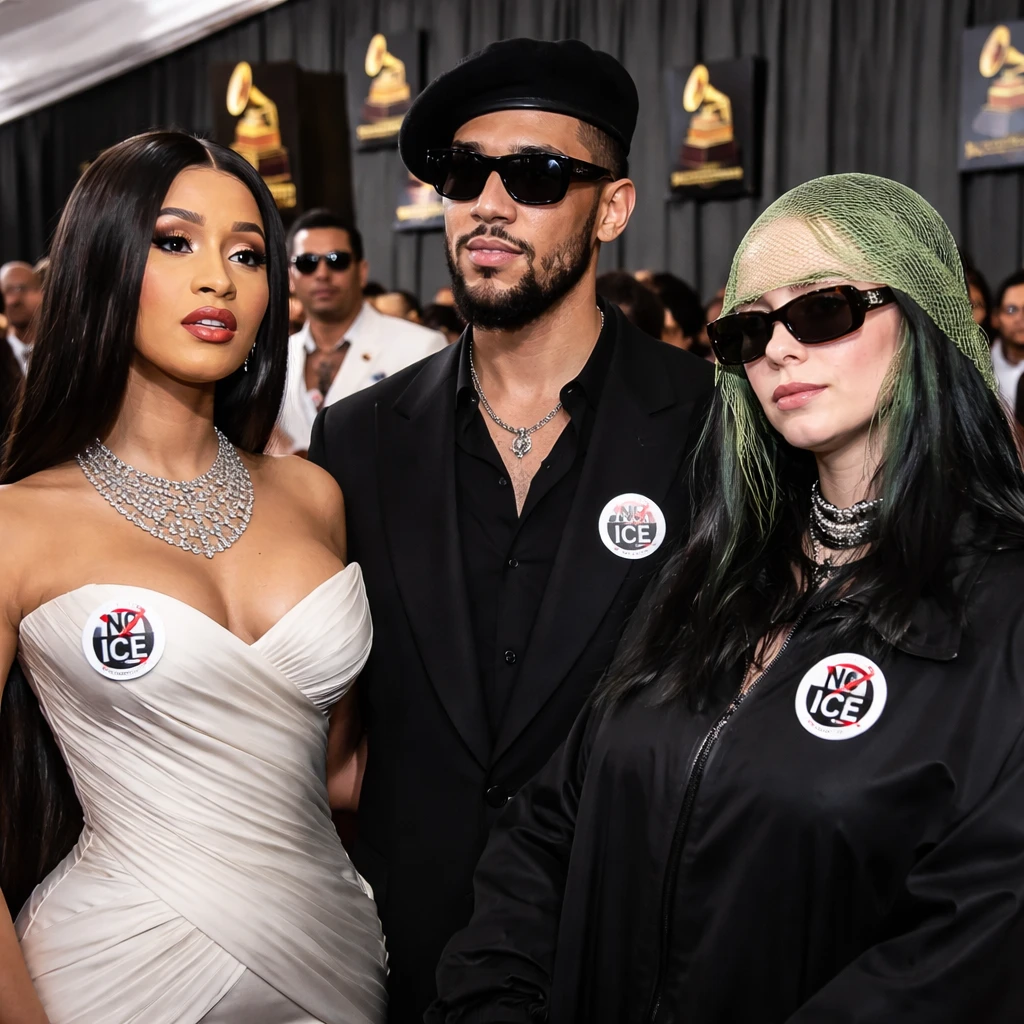

As the entertainment industry celebrates its most high-profile events, the issue of immigration enforcement has become a focal point of public protest among artists, especially amid an intensified federal crackdown in Minneapolis. This dynamic was clearly visible during the Grammys red carpet and ceremony, where musicians and cultural figures participated in a highly publicized gesture of resistance against the U.S. Immigration and Customs Enforcement (ICE) operations.
In the week leading up to the Grammys, activists orchestrated a campaign encouraging celebrities to wear pins that explicitly critique ICE’s presence in various metropolitan areas. These pins were circulated through celebrity teams and at numerous related gatherings. Organizers observed a notable increase in participation at the Grammys when compared with a similar initiative at the Golden Globes earlier. The heightened momentum corresponds with a surge in public indignation stemming from incidents such as a fatal shooting involving a Border Patrol agent that claimed the life of nurse Alex Pretti and the detention of a young child, Liam Conejo Ramos. Further fueling the controversy was the recent detention of journalist Don Lemon.
Jess Morales Rocketto, Executive Director of the Latino advocacy organization Maremoto, remarked on the distinctive culture of the music industry as a contributing factor to the visible support. She noted that these artists often embrace rebellion and theatricality, traits conducive to overt political expressions. Morales Rocketto emphasized that the pins transcend mere fashion statements, representing a deliberate stance against ICE’s community involvement.
Within the realm of performances and appearances in the days surrounding the event, Mexican American artist Becky G conveyed a pointed critique of ICE through the artful display on her fingernails at the MusiCares Person of the Year event. Likewise, various musicians including Jason Isbell, Margo Price, Kehlani, and Rhiannon Giddens donned protest attire during the Grammy festivities. Kehlani notably included a direct denunciation of ICE during her acceptance speech for the best R&B performance category.
Bon Iver’s frontman, Vernon, who was nominated for best alternative album, wore a whistle symbolizing solidarity with legal observers documenting federal agents’ street-level activities in Minneapolis. Highlighting music’s role as a unifying force, Vernon praised those on the ground undertaking legal observation, describing their efforts as essential to the broader cause.
The phenomenon extends beyond music, with several celebrities at the Sundance Film Festival also wearing pins articulating opposition to ICE. Stars such as Natalie Portman, Olivia Wilde, and Zoey Deutch displayed “ICE OUT” pins, with Deutch additionally commemorating Renee Good, a woman killed by an ICE officer, through a related badge. Wilde characterized the situation as a disturbing normalization of violence that contrasts sharply with celebratory festival atmospheres. She affirmed her commitment to advocating for ICE’s removal from communities.
Portman expressed emotional response to her participation in the protest symbolism amid the premiere of her film "The Gallerist." She reflected on the tension between participation in artistic celebration and the grave societal impact of ICE’s actions, applauding the solidarity and resilience exhibited by Americans at community levels.
Despite visible support from numerous high-profile performers, Morales Rocketto acknowledged the complexity of celebrity activism, pointing to various obstacles in the entertainment industry. These range from resistance by record labels, managers, corporate sponsors, and even fashion designers whose designs may not accommodate symbolic alterations like pins. Additionally, artists face potential personal risk from political backlash or direct threats, illustrated by federal plans to position ICE agents at a prominent Super Bowl halftime show.
She also highlighted the particular pressures and vulnerabilities facing Latino artists, many of whom may have fragile immigration statuses or mixed-status families, despite their public prominence. This context underscores the nuances affecting the depth of participation from Latino entertainers in public protests against ICE.
This wave of artistic dissent converges with broader societal debates on immigration enforcement policies and their human impacts, contributing to ongoing dialogue about the role of public figures in political advocacy.