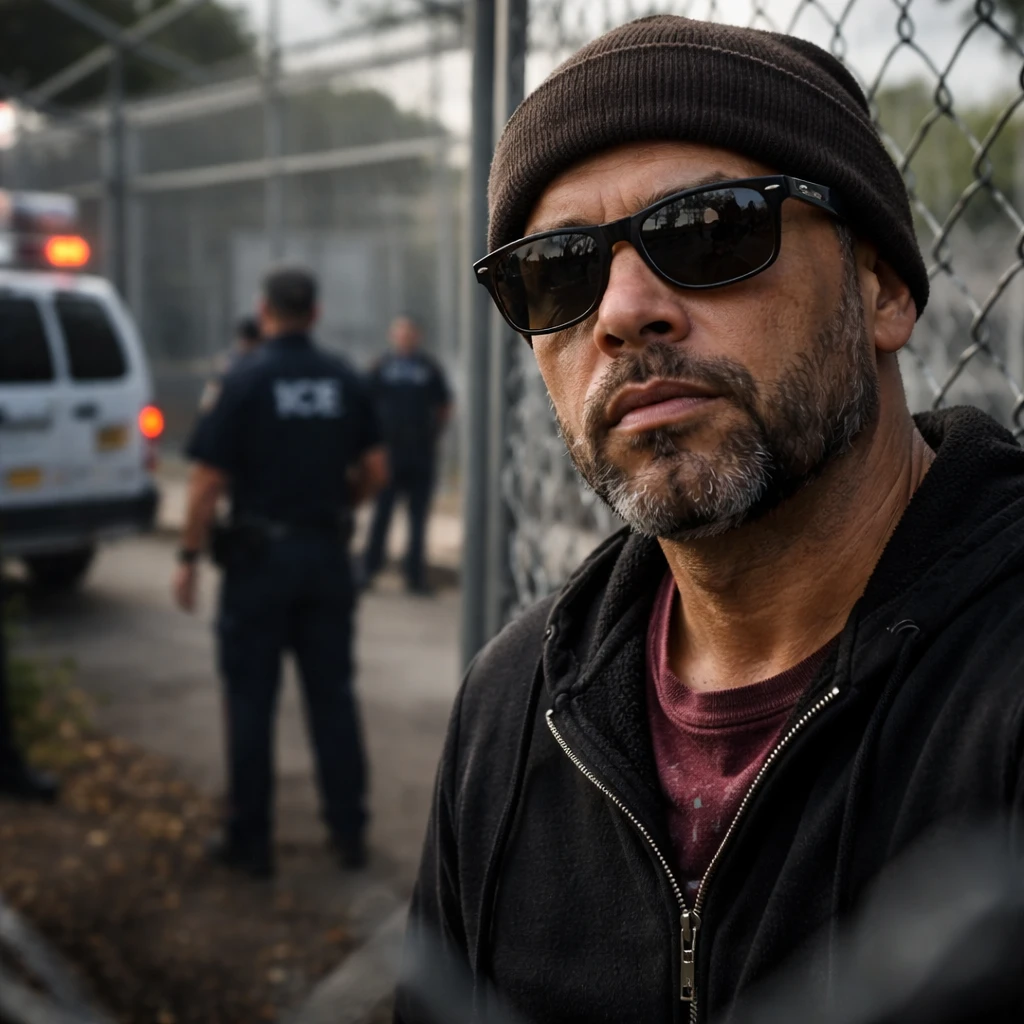

Geraldo Lunas Campos, a 55-year-old Cuban immigrant detained at a Texas immigration facility, died on January 3 after an incident involving guards who restrained him physically, according to a newly released autopsy report that classifies his death as a homicide. Campos, who was held in solitary confinement at Camp East Montana, a large tent detention site located on the grounds of Fort Bliss military base, exhibited injuries consistent with a violent struggle before losing consciousness and subsequently passing away.
The El Paso County Medical Examiner’s Office detailed in its report that Campos' body showed evidence of abrasions on his chest and knees along with hemorrhages affecting the neck area. Deputy medical examiner Dr. Adam Gonzalez attributed the cause of death to asphyxia brought on by compression of the neck and torso. The autopsy highlighted the presence of petechial hemorrhages—minute blood spots caused by broken capillaries typically linked to severe strain—in the eyelids and neck skin. Such findings reinforce the conclusion that pressure applied during restraint led to his suffocation.
Additional injuries noted included contusions that may have been caused by hands or knees pressing onto Campos' neck. The autopsy also acknowledged Campos was prescribed antidepressant and antihistamine medications and had medical histories involving bipolar disorder and anxiety, though it made no mention of an attempted suicide. Witnesses confirmed to authorities that Campos became unresponsive while under physical restraint, and the report references injuries on his neck, head, and torso correlated with the restraint.
Contrasting accounts from U.S. Immigration and Customs Enforcement (ICE) initially described Campos as disruptive, with no mention of a physical altercation. ICE stated that after moving him to segregation—a cellblock for detainees separated from others—staff observed him in distress and summoned medical personnel to respond. Emergency medical services arrived promptly, but Campos was declared dead after paramedic intervention. Subsequently, the Department of Homeland Security (DHS) amended this narrative, indicating that Campos had attempted suicide and that guards intervened to save him during which he resisted strongly, leading to a struggle after which he lost consciousness and stopped breathing.
Following the presentation of the autopsy findings, DHS spokesperson Tricia McLaughlin described Campos as a "criminal illegal alien and convicted child sex predator," outlining that in 2003 he was convicted in New York for sexual contact with a minor under 11 years old. Additional convictions included a 2009 prison sentence for attempted drug sales, completed in 2017. McLaughlin emphasized that ICE is conducting a thorough investigation into the death, though the agency has not confirmed whether external law enforcement bodies are involved.
Campos was among the first detainees transferred to Camp East Montana, arriving in September after being taken into custody in New York under an immigration enforcement operation targeting individuals with criminal records deemed removable. The detention facility itself has faced scrutiny; a $1.2 billion contract to build and operate the camp was awarded to Acquisition Logistics LLC, a private contractor with no prior experience in correctional management, raising questions regarding operational oversight. The nature of the guards’ employment—whether government or contractor—present during Campos' restraint remains unclear.
His death is part of a series of at least three fatalities reported within a relatively short time frame at Camp East Montana. Two other detainees—a Guatemalan man who died in December while hospitalized and a Nicaraguan man who reportedly died by suicide in January—have also died there recently, with investigations ongoing. The circumstances surrounding these deaths have led to congressional demands for federal briefings and calls for the closure of the facility and termination of its contracts.
Representative Veronica Escobar, whose district includes El Paso, has urged DHS officials to halt deportations of witnesses and ensure preservation of all evidence related to these deaths. Legal complications stemming from the detention site's placement on a military base could limit jurisdiction for state and local investigations, further complicating accountability efforts.