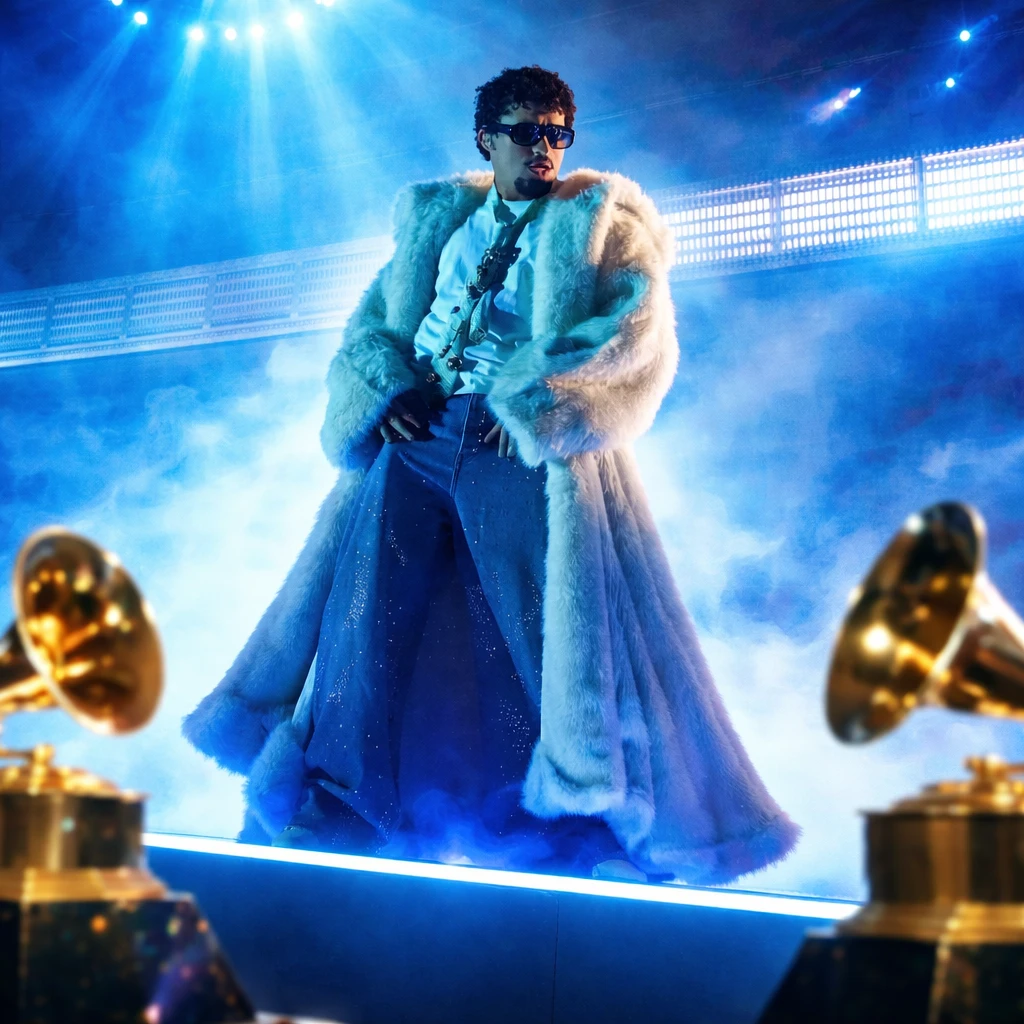

Benito Antonio Martínez Ocasio, professionally known as Bad Bunny, has solidified his prominent position on the global music stage by receiving six nominations at the forthcoming Grammy Awards scheduled for February 1, 2026. This unprecedented recognition positions him as the first Spanish-language artist to secure nominations simultaneously in the prestigious categories of album, song, and record of the year. His acclaimed record, “Debí Tirar Más Fotos,” represents only the second Spanish-language album ever nominated for album of the year, following his own 2022 nomination for “Un Verano Sin Ti.”
Specialists in Latino studies and musicology highlight that, beyond individual achievement, Bad Bunny’s nominations epitomize a broader acceptance and celebration of Latin music, signaling a critical juncture for the genre and its cultural significance. Vanessa Díaz, an associate professor at Loyola Marymount University, underscores that these accolades reflect recognition for the increasing global influence of Latin music. Albert Laguna, a Yale University academic focusing on ethnicity and migration, situates Bad Bunny’s success within a longstanding trajectory of Caribbean musical influence extending over centuries.
Bad Bunny’s musical foundation rests in Latin trap and reggaetón, genres rooted deeply in Puerto Rico’s marginalized urban communities. These styles, once stigmatized similarly to the early years of hip-hop in the U.S., form the core of his artistic identity and continue to shape his music. The fact that an artist emerging from these genres now receives top Grammy nods is both unprecedented and transformative, marking a shift in mainstream music recognition paradigms.
Institutional biases linger, however. Despite holding three Grammy wins in urban music categories, Bad Bunny remains somewhat sidelined in broader industry awards. Petra Rivera-Rideau, an American studies scholar at Wellesley College, remarks on the historical neglect of marginalized genres within award institutions, including the Latin Grammy Awards. A win in major categories could carry significant symbolic weight, potentially signaling greater openness to diverse Latin musical styles, though she remains cautious about the broader industry impact.
Musically, “Debí Tirar Más Fotos” fuses traditional Puerto Rican folkloric sounds such as música jíbara, bomba, plena, salsa, and aguinaldo with contemporary Latin urban genres. This blending stands out as a departure from the typical trajectory where artists often dilute local sounds to cater to global audiences. Bad Bunny reverses this trend, embracing and elevating his Puerto Rican heritage and embedding political and historical narratives within his lyrics.
The release and acclaim of this album coincide with a politically sensitive period for Latinos in the United States, characterized by increased anti-immigrant sentiment and aggressive immigration enforcement. This context amplifies the album’s cultural resonance, with the artist expressing earlier reluctance to tour the U.S. mainland due to concerns about deportation risks for Latinos. The album’s songs engage deeply with political, cultural, and social issues facing Puerto Rico and the broader Latin community, embedding a powerful message within its musical composition.
Should Bad Bunny secure a Grammy in any major category, comparisons have been drawn to landmark moments in entertainment history where first victories by marginalized individuals opened doors for increased representation. Yet, these achievements also raise critical questions about whether such recognition will facilitate broader inclusion within the music industry.
“Debí Tirar Más Fotos” resonates across diverse age groups, helped by its innovative combination of accessible traditional rhythms and urban music. This multilayered approach makes the album appealing both within Puerto Rico and internationally, contributing to a sonic landscape that narrates complex contemporary realities while offering pleasure and connection.
As Bad Bunny prepares to perform as the headliner for the Super Bowl halftime show shortly after the Grammy Awards, his influence continues to redefine the scope and reach of Latin music globally. The 68th Grammy Awards ceremony will take place at Crypto.com Arena in Los Angeles and will be broadcast on CBS and streamed on Paramount+.