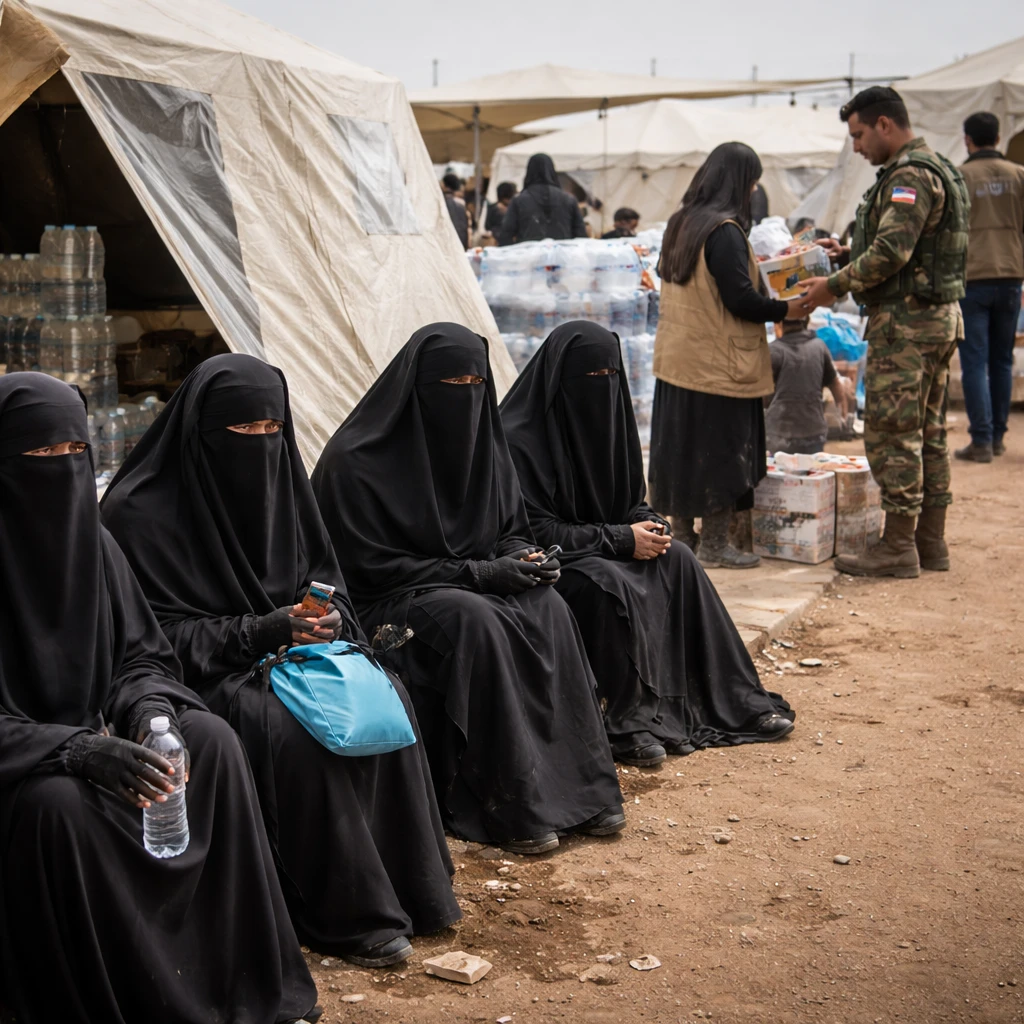
AL-HOL, Syria – Basic public services at the al-Hol camp in northeastern Syria, which shelters thousands of women and children connected to the Islamic State group, are slowly returning to normal operations following a change in control of the facility.
On January 21, Syrian government forces took possession of the camp from Kurdish-led fighters as part of a multi-week offensive against the Kurdish-led Syrian Democratic Forces (SDF), who had administered the settlement near the Iraqi border for about ten years. Since then, a ceasefire agreement has halted active fighting in the area.
Celine Schmitt, spokesperson for the United Nations refugee agency (UNHCR), told The Associated Press that service disruptions lasted only two days amidst the clashes surrounding the camp. She added that UNHCR teams visited al-Hol shortly after its capture to promptly restore basic and humanitarian assistance, including access to healthcare services. Beginning January 23, distribution of essentials like bread and water resumed within the camp.
Speaking from Damascus, Schmitt reported that conditions inside al-Hol have since stabilized, and several humanitarian groups have conducted food package distributions. The Syrian government has also appointed a new camp administrator.
At the peak following ISIS's defeat in Syria in 2019, the camp population numbered approximately 73,000 individuals. This figure has since declined as some countries repatriated their nationals. Currently, the camp houses nearly 24,000 people, primarily women and children, many of whom are wives or widows of ISIS members. The breakdown includes approximately 14,500 Syrians, close to 3,000 Iraqis, and around 6,500 detainees of various other nationalities held in a heavily guarded section, largely suspected ISIS supporters who originally joined the extremist group from different parts of the world.
Although residents are not formally incarcerated or charged with crimes, they remain under de facto detention at the highly secured camp.
Last month, the United States began transferring selected detainees from approximately 9,000 ISIS fighters held in northeastern Syrian prisons to Iraq, where authorities announced plans to formally process them. However, no clear solution has been outlined for managing the al-Hol camp or a similar site, Roj camp, facing comparable conditions.
Amal al-Hussein, representing the aid group Syria Alyamama Foundation, shared with the AP that all clinics within the camp's medical facility operate around the clock. She noted that daily treatments are provided to up to 150 children and 100 women. In the past ten days, there have been five natural births at the camp, while cesarean cases were referred to hospitals in the eastern Deir el-Zour province or nearby al-Hol city.
Al-Hussein reported shortages of baby formula and diapers for both children and adults.
Safiya Suleiman, a camp resident from the eastern Syrian city of Mayadeen, who has lived in al-Hol with her six children for eight years, highlighted shortages of certain food items and inadequate education for her children. She expressed a need for children’s clothing and fresh produce, stating that vegetables and fruits have been unavailable for approximately a month and remain unaffordable for most residents.
Mariam al-Issa, originally from northern Syria's Safira city, echoed concerns over the camp’s conditions. She expressed a desire to leave al-Hol with her children to access better education and nutrition. Discussing financial difficulties, she mentioned that the food basket includes lentils, which children now reject, alongside predominantly bread and water. She emphasized that it has been a month since the camp inhabitants had a decent meal.
Over recent years, thousands of Syrians and Iraqis have returned home from camps like al-Hol. Nonetheless, many find their residences destroyed and face scarce employment opportunities, as the majority of Syrians continue to endure poverty following the onset of conflict in 2011.
Schmitt underscored the necessity for investments to assist returning populations in rebuilding safe, sustainable lives. "People need support to have a house, to reconstruct their homes, and to secure an income," she said. Such investments would address the significant material challenges confronting those returning to their communities.
Reported from Damascus by Shaheen.