As the United States marks 250 years since the signing of the Declaration of Independence, a new campaign titled "Be The People" is initiating a large-scale effort to engage Americans in tackling pressing community issues. This privately financed venture, backed by a coalition of philanthropic foundations and individual donors, plans to connect hundreds of millions of citizens with local initiatives addressing critical problems including poverty, addiction, violence, and economic immobility.
Brian Hooks, chairman and CEO of the nonprofit network Stand Together, highlighted the historic timing of this campaign, expressing that the nation is uniquely positioned to reinforce the message that every individual matters and has a role to play in shaping an unwritten future. He emphasized that this moment provides an opportunity to inspire Americans to take active responsibility in improving their communities.
With financial support from approximately 50 philanthropic foundations and donors, "Be The People" targets a budget exceeding $200 million in its inaugural year. The program builds on research revealing that although many Americans desire to contribute to their communities, they often do not know how to get involved effectively.
The campaign counts among its founding partners a diverse group comprising nonprofits such as GivingTuesday, Goodwill Industries, Habitat for Humanity, and More Perfect, alongside businesses like Imagine Entertainment and the National Basketball Association, as well as funders including the John D. and Catherine T. MacArthur Foundation.
Describing the campaign as a long-term commitment, Hooks asserted that the initiative aims to influence both behavior and cultural norms over a ten-year horizon. He cited findings from a 2024 Pew Research Center survey indicating that the majority of Americans in 2023 and 2024 expressed skepticism regarding the nation’s ability to solve major challenges—a sentiment Hooks termed a "red alert."
Hooks further explained that the campaign’s aspiration extends beyond traditional volunteerism or occasional community service. It seeks active participation from various sectors such as businesses and educational institutions, incorporating a comprehensive data collection strategy to assess whether individuals become more engaged and if local problems are effectively addressed.
Stand Together, founded by billionaire Charles Koch, functions as a convener across ideological divides in a wide array of American communities. The "Be The People" initiative will operate more as an umbrella organization, facilitating existing groups to collaborate and access resources rather than forming a standalone nonprofit.
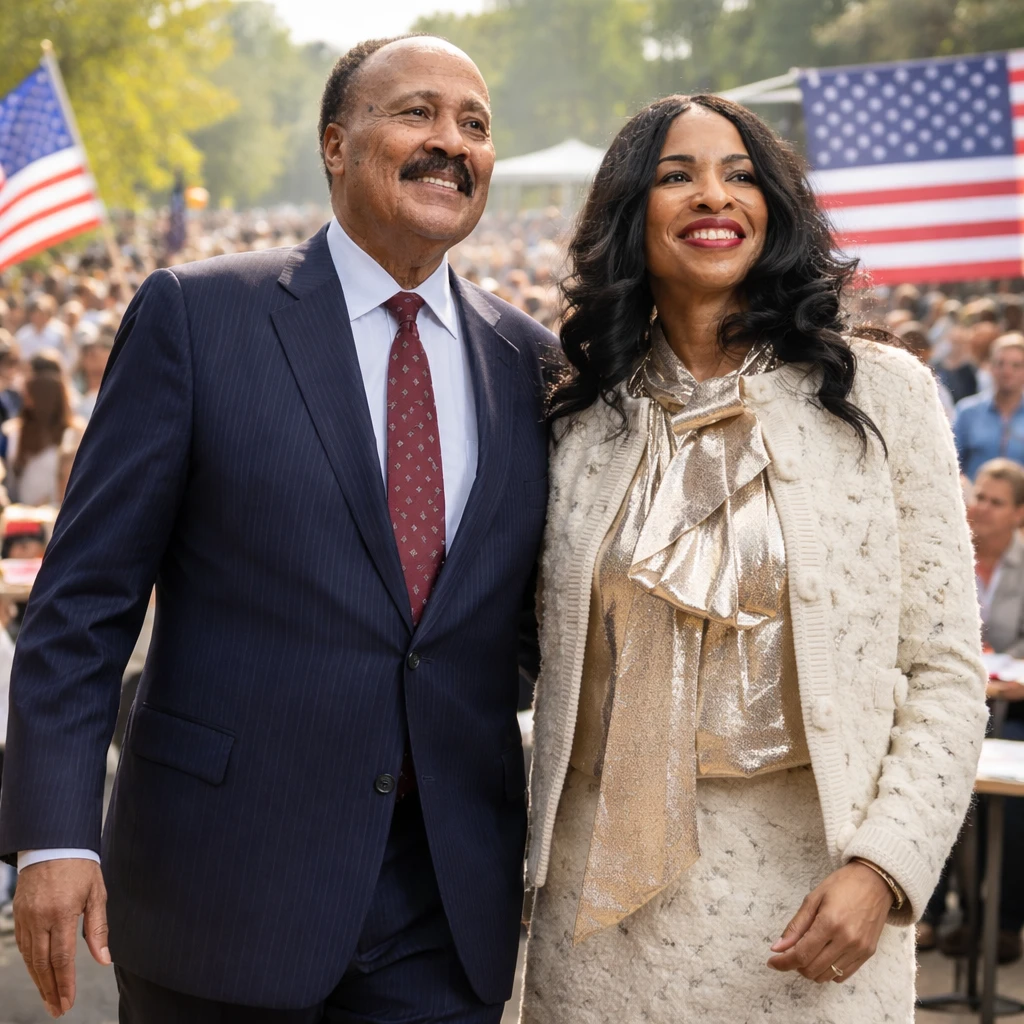
For example, at a recent Atlanta Hawks game, civil rights leader Martin Luther King III and his wife, Arndrea Waters King, linked their "Realize the Dream" program—which promotes increased acts of service—to the new campaign. The Kings articulated a vision where "Be The People" amplifies community-led efforts nationwide, reinforcing the American values of service and collective responsibility.
Asha Curran, CEO of GivingTuesday, underscored the cumulative power of small actions, likening volunteerism to a muscle that strengthens with use. She noted that collaboration in service fosters social bonds that make it increasingly difficult for participants to harbor animosity towards one another.
This movement arises amidst significant national challenges including political polarization, economic disparities, and concerns over the erosion of democratic norms. Political scientist Hahrie Han of Johns Hopkins University, who studies civic engagement, remarked that deeper involvement opportunities are needed to empower individuals as genuine problem solvers rather than passive supporters. She observed that many citizens currently engage merely as volunteers or donors, leaving professional organizations to address core issues—leading to diminished commitment and perceived efficacy.
Kristin Goss, a professor at Duke University who directs the Center for the Study of Philanthropy and Voluntarism, noted an increasing trend among private foundations to invest in the health of American democracy. While prohibited from electoral participation, these foundations impact public opinion and policy discourse.
Goss remarked that funders express growing concern about the vitality of the democratic system, pluralism, and inclusion, motivating them to support initiatives like "Be The People." Complementing this, organizations such as the Freedom Together Foundation have introduced awards recognizing "civic bravery," encouraging community activism as a countermeasure to rising authoritarian tendencies.
Leaders of "Be The People" have also assembled prominent communications teams to spotlight positive narratives emerging from grassroots efforts, addressing a gap in the current information environment where such stories often remain obscure.
Hooks articulated that the campaign’s role is to "hold up a mirror and a microphone" to Americans, unveiling the authentic, collaborative spirit thriving at the local level and fostering mutual recognition among citizens.
Brian Hooks, chairman and CEO of the nonprofit network Stand Together, highlighted the historic timing of this campaign, expressing that the nation is uniquely positioned to reinforce the message that every individual matters and has a role to play in shaping an unwritten future. He emphasized that this moment provides an opportunity to inspire Americans to take active responsibility in improving their communities.
With financial support from approximately 50 philanthropic foundations and donors, "Be The People" targets a budget exceeding $200 million in its inaugural year. The program builds on research revealing that although many Americans desire to contribute to their communities, they often do not know how to get involved effectively.
The campaign counts among its founding partners a diverse group comprising nonprofits such as GivingTuesday, Goodwill Industries, Habitat for Humanity, and More Perfect, alongside businesses like Imagine Entertainment and the National Basketball Association, as well as funders including the John D. and Catherine T. MacArthur Foundation.
Describing the campaign as a long-term commitment, Hooks asserted that the initiative aims to influence both behavior and cultural norms over a ten-year horizon. He cited findings from a 2024 Pew Research Center survey indicating that the majority of Americans in 2023 and 2024 expressed skepticism regarding the nation’s ability to solve major challenges—a sentiment Hooks termed a "red alert."
Hooks further explained that the campaign’s aspiration extends beyond traditional volunteerism or occasional community service. It seeks active participation from various sectors such as businesses and educational institutions, incorporating a comprehensive data collection strategy to assess whether individuals become more engaged and if local problems are effectively addressed.
Stand Together, founded by billionaire Charles Koch, functions as a convener across ideological divides in a wide array of American communities. The "Be The People" initiative will operate more as an umbrella organization, facilitating existing groups to collaborate and access resources rather than forming a standalone nonprofit.
For example, at a recent Atlanta Hawks game, civil rights leader Martin Luther King III and his wife, Arndrea Waters King, linked their "Realize the Dream" program—which promotes increased acts of service—to the new campaign. The Kings articulated a vision where "Be The People" amplifies community-led efforts nationwide, reinforcing the American values of service and collective responsibility.
Asha Curran, CEO of GivingTuesday, underscored the cumulative power of small actions, likening volunteerism to a muscle that strengthens with use. She noted that collaboration in service fosters social bonds that make it increasingly difficult for participants to harbor animosity towards one another.
This movement arises amidst significant national challenges including political polarization, economic disparities, and concerns over the erosion of democratic norms. Political scientist Hahrie Han of Johns Hopkins University, who studies civic engagement, remarked that deeper involvement opportunities are needed to empower individuals as genuine problem solvers rather than passive supporters. She observed that many citizens currently engage merely as volunteers or donors, leaving professional organizations to address core issues—leading to diminished commitment and perceived efficacy.
Kristin Goss, a professor at Duke University who directs the Center for the Study of Philanthropy and Voluntarism, noted an increasing trend among private foundations to invest in the health of American democracy. While prohibited from electoral participation, these foundations impact public opinion and policy discourse.
Goss remarked that funders express growing concern about the vitality of the democratic system, pluralism, and inclusion, motivating them to support initiatives like "Be The People." Complementing this, organizations such as the Freedom Together Foundation have introduced awards recognizing "civic bravery," encouraging community activism as a countermeasure to rising authoritarian tendencies.
Leaders of "Be The People" have also assembled prominent communications teams to spotlight positive narratives emerging from grassroots efforts, addressing a gap in the current information environment where such stories often remain obscure.
Hooks articulated that the campaign’s role is to "hold up a mirror and a microphone" to Americans, unveiling the authentic, collaborative spirit thriving at the local level and fostering mutual recognition among citizens.