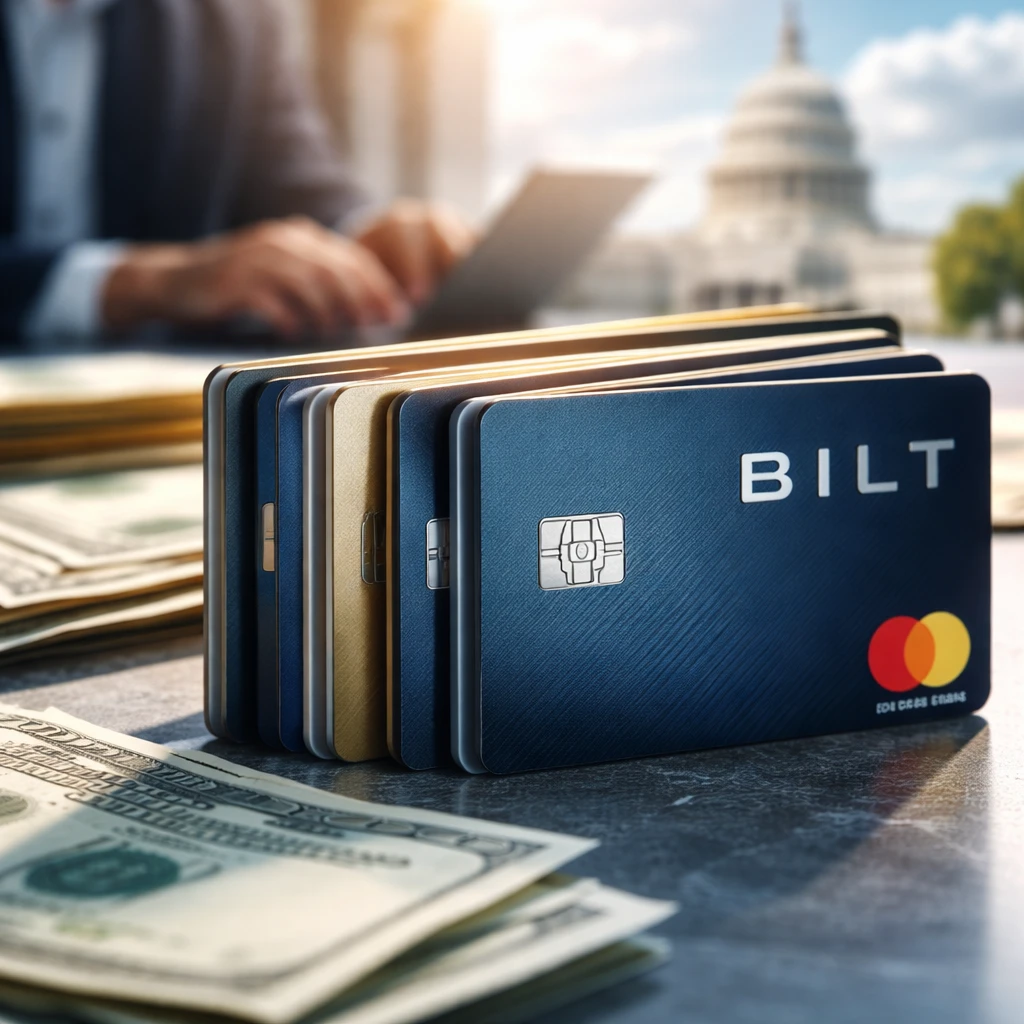

New York fintech firm Bilt has revealed a comprehensive update to its credit card portfolio, highlighting an introductory interest rate capped at 10% per annum for a period of 12 months on new purchases. This move arrives amid escalating political debate over credit card interest rates, notably following former President Donald Trump's recent endorsement of a one-year 10% cap on such rates.
Bilt, which initially established itself by enabling users to earn rewards on rent and everyday expenses, is expanding its footprint in the financial services domain. The company, privately owned and supported by multiple venture capital and pension fund investors, was valued at $10.75 billion last year. It is actively forging greater partnerships with landlords and incorporates rewards programs geared toward routine financial interactions, such as mortgage payments. Approximately 25% of landlords currently accept Bilt, and the company positions itself as the largest reporter of timely rental payments to credit bureaus.
In a discussion, Bilt's Chief Executive Officer, Ankur Jain, explained that the decision to implement a one-year cap on credit card interest rates emerged from a desire to respond to the "bipartisan call for a solution" concerning affordability challenges faced by many customers. Jain also acknowledged the prospect that the cap could attract new cardholders.
"If a credit card rate cap is going to happen, we want to lead the way," Jain remarked.
The 10% rate will apply as an introductory annual percentage rate (APR) for the first 12 months on new eligible purchases for applicants approved for any of Bilt's three recently introduced credit cards. Subsequent to this introductory period, APRs for purchases, balance transfers, and cash advances will revert to levels exceeding 20%, consistent with rates typical for rewards cards in the market.
The broader credit card sector has historically resisted strict APR caps, with average rates around 21%. The proposal championed by Trump, which represents one of the most formidable challenges to the industry, is estimated by Vanderbilt University researchers to potentially reduce credit card industry revenue by $100 billion. Progressive politicians including Representative Alexandria Ocasio-Cortez and Senator Bernie Sanders have long supported similar limits on credit card interest rates.
Bilt's offer effectively represents a promotional rate strategy analogous to standard industry practices such as zero percent introductory APRs or balance transfer promotions intended to acquire customers. Nevertheless, Bilt's public commitment to a rate cap, despite being smaller than major players such as JPMorgan Chase, Capital One, and American Express, may influence political discourse by setting a precedent. Policymakers could reference Bilt's voluntary cap when questioning why larger competitors have not adopted comparable measures.
The new cards were introduced at a ceremony atop the World Trade Center and employ a "good, better, best" tiered model common among credit card issuers. Central to the program is Bilt Cash, a points system redeemable as cash back within Bilt's network, primarily involving merchants aligned with Bilt to drive local customer engagement. The program continues to maintain transfer partnerships with airline and hotel loyalty programs via Bilt Rewards points.
The premium tier is the Bilt Palladium Card, featuring a $495 annual fee, accompanied by $400 in annual hotel credits and $200 in Bilt Cash rewards. The mid-tier Bilt Obsidian Card targets enhanced rewards for dining and grocery purchases, charging a $95 fee annually. The foundational Bilt Blue Card carries no annual fee, providing more modest cash back and points accrual compared to the fee-based cards.
Attempting to evolve beyond its initial label as a "credit card for renters," Bilt aims to establish itself as a financial intermediary connecting local merchants, landlords, and tenants. Previously partnering with Wells Fargo for credit card issuance, Bilt's collaboration with the bank will conclude in February amid indications of a strained relationship. Reports suggest Wells Fargo incurred losses approximating $10 million per month on the Bilt card, precipitating an early termination of their contract initially set to extend until 2029.
The revamped credit card line is being issued in collaboration with Cardless, a credit card operations firm, while Column N.A. serves as the issuing bank.